Lenovo AI server alternative: 7 best options in 2026, on‑prem and cloud
Dell, HPE, Supermicro, NVIDIA DGX, Cisco, CoreWeave and Lambda compared as Lenovo AI server alternatives, with GPUs, lead times and real pricing.
 Written byBurhan AqibSenior writer, policy and analysis
Why you can trust The AI Future
Our writers research every product from its official pages, independent tests and user reports, link each claim to its source and correct mistakes openly. Unless an article says otherwise, we haven't tested the product hands-on ourselves. Companies can't pay for coverage or see reviews before they're published.
Read our editorial policy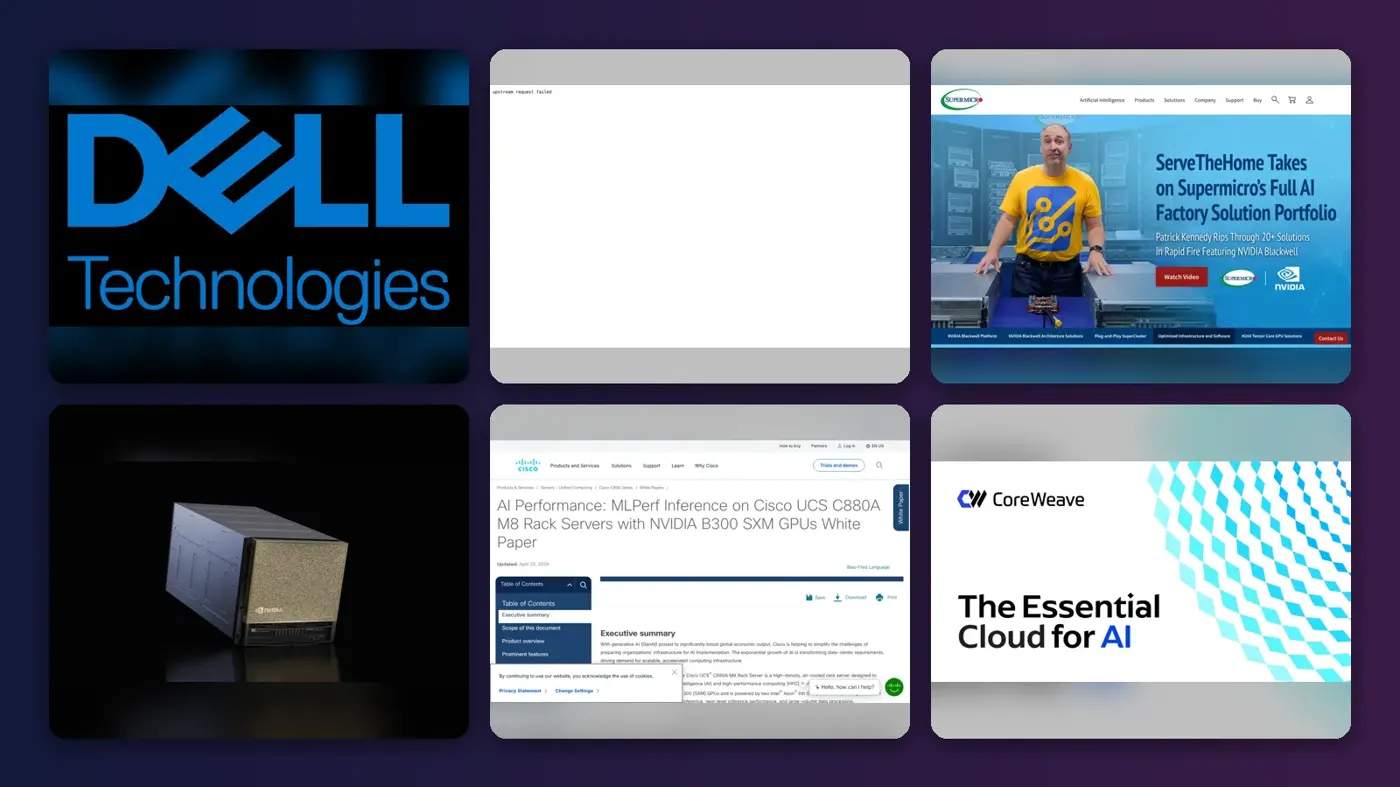
If you want a Lenovo AI server alternative, the short answer is Dell's PowerEdge XE line for most enterprises, Supermicro if delivery speed and price matter more than polish, and a GPU cloud like CoreWeave or Lambda if you'd rather not buy hardware at all. Lenovo's ThinkSystem SR680a V4 is a serious machine with eight NVIDIA HGX B300 GPUs, but its product page only says contact us for pricing, and that's where a lot of buyers start shopping around.
Most of these boxes share the same NVIDIA silicon. As American Compute puts it, an H100 inside a Dell server "is the same chip" as one inside a Supermicro or HPE system. So you're really choosing support, cooling, lead times and software, which I'd say still decides whether a $200,000-plus node earns its keep.
Key takeaways
- Dell's PowerEdge XE9780 and XE9785 are the closest like-for-like swap for Lenovo's eight-GPU ThinkSystem servers.
- Supermicro has the shortest quoted lead times of the big server makers, but it's had delivery slips and past accounting problems.
- HPE suits buyers who want liquid cooling and the option to pay for on-premises hardware through GreenLake.
- Renting from CoreWeave or Lambda costs more per hour over years, yet it avoids a six-figure upfront purchase and a long wait.
Our ranking method
Nobody at The AI Future had hands-on access to these servers. We compared them using vendor spec sheets and press releases, independent buying guides, published reviews on PeerSpot and Trustpilot, and pricing pages where they exist, as of early November 2026. We ranked each option on six criteria:
- GPU options, meaning which NVIDIA (or AMD) accelerators the system supports today.
- Lead time and availability, based on vendor claims and third-party guides.
- Support and service reach, such as onsite response and global coverage.
- Cooling and power fit for a normal enterprise data center.
- Price transparency, which is mostly poor across this category.
- Feedback from real users and independent reviewers.
On-premises picks rank ahead of cloud ones because people searching for a Lenovo replacement usually want to own hardware. Prices are in US dollars. Treat any figure as a rough guide.
The 7 best Lenovo AI server alternatives at a glance
| # | Tool | Category | Best for | Free tier | Starts at |
|---|---|---|---|---|---|
| 1 | Dell PowerEdge XE | On-prem GPU server | Enterprises with Dell contracts | No | Quote only |
| 2 | HPE ProLiant Compute XD | On-prem GPU server | Liquid cooling and pay-per-use | No | Quote only |
| 3 | Supermicro | On-prem GPU server | Fast delivery and custom builds | No | Quote only |
| 4 | NVIDIA DGX B300 | Turnkey AI system | A full NVIDIA software stack | No | Quote only |
| 5 | Cisco UCS C880A M8 | On-prem GPU server | Cisco networking shops | No | Quote only |
| 6 | CoreWeave | GPU cloud | Renting large GPU clusters | No | $9.56/hr (spot) |
| 7 | Lambda | GPU cloud | Self-serve GPU instances | No | $0.69/GPU/hr |
Cloud prices are the lowest listed rate, not the rate for B300-class GPUs. CoreWeave's figure is a spot price for an RTX PRO 6000 Blackwell system, and Lambda's is for an older Quadro RTX 6000.
The best Lenovo AI server alternatives in 2026, ranked
Dell PowerEdge XE – best for enterprises with Dell contracts
PowerEdge XE is Dell's line of dense GPU servers, also sold inside the Dell AI Factory with NVIDIA. See the range at Dell.
Strengths
The XE9780 and XE9785 are the models that line up most closely with Lenovo's SR680a V4. Dell announced them in May 2025 as successors to the XE9680, saying the new servers can deliver up to four times faster LLM training with the eight-way HGX B300. The AMD-based XE9785 and its liquid-cooled XE9785L became generally available at SC25, according to IT Pro.
Support is the main reason people pick Dell. American Compute calls Dell "the enterprise standard" and notes its $43 billion AI server backlog going into fiscal 2027, which is good for Dell and less good for you if you need servers next month. On PeerSpot, one reviewer of Dell's general rack servers wrote: "I have some Dell PowerEdge R-Series units that have already been in use for 14 years and are still performing extremely well." That's about CPU servers, not GPU boxes.
Key features
- The XE9780 and XE9785 take eight NVIDIA HGX B300 GPUs.
- Liquid-cooled L versions scale to 256 Blackwell Ultra GPUs per Dell IR7000 rack.
- The XE9712 rack system runs NVIDIA GB300 NVL72.
- iDRAC handles remote management and firmware updates.
Pros
- The closest one-to-one swap for an eight-GPU Lenovo server.
- Large support organisation with ProSupport Plus onsite options.
- Air-cooled and liquid-cooled versions of the same platform.
Cons
- Introl puts Dell at a 20-30% price premium over white-box vendors.
- A big backlog can mean long waits for custom builds.
- No public pricing.
Dell PowerEdge XE pricing: No free plan. AI servers are sold by quote (checked November 2026). See pricing
Related: Dell AI Factory alternatives
HPE ProLiant Compute XD – best for liquid cooling and pay-per-use
ProLiant Compute XD is HPE's line of eight-GPU AI servers, backed by its Cray supercomputing experience. Find them at HPE.
Strengths
HPE said its ProLiant Compute XD servers would support NVIDIA's HGX B300 platform, alongside a GB300 NVL72 rack, as DCD reported from NVIDIA GTC. American Compute lists the ProLiant Compute XD685 with eight HGX B300, B200 or H200 GPUs and AMD EPYC CPUs, adding that the B300 version needs the liquid-cooled chassis.
The interesting bit is GreenLake. It lets you put hardware in your own building and pay for it like a cloud service; American Compute says it had $3.2 billion in annual recurring revenue. I think that's the main reason to pick HPE over Dell if your finance team hates big capital purchases. A PeerSpot reviewer of HPE's general DL servers wrote: "The price-performance ratio is better than IBM counterparts, which is why we have opted for these solutions."
Key features
- The XD685 supports eight HGX B300, B200 or H200 GPUs.
- GB300 NVL72 racks are available for rack-scale work.
- GreenLake offers consumption-based payment for on-site hardware.
- HPE iLO handles out-of-band management.
Pros
- Deep liquid-cooling and HPC experience from Cray.
- A pay-as-you-go route for owned hardware.
- Choice of NVIDIA or AMD accelerators.
Cons
- B300 configurations need liquid cooling, which many server rooms can't handle yet.
- No published prices for AI servers.
HPE ProLiant Compute XD pricing: No free plan. Sold by quote or through GreenLake (checked November 2026). See pricing
Supermicro – best for fast delivery and custom builds
Supermicro builds GPU servers and full racks for NVIDIA Blackwell, in both air-cooled and liquid-cooled form, from its own factories. Its range is on the Supermicro site.
Strengths
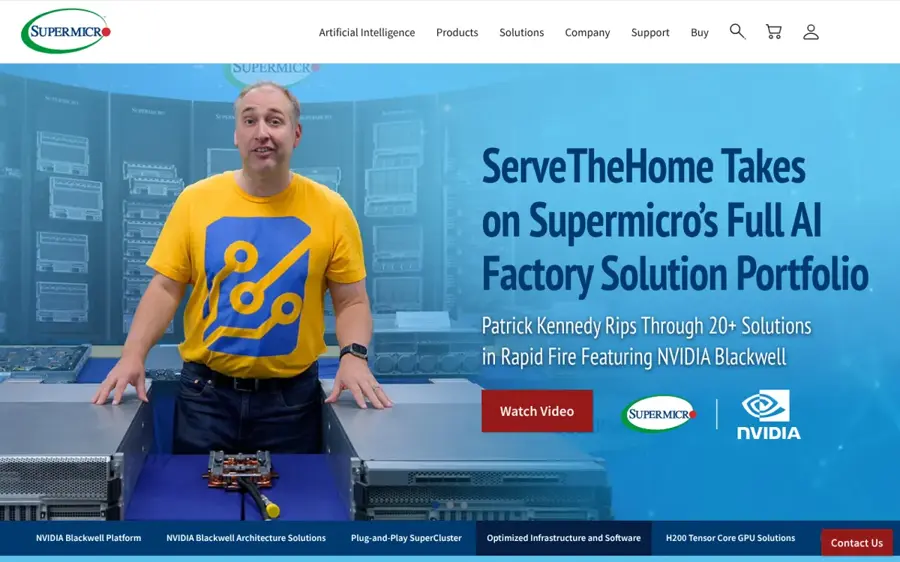
Speed is the selling point. American Compute says Supermicro's lead times of 2-4 weeks are "the fastest in the industry, half the wait of Dell or HPE", and that its pricing undercuts both for similar configurations. Supermicro says its HGX B300 and GB300 NVL72 systems are now shipping.
The history needs a mention, though. Supermicro cut its first-quarter fiscal 2026 revenue forecast to $5 billion from $6-7 billion because of changed delivery timelines, and it was still addressing internal control weaknesses, Capital Brief reported. American Compute also recalls a $17.5 million SEC fine in 2020 over earlier accounting violations. Honestly, I'd still shortlist it, but I'd want firm delivery dates in the contract.
Key features
- Systems for NVIDIA HGX B300, B200 and GB300 NVL72.
- Direct liquid cooling across much of the GPU range.
- Turnkey racks with networking, cabling and cluster-level validation.
- Options for AMD, Intel Gaudi 3 and NVIDIA RTX PRO accelerators.
Pros
- Shortest quoted lead times of the major server makers.
- Usually cheaper than Dell or HPE for similar hardware.
- Very wide range of configurations.
Cons
- Recent delivery slips and past accounting issues.
- Smaller support organisation than Dell, HPE or Lenovo.
- No public pricing for AI systems.
Supermicro pricing: No free plan. Sold by quote through Supermicro and resellers (checked November 2026). See pricing
NVIDIA DGX B300 – best for a full NVIDIA software stack
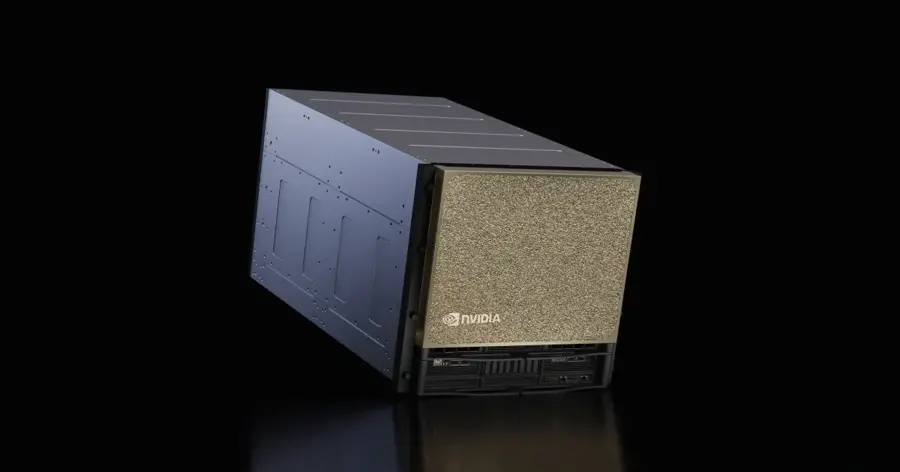
DGX B300 is NVIDIA's own eight-GPU AI system, sold with its DGX OS and designed to scale into DGX SuperPOD clusters. Details are on the NVIDIA DGX B300 page.
Strengths
With DGX, one vendor owns the hardware, operating system and cluster software. The spec table lists eight Blackwell Ultra GPUs, 2.1TB of total GPU memory and 144 petaFLOPS of FP4 performance (sparse), in a 10U box that draws about 14kW. NVIDIA says Eli Lilly is building a DGX SuperPOD on B300 systems for drug discovery.
We couldn't find a public user review or third-party rating for DGX B300. That's common for enterprise hardware.
Key features
- Eight NVIDIA Blackwell Ultra SXM GPUs with 2.1TB of GPU memory.
- Up to 800Gb/s networking through ConnectX-8 ports.
- DGX OS included, with NVIDIA AI Enterprise and Mission Control recommended.
- Three-year business-standard support included.
Pros
- One vendor for hardware and software.
- A clear path from one system to a SuperPOD.
- Three years of support included.
Cons
- About 14kW per system will strain many server rooms.
- NVIDIA AI Enterprise is recommended, not bundled.
- No public pricing or user reviews.
NVIDIA DGX B300 pricing: No free plan. Sold by quote through NVIDIA partners (checked November 2026). See pricing
Cisco UCS C880A M8 – best for Cisco networking shops
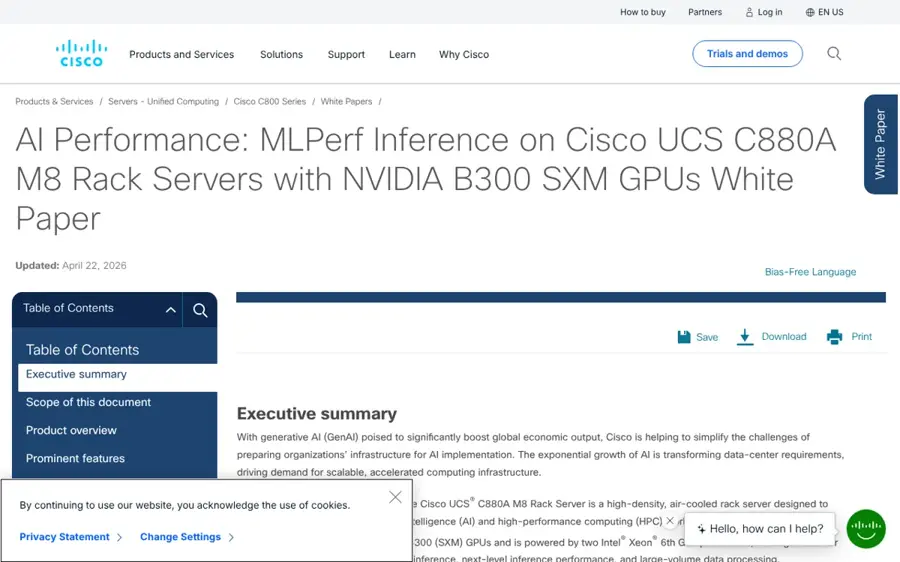
The UCS C880A M8 is Cisco's air-cooled eight-GPU server built on NVIDIA HGX B300. Cisco describes it in its MLPerf white paper.
Strengths
The C880A M8 pairs eight HGX B300 GPUs with two Intel Xeon 6 processors, and it's air-cooled, which matters if your data center isn't plumbed for liquid. Cisco published MLPerf Inference 6.0 results for it in April 2026, though Cisco ran those tests itself. The C885A M8 sibling now ships with eight AMD MI350X GPUs, going by its July 2026 data sheet.
Cisco makes most sense if you already run Nexus switches and Intersight. American Compute is blunt about it: "Nobody's first thought for AI GPU clusters is Cisco." I'd agree for greenfield builds; for a Cisco-heavy shop, one vendor for servers and network is probably worth something.
Key features
- Eight NVIDIA HGX B300 SXM GPUs in an air-cooled chassis.
- Two Intel Xeon 6 processors.
- The C885A M8 sibling offers eight AMD MI350X GPUs.
- Management through Cisco Intersight.
Pros
- Air cooling for B300-class GPUs.
- Fits neatly into Cisco networking and management.
- Choice of NVIDIA or AMD across the family.
Cons
- The C885A data sheet says full Intersight management arrives in a later phase.
- A smaller AI server portfolio than Dell or HPE.
- Fixed configurations limit customisation on some models.
Cisco UCS C880A M8 pricing: No free plan. Sold by quote through Cisco and partners (checked November 2026). See pricing
CoreWeave – best for renting large GPU clusters
CoreWeave is a GPU cloud that rents NVIDIA systems, from RTX PRO 6000 servers up to GB300 NVL72 racks, by the hour. Its rates are on the CoreWeave pricing page.

Strengths
If the point of buying a Lenovo server was to get B300 GPUs, renting them is the fastest route. CoreWeave lists an HGX B300 spot price of $35.84 an hour in North America, plus GB300 NVL72 and RTX PRO 6000 Blackwell options.
Third-party feedback is thin. CoreWeave's Trustpilot profile had no reviews when we checked, which isn't surprising for a company that sells mostly to big AI labs and enterprises.
Key features
- HGX B300 and GB300 NVL72 capacity.
- RTX PRO 6000 Blackwell servers in high- and standard-memory versions.
- Spot pricing for interruptible work.
- Reserved capacity on contract.
Pros
- Access to B300-class GPUs without a purchase order for hardware.
- No data center work on your side.
- GB300 NVL72 racks to rent.
Cons
- Spot capacity can be interrupted.
- Costs add up over a multi-year horizon.
- Almost no public user reviews.
CoreWeave pricing: No free plan. Spot prices from $9.56 an hour for an RTX PRO 6000 Blackwell system (checked November 2026). See pricing
Related: Cloud-native AI platforms
Lambda – best for self-serve GPU instances
Lambda is a GPU cloud with self-serve instances and 1-Click Clusters of NVIDIA B200 and H100 GPUs. Rates are on the Lambda pricing page.

Strengths
Lambda's prices are about as open as this market gets. On its rate card, an eight-GPU HGX B200 instance costs $7.69 per GPU-hour and an HGX H100 instance $4.59, with these new rates taking effect on November 16, 2026.
The reviews are rough, but there aren't many of them. Lambda's Trustpilot page shows a 2.5 score from just five unprompted reviews, and the profile is unclaimed. One review's headline reads: "They will delete all your data with zero warning." I wouldn't judge a cloud on five reviews, but I'd set up billing alerts and backups from day one.
Key features
- Self-serve B200, H100, A100 and GH200 instances.
- 1-Click Clusters from 16 to more than 2,000 GPUs.
- Published per-GPU-hour rates for every instance type.
- Reserved capacity on request.
Pros
- Clear, public pricing.
- Cheap older GPUs for smaller jobs.
- Short cluster contracts.
Cons
- No B300 instances listed on the public price page.
- Poor Trustpilot feedback, mostly about billing and account closures.
- Self-serve capacity is first come, first served.
Lambda pricing: No free plan. Instances from $0.69 per GPU-hour, B200 from $7.69 per GPU-hour (checked November 2026). See pricing
Related: Cloud-native AI platforms
Choosing the right Lenovo AI server alternative
Check your power and cooling first
A DGX B300 draws about 14kW, and HPE's B300 configuration needs liquid cooling. Many older server rooms simply can't host that. If yours can't, Cisco's air-cooled C880A or a cloud rental is probably the realistic option. Our guide to running AI on premises covers the facility side in more detail.
Get a delivery date in writing
Lead times vary more than prices. Supermicro quotes weeks, while Dell's backlog runs into tens of billions of dollars. Lenovo's own AI Express program promises order-to-ship in as little as 15 business days, so ask every vendor to match a firm date.
Run the cloud numbers honestly
American Compute puts an eight-GPU H100 node at $200,000 to $300,000. At Lambda's $4.59 per H100 GPU-hour, eight GPUs running nonstop would cost roughly $320,000 a year, so ownership tends to win if you'll keep the hardware busy for more than a year or so. Utilisation is the swing factor; see our explainer on whether on-premise AI is cheaper than cloud AI.
Reasons buyers look for a Lenovo AI server alternative
Pricing is the first one. Lenovo doesn't list prices for its AI servers, and the SR680a V4 page simply asks you to get in touch. That's normal here, but it slows comparison shopping.
Then there's sentiment. PeerSpot users give Lenovo's ThinkSystem rack servers an average rating of 8.6 out of 10, which is good. But PeerSpot also says Lenovo's mindshare in rack servers fell to 7.0% from 14.9% a year earlier, and its summary of complaints mentions XClarity management, configurator issues and "delays due to supply chain gaps". One reviewer there wrote: "The price of the solution is very expensive when compared to other solution like HP or Dell." Others say the opposite, for what it's worth.
Availability has been an issue before. When StorageReview covered the SR685a V3 and SR680a V3, it said they were "very hard to get a hold of at the moment". That review is older, and Lenovo has since added faster-ship options.
Short version: most people aren't leaving because Lenovo's hardware is weak.
Verdict
For most companies replacing a Lenovo AI server, I'd start with Dell, since it's the closest match on hardware and support. Smaller teams should check first whether they need a server at all; our AI laptops vs GPUs comparison covers workloads that fit on a single card.
Supermicro is my pick if you need hardware quickly and have an in-house team to run it. And if your workload is a project rather than a permanent fixture, I'd rent from CoreWeave or Lambda first and only buy once utilisation is proven. Lenovo's servers are fine machines; the alternatives mostly win on speed, price or fit with what you already own.
FAQ
What is the best alternative to a Lenovo AI server?
For most enterprises, it's Dell's PowerEdge XE9780 or XE9785. They take the same eight NVIDIA HGX B300 GPUs as Lenovo's SR680a V4 and come with large support coverage. Supermicro is likely the better fit if you care more about lead time and price than about a big-name support contract.
Do Lenovo, Dell and Supermicro use different GPUs?
Usually not. All three build around the same NVIDIA HGX baseboards, so a B300 is the same chip in each. The chassis, cooling, management software and support differ, and those affect uptime more than raw speed.
Is it cheaper to rent GPUs than buy an AI server?
For short projects, probably yes. At Lambda's listed H100 rate, eight GPUs running all year cost roughly $320,000, while American Compute puts a comparable node at $200,000 to $300,000 to buy outright. If the hardware stays busy for more than about a year, buying tends to come out ahead, though power, cooling and staff costs narrow that gap.
Which Lenovo AI server alternative ships fastest?
Among hardware vendors, Supermicro, which American Compute says quotes two to four weeks, though it's had delivery slips. Cloud is faster still: Lambda's self-serve instances can be running in minutes if the GPU type you want is free.