Eve Legal AI review: features, pricing and who it's for
Eve Legal AI is an AI platform for plaintiff law firms. Here's what EveOS does, what it likely costs, its downsides and the best alternatives.
 Written byDr. Alap ZahidReviews And Guides Editor
Why you can trust The AI Future
Our writers research every product from its official pages, independent tests and user reports, link each claim to its source and correct mistakes openly. Unless an article says otherwise, we haven't tested the product hands-on ourselves. Companies can't pay for coverage or see reviews before they're published.
Read our editorial policy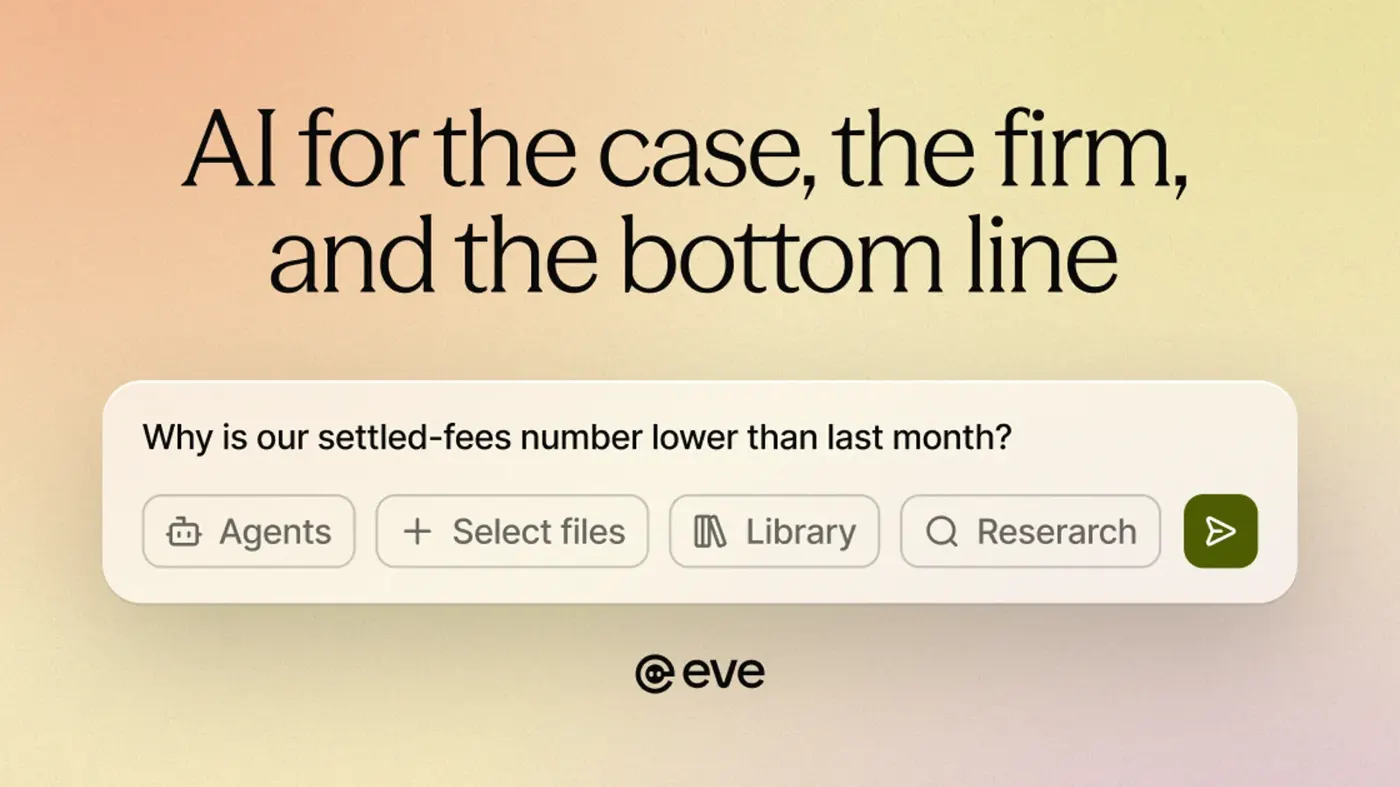
Our verdict on Eve Legal AI (EveOS)
Eve Legal AI is one of the most complete AI platforms for US plaintiff firms, especially busy PI and employment practices. Book a demo and push for a pilot; solo lawyers, defense firms and anyone wanting transparent pricing should look elsewhere.
Pricing No public pricing or free plan; custom quotes after a demo (third-party estimate about $500 per attorney per month)
Visit Eve Legal AI (EveOS)Eve Legal AI is an AI platform built only for plaintiff law firms: personal injury, employment, workers' comp, disability and medical malpractice practices. If that's you, it looks like one of the most complete options out there, covering intake calls, medical chronologies, demand letters and discovery in one place. If you're a defense firm, an in-house lawyer or just someone curious about "eve ai", it isn't built for you, and you can stop reading here (no hard feelings).
The big drawback is money, or rather the lack of any visible price. Eve doesn't publish plans, so every firm has to sit through a sales demo before it learns what it'll pay. That bugs me more than it probably should.
Eve Legal AI overview
Eve is made by Butler Labs, Inc., a San Francisco-area startup co-founded by CEO Jay Madheswaran, a former Facebook engineer and Lightspeed investor. The company now calls its product EveOS, describing it as an "AI operating system for plaintiff firms". On the homepage it says it's "trusted by 1,700+ plaintiff firms".
It's grown fast. In September 2025 Eve raised a $103 million Series B led by Spark Capital at a valuation of over $1 billion, after a $47 million Series A that January and a $14 million seed round in October 2023. That's about $164 million in total. At the time of the Series B, the company counted just over 450 firms as customers, so the jump to 1,700 suggests the money's being spent on sales.
So who's it for? Firms that take cases on contingency and live or die on volume. Eve's pitch is that a plaintiff firm can take on more cases without hiring, because software handles the reading, summarising and first drafts. I think that pitch is credible for the boring, document-heavy work. It's less obvious for anything that needs judgement.
Defense firms, you'll want something else.
Key features
Intake that signs clients on the call
Eve Intake answers calls 24/7 in more than 28 languages, scores the lead and sends the retainer for e-signature before the caller hangs up. Qualified leads then sync to the firm's CRM. For PI firms that lose clients to whoever calls back first, this might be the feature that pays for the whole thing.
Medical chronologies
Upload hundreds or thousands of pages of medical records and bills, and Eve builds a dated treatment timeline with the gaps and pre-existing conditions flagged. One analyst profile of the company describes a 15-minute turnaround target for chronologies. Eve keeps the timeline updated as new records come in, which matters, because records rarely arrive all at once.
A good chronology is the backbone of a PI demand. If Eve gets the dates or providers wrong, everything built on top of it inherits the error, so I'd spot-check the first few against the source PDFs line by line until your team trusts it.
Demand letters and drafting
Eve drafts demand letters "using your style, formatting, and case facts", along with complaints, good faith letters and motions. Firms can build their own templates, so the output should sound like the firm rather than a chatbot. You'll still want a lawyer reading every page before it goes out; that's true of every legal AI, and Eve doesn't claim otherwise.
Discovery in both directions
Propounding discovery means generating interrogatories, requests for admission and requests for production. Responding means Eve suggests objections and drafts answers.
For employment cases, Eve claims discovery response times drop by more than 90% and that attorneys get back 20 hours a week. Those are vendor numbers, so I'd treat them as a best case.
Research, Auditor and Analyst
Eve Research looks up case law, statutes, regulations and medical literature from inside a matter, with citations you can open and check. Auditor goes through every active matter overnight and flags buried injuries, treatment gaps and the next best step. Analyst lets partners ask plain-English questions about revenue, margins and settlement pace. I'd guess Auditor is the sleeper here: a nightly check on hundreds of files is exactly the kind of work no paralegal has time for.
Integrations and security
The integrations pull calls, emails, texts and faxes onto the right matter and push court dates onto Outlook or Google calendars. On the security side, Eve's trust page says its program follows the SOC 2 framework, data's encrypted at rest and in transit, it runs at least one third-party penetration test a year and customer data sits in US-based AWS databases. That's what a firm's IT person will want to see first.
Eve Legal AI pricing
There's no price list. Eve sells through demos and custom quotes, and the old /pricing URL now returns a "page not found" error. One investment research profile estimates the cost at about $500 per attorney per month, but that's a third-party figure, not an Eve number, and your quote could be higher or lower.
| Plan | Price | Notes |
|---|---|---|
| Free plan | None | No self-serve signup or free tier |
| Free trial | Not advertised | Ask during the demo |
| Firm subscription | Custom quote | Third-party estimate: around $500 per attorney per month |
For a ten-lawyer firm, that estimate works out to roughly $60,000 a year. Is it worth it? If Eve's own math holds even halfway (the homepage claims customers see 15 to 30% higher settlements), probably yes. But you can't check that until you're already talking to a salesperson, which is exactly the problem.
Honestly, I'd ask for a pilot on a handful of closed cases before signing anything. Compare Eve's chronology and demand letter with what your team actually sent.
Performance and independent testing
Short version: it's hard to judge from outside.
I couldn't find a published, independent benchmark of Eve's accuracy. That's normal for legal AI sold to firms rather than the public, but it means most of what's out there comes from Eve and its customers.
The customer-side numbers are big. Eve says it processes more than 200,000 legal cases a year and that its firms have collectively recovered over $3.5 billion in settlements and judgments. It lists Mike Morse Law Firm next to a "3x more cases" claim, and it says it's rated 4.9 out of 5 on G2 by plaintiff firms. I couldn't load G2's page to confirm the review count, so take that score as Eve's own claim for now.
One thing I like: Eve is upfront about why general chatbots are risky for this work. Its guide for PI lawyers points to United States v. Heppner, where a federal court found a client's chats with a consumer AI tool weren't protected. A purpose-built tool with confidentiality terms is a reasonable answer to that, though it doesn't remove the need to check every citation. Hallucinated case law has already got lawyers sanctioned, and a nicer interface won't change the fact that a model can be wrong.
Best suited to
- Personal injury firms handling dozens or hundreds of open cases with heavy medical records.
- Employment, workers' comp, Social Security disability and med-mal practices, which Eve supports directly.
- Firms that miss after-hours intake calls and want them answered and signed.
- Managing partners who want live numbers on revenue and case pace without a data team.
It's a poor fit for defense firms, transactional lawyers, solo practitioners on a tight budget and anyone outside the US, since Eve's data's hosted in the US and its research is built around US law. For a wider look at the options, our guide to the best lawyer AI tools covers general-purpose picks too.
Eve Legal AI alternatives
EvenUp
EvenUp is probably Eve's closest rival. It's focused on personal injury, started with demand letters, and now drafts documents at every stage of a case, with line-level citations so you can check each fact. It says it's SOC 2 audited and HIPAA attested. If demand letters are your main bottleneck, I'd put it on the shortlist next to Eve.
Supio
Supio targets plaintiff law and mass torts, with an agent that works at both the case and firm level. It lists SOC 2, HIPAA, PHIPA and GDPR compliance. Mass tort firms in particular should compare it with Eve.
A general assistant, carefully
Some small firms will lean on a general AI assistant such as Claude for drafting help and keep client data out of it. It's far cheaper, but it doesn't know your case files, and the privilege issue above is real. Our list of ChatGPT alternatives covers the main options.
Verdict
I'd rate Eve Legal AI a 4 out of 5. It covers more of a plaintiff case than almost anything else I've read about, from the first phone call through discovery, and the overnight Auditor is a smart idea. The fast growth to 1,700+ firms suggests plenty of lawyers think it's worth paying for.
What holds it back is opacity. No public prices, no free tier and no independent accuracy tests mean you're buying partly on trust. If you run a busy PI or employment practice, book the demo and push hard for a pilot. If you're a solo or a defense lawyer, skip it. And if you're wondering whether tools like this will put you out of work, we've written about whether lawyers will be replaced by AI (short answer: I doubt it, but the job's changing).
FAQ
Is Eve Legal AI free?
No. Eve doesn't have a free plan or a public free trial. Firms book a demo and get a custom quote, and one third-party estimate puts the price at around $500 per attorney per month. Ask about a pilot or trial period during the demo, since that isn't advertised on the site.
Who owns Eve Legal AI?
Eve is a Butler Labs, Inc. company, led by co-founder and CEO Jay Madheswaran. It's venture-backed, with investors including Spark Capital, Andreessen Horowitz, Lightspeed Venture Partners and Menlo Ventures. Its September 2025 Series B valued it at over $1 billion.
Is Eve the same as other "Eve AI" products?
No. Several unrelated products share the name, including a crypto token. Eve Legal, now sold as EveOS, is the legal one.
Is Eve Legal AI secure enough for client data?
Eve says its security program follows the SOC 2 framework, encrypts data at rest and in transit, runs yearly third-party penetration tests and stores data in US-based AWS databases. That's a solid baseline, but your firm should still review the contract's confidentiality and data-use terms before uploading anything.
Can Eve replace a paralegal?
I don't think so, at least not fully. Eve handles the first pass of chronologies, demands and discovery, which frees up hours, but someone still has to check its work and talk to clients. Our piece on whether AI will replace paralegals goes into this in more detail. In practice, I'd expect firms using Eve to shift paralegals toward client contact, records requests and quality checks rather than cut them, at least for now. A tool that drafts a demand in minutes still needs someone who knows the client's story to catch what the records leave out.
What we like
- Covers intake, medical chronologies, demands, discovery and research in one app
- 24/7 intake calls in 28+ languages with retainers signed on the call
- Overnight Auditor flags treatment gaps and buried injuries across every matter
- SOC 2-based security program with US-hosted, encrypted data
- Used by 1,700+ plaintiff firms
What could be better
- No published pricing, free plan or self-serve trial
- No independent accuracy benchmarks
- Only built for US plaintiff practices
- Outputs still need full attorney review