Why does AI use water? Cooling, power plants and chips explained (2026)
AI uses water to cool hot chips, to generate its electricity and to make the chips themselves. Here is how each works, and why location matters.
 Written byFahad HashmiContributing writer, AI in energy and industry
Why you can trust The AI Future
Our writers research every product, link each claim to its source and correct mistakes openly. Companies can't pay for coverage or see reviews before they're published.
Read our editorial policy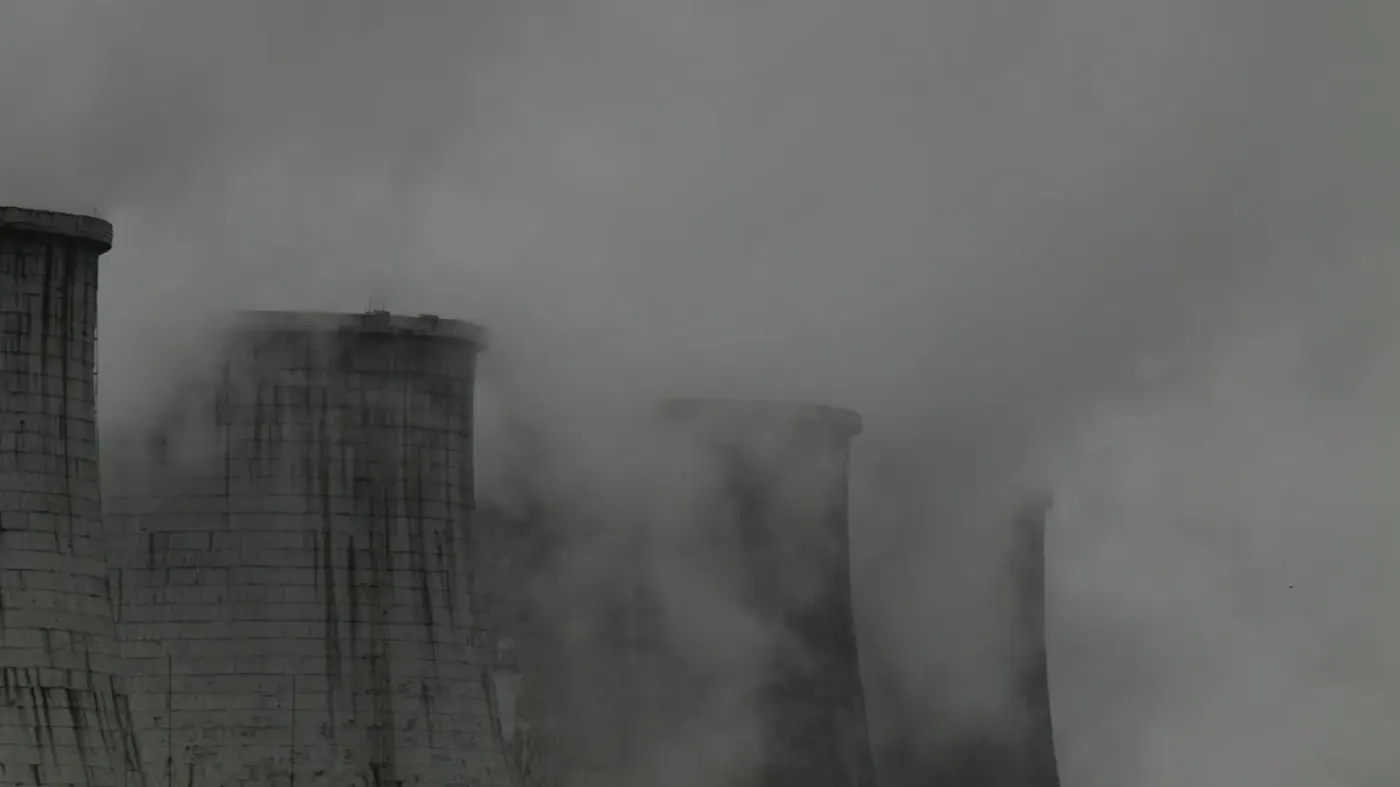
AI uses water because the chips that run it turn electricity into heat, and in many data centres the cheapest way to dump that heat is to evaporate water. The power plants behind the electricity evaporate even more. The factories that make the chips need huge volumes of ultrapure water too. So the honest answer is cooling, electricity and manufacturing, which is the order in which you'll see them, though I don't think it's the order of their size.
Our sister guides cover the totals: how much water AI uses per prompt and per year, and how much water AI uses per day. This page is about the mechanism, the plumbing behind those numbers. It's based on published research and company reports as of late October 2026.
Short answer: why does AI use water?
AI servers run hot. Data centres remove that heat with cooling towers that evaporate water, or with air and closed-loop systems that use less water on site but more electricity. Generating that electricity at gas, coal and nuclear plants also evaporates water, usually more than the data centre itself. Making the chips adds a third, largely hidden share.
The three places AI uses water
The clearest framework comes from the paper "Making AI Less Thirsty" by Pengfei Li, Shaolei Ren and colleagues. They split AI's water into three scopes. One distinction matters throughout. Withdrawal is water taken from a river, lake or aquifer; consumption is the part that never comes back, mostly because it evaporates.
1. On-site cooling (scope 1)
Nearly all the power a GPU draws ends up as heat. In a cooling tower, warm water from the building is sprayed over a heat exchanger and some of it evaporates, carrying heat away. The paper notes that the rest can only be recycled "typically 3–10 cycles" before minerals build up and it has to be flushed, so fresh water, often drinking-quality, has to keep being added. With good water quality, roughly 80% of the water withdrawn ends up evaporated.
How much? According to the same paper, data centres evaporate roughly 1 to 9 litres per kWh of server energy: about 1 L/kWh for Google's annual global average, and up to 9 L/kWh for a large commercial site in an Arizona summer.
2. Electricity generation (scope 2)
Thermal power plants boil water into steam to spin turbines, then cool it, often in their own cooling towers. Li and Ren put the US average at about 3.1 litres of water consumed per kWh generated, and note that Meta's self-reported figure for its fleet was 3.7 L/kWh. That's why scope 2 usually dwarfs scope 1.
Lawrence Berkeley National Laboratory estimated US data centres consumed 17 billion gallons directly for cooling in 2023 and about 211 billion gallons indirectly through electricity, roughly 12 times more, as researchers at the University of Wisconsin-Milwaukee explain. Meta says about 96% of its 21 billion gallons of 2024 water use was indirect, according to Bloomberg. That split surprised me; I'd have guessed the cooling towers were the bigger story.
Wind and solar change the picture. Google's Ben Townsend told Bloomberg that "With wind, solar, storage, these projects have effectively zero water footprint."
3. Chip and server manufacturing (scope 3)
Chip fabs rinse silicon wafers with ultrapure water to wash off microscopic particles that would cause defects. Robeco cites industry estimates that a single fab can use roughly 20 to 38 million litres a day, and says TSMC consumed 101 billion litres in 2023. TSMC's first fab in Phoenix uses about 4.75 million gallons a day, according to DatacenterDynamics. The Li and Ren paper points out that Apple reports its supply chain makes up 99% of its total water footprint, so the hardware can matter more than the use. This scope is the least measured, which is probably why most AI water estimates leave it out. To see who makes these chips, read our guide to AI chip companies.
Evaporative against closed-loop cooling: a worked example
The cooling choice is a trade-off between water and electricity. Evaporative systems use little energy but a lot of water. Closed-loop systems fill a sealed circuit once and recirculate it through chillers, so on-site water drops close to zero, but the chillers use more power. The Wisconsin researchers sum it up: closed loops do "not require constant addition of large volumes of water, but it uses a lot more energy to run the chillers."
To make the trade-off concrete, here's an original illustration. Take a hypothetical AI campus with 100 MW of servers running flat out all year. That is 876 million kWh. Multiply by the per-kWh factors above (we ignore cooling overhead and chip manufacturing to keep it simple):
| Setup | On-site water (L/kWh) | Power-plant water (L/kWh) | Rough total per year |
|---|---|---|---|
| Cooling towers, mild climate | About 1 | About 3.1 (US grid) | About 3.6 billion litres |
| Cooling towers, Arizona summer rate all year (upper bound) | Up to 9 | About 3.1 | About 10.6 billion litres |
| Closed loop, US grid | Near zero | 3.1 or more (chillers add load) | About 2.7 billion litres or more |
| Closed loop, wind and solar power | Near zero | Near zero | Far lower, but chips still carry a water cost |
Two things fall out of this maths. First, even in the mild-climate case, the power-plant water (about 2.7 billion litres) is three times the on-site water (about 0.9 billion). Second, switching to closed-loop cooling on a fossil-heavy grid cuts the visible water but leaves most of the total in place. I think the cleanest fix is the combination: low-water cooling plus low-water electricity.
For scale, an Olympic pool holds about 2.5 million litres, so 3.6 billion litres is roughly 1,400 pools a year. For a sense of how large real campuses are getting, see how big AI data centers are.
Location and climate in practice
The same server uses very different amounts of water depending on where it sits. Cooling towers get thirstier as the outside wet-bulb temperature rises, and "free" outside-air cooling still needs water when the air is too hot (the paper cites above 85°F) or too dry.
- Air-cooled against water-cooled sites: Google's air-cooled data centre in Pflugerville, Texas consumed just 10,000 gallons in 2024, while its Council Bluffs, Iowa campus consumed about 1 billion gallons.
- Drought regions: Bloomberg reports that Phoenix-area cities rely on the Colorado River for 20% to 50% of their water, and that the federal government announced a 27% cut to Arizona's allocation in August 2026. Bloomberg Intelligence expects data centres under construction to push on-site demand there to 5 billion gallons a year.
- Cool, wet regions: The Great Lakes attract developers because of a cool climate and abundant water, the Wisconsin researchers note, though data centres then compete with the drinking water of more than 40 million people.
A litre evaporated from a stressed aquifer probably costs a community far more than a litre in a wet region. Global averages hide that.
Company responses
- Microsoft: all data centres designed from August 2024 use a closed-loop, "zero-water evaporation" design, piloting at Phoenix and Mount Pleasant, Wisconsin in 2026 and coming online from late 2027, DatacenterDynamics reports. Microsoft says each data centre typically used more than 125 million litres a year, and its fleet average WUE was 0.30 L/kWh. It admits power use will rise slightly, which seems a fair trade.
- Google: it says it will only use water cooling where local water sources are healthy, choosing air cooling or recycled water where they are at risk, and reuses treated wastewater at its Douglas County, Georgia campus. It pledged to replenish 120% of the water its sites use by 2030, and its 2026 environmental report says it replenished about 7.7 billion gallons in 2025, roughly 78% of its freshwater consumption.
- Amazon: AWS says water efficiency at its data centres improved 52% since 2021, per Bloomberg.
- Meta: one of the few to publish indirect water, which is how we know 96% of its footprint sits at power plants.
- TSMC: a reclamation plant at its Phoenix site, due in 2028, aims to recycle around 85% of water at first, cutting the first fab's demand from 4.75 million to under 1.2 million gallons a day.
Benefits and limitations of the fixes
The gains are real. Per-unit efficiency keeps improving, and on-site water in the newest designs is heading towards zero. But each fix has a failure mode.
- Water moves off site: A 2025 study co-authored by Kerri Hickenbottom found that in the Phoenix area, air-cooled chillers can have indirect water use more than 2.5 times that of water-cooled ones, Bloomberg reports, because they need more electricity.
- Replenishment isn't the same watershed: a global "120%" figure can coexist with a stressed local aquifer.
- No standard for indirect water: AWS's Brandon Oyer told Bloomberg, "We need industry alignment on one if we're going to collectively report indirect water consumption." Google's per-prompt figure of 0.26 mL counts only on-site water.
- Volume beats efficiency: cheaper prompts likely lead to more prompts. Morgan Stanley's projection, covered in our main water guide, has AI water use growing about elevenfold from 2024 to 2028.
Implications for you
Your own chatbot use is a small share; our per-day guide puts even heavy daily use at a few litres at most. The bigger lever is reading the claims carefully. Honestly, these four questions get you most of the way:
- Ask which scope is counted. On-site only, or power plants too? The answer can change a figure tenfold.
- Ask where. Water use in a desert matters more than the same volume in a wet region.
- Ask about the grid. A "zero-water" data centre on a gas-fired grid still consumes water.
- Don't ignore chips. Most estimates skip manufacturing entirely.
For energy and emissions alongside water, read our take on whether AI is bad for the environment.
Next steps for the industry
I'd expect more closed-loop and direct-to-chip cooling, since dense AI racks need liquid cooling anyway. I'd also expect more pressure to report scope 2 water: Alex de Vries-Gao argues in a study in Patterns that companies should report it just as they report indirect carbon emissions. Siting fights in dry places will probably multiply as well. The open question is whether clean power arrives fast enough to cut the larger, invisible share of AI's water, because better cooling alone can't.
FAQ
How much water did AI use in 2025?
There isn't an official figure. A study in Patterns by Alex de Vries-Gao estimates AI systems used between 312.5 and 764.6 billion litres in 2025, counting cooling and electricity. For context, a UN University report puts all data centres, AI and non-AI, at about 4.5 trillion litres of water consumed in 2025.
How much water has AI used in 2025?
Estimates range widely because few companies publish AI-specific data. De Vries-Gao's 312.5 to 764.6 billion litres is the most direct AI-only estimate, roughly the world's annual bottled water consumption. Company reports give partial views: Google says it replenished 7.7 billion gallons in 2025, about 78% of its freshwater consumption.
Why does AI need water?
AI chips turn almost all the electricity they use into heat, and overheating damages them. Evaporating water in cooling towers is one of the cheapest, most energy-efficient ways to remove that heat. Power plants supplying the electricity also evaporate water, and chip factories use ultrapure water to rinse wafers during manufacturing.
Why does AI need to use water instead of just air?
It doesn't always. Air cooling and closed-loop systems can cut on-site water close to zero, and some Google and Microsoft sites already do. The catch is electricity: chillers use more power, and on a fossil-fuel grid that extra power consumes water at the plant. In the Phoenix area, air-cooled chillers' indirect water use can exceed water-cooled systems by 2.5 times.
Does the water AI uses disappear?
Not from the planet, but from the local supply. Evaporated water returns as rain somewhere else, often far away. That's why researchers focus on consumption rather than withdrawal: water that evaporates from a cooling tower in Arizona doesn't refill the Colorado River.
Sources
- Making AI Less Thirsty: Uncovering and Addressing the Secret Water Footprint of AI Models (arXiv)
- Data centers consume massive amounts of water – companies rarely tell the public exactly how much (AIhub / The Conversation)
- AI's Water Strain Includes Surging Demand From Electricity Use (Insurance Journal / Bloomberg)
- Microsoft's upcoming data centers to use closed loop, zero-water evaporation design (DatacenterDynamics)
- Microsoft Unveils Zero-Water Data Centers to Reduce AI Climate Impact (Data Center Knowledge)
- Why the future of chips depends on water (Robeco)
- TSMC breaks ground on water reclamation project in Phoenix, Arizona (DatacenterDynamics)
- Google will replenish more water than it uses at data centers (9to5Google)
- Google 2026 Environmental Report (Google)
- AI's hidden carbon and water footprint (VU Amsterdam)
- UN University data center water report coverage (Insurance Journal)
- Google: median Gemini prompt uses 0.24 watt-hours of power and consumes 0.26ml of water (DatacenterDynamics)