How much water does AI use in 2026? The drops, the totals and what they miss
A single AI prompt uses a few drops to a few tablespoons of water, depending on who's counting. Across the industry, it adds up to billions of litres a year.
 Written byBurhan AqibSenior writer, policy and analysis
Why you can trust The AI Future
Our writers research every product, link each claim to its source and correct mistakes openly. Companies can't pay for coverage or see reviews before they're published.
Read our editorial policy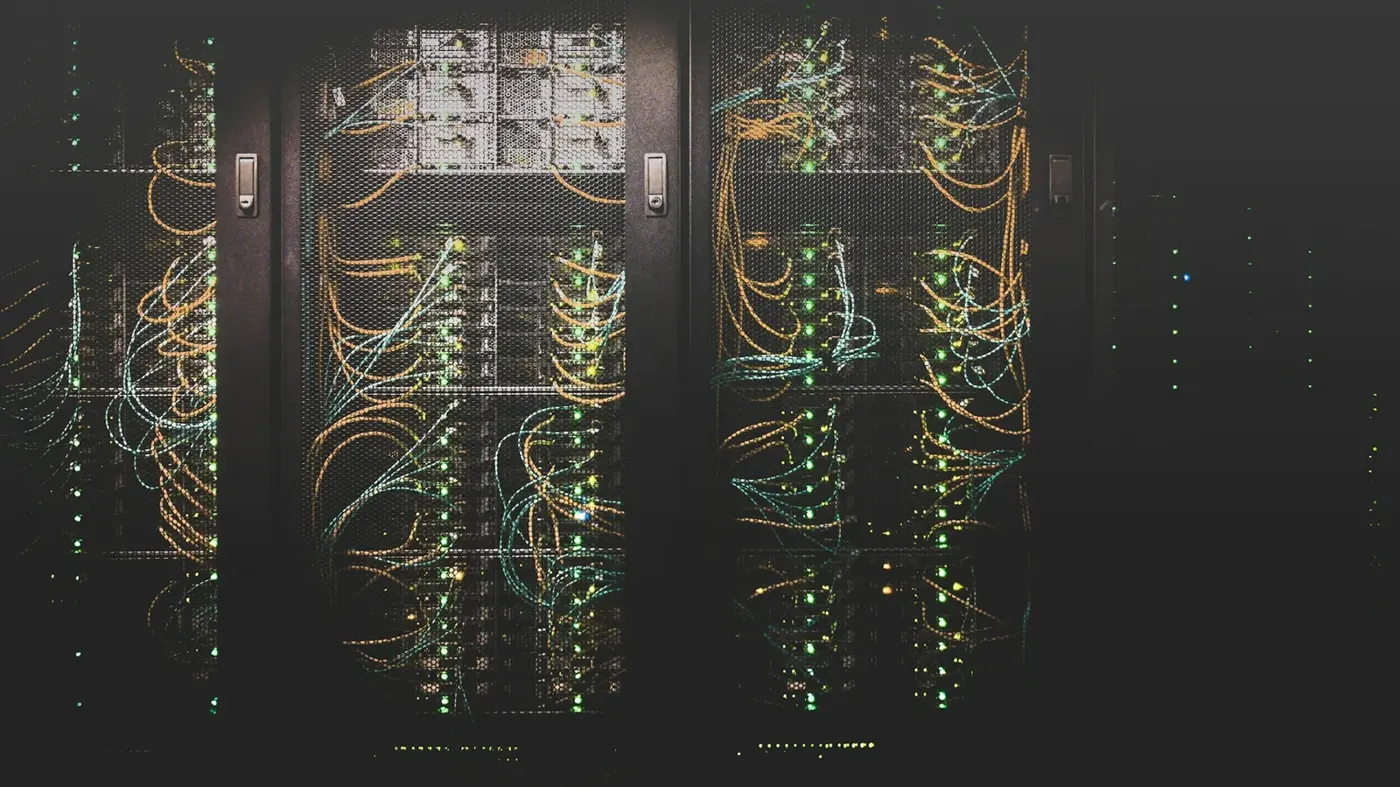
Ask a chatbot to summarise an email and, somewhere in a warehouse full of humming chips, a little water turns to vapour. How much water does AI use? For a single text prompt, the published estimates run from about a quarter of a millilitre (Google's figure for Gemini) to roughly 10 to 50 millilitres once you count the water used to generate the electricity. Across the whole industry, though, the totals reach billions of litres a year, and they are rising fast.
Both of those statements are true at once, and that is why the topic gets so heated. One side points to the tiny drop per prompt. The other points to the giant totals and to the towns that sit next to new data centers. We think the honest picture needs both, so this explainer walks through how AI uses water, what the best numbers say as of late October 2026, and where the gaps are.
Short answer: how much water does AI use?
Per prompt, very little: Google says a median Gemini text prompt uses 0.26 mL, about five drops. Per year, a lot: a United Nations University report says data centers worldwide consumed 4.5 trillion litres of water in 2025 and could reach 9.3 trillion litres by 2030, with AI as a major driver.
The gap between those two numbers is partly about scale (billions of prompts a day add up) and partly about what each study chooses to count. Most of the disagreement you see online comes from the second point, not the first.
How it works: why does AI need water?
An AI model runs on specialised chips that turn electricity into heat. Pack thousands of them into one building and the heat has to go somewhere. The cheapest, most energy-efficient way to remove it in many climates is evaporation: data centers pump water through cooling towers, and some of it evaporates, carrying heat away. Your body does the same thing when you sweat.
That evaporated water is gone from the local supply, which is why researchers separate two ideas. In the widely cited paper "Making AI Less Thirsty", Pengfei Li, Shaolei Ren and colleagues define water withdrawal as freshwater taken from rivers, lakes or aquifers, and water consumption as the part that is not returned, mostly because it evaporates. Consumption is the number that matters most for a stressed river.
The same paper splits AI's water into two scopes:
- On-site (scope 1): water used to cool the data center itself.
- Off-site (scope 2): water used by power plants to make the electricity. Gas, coal and nuclear plants boil water into steam and cool it again, and much of that evaporates too.
The second category is easy to forget, but it is usually the bigger one. Researchers at the University of Wisconsin-Milwaukee, writing in The Conversation, note that Lawrence Berkeley National Laboratory estimated US data centers consumed 17 billion gallons of water directly for cooling in 2023, and about 211 billion gallons indirectly through their electricity, roughly 12 times more. Meta reported that about 96% of its 21 billion gallons of 2024 water use was indirect, according to Bloomberg.
Training a model also uses water, but it is a one-off cost spread over every later use. Li and Ren estimated that training GPT-3 in Microsoft's US data centers consumed about 5.4 million litres in total. Mistral's audited study found that training and 18 months of use of its Mistral Large 2 model consumed 281,000 cubic metres of water.
Real examples: what the numbers actually say
Here is where it gets confusing, because the per-prompt figures differ by more than a hundredfold. They are not necessarily contradictory. They measure different things, for different models, in different years.
| Estimate | Water per text response | What it counts |
|---|---|---|
| Google, Gemini Apps median prompt (Aug 2025) | 0.26 mL (about 5 drops) | On-site cooling only; excludes water used to make electricity |
| Sam Altman, average ChatGPT query (2025) | 0.000085 gallons (about 0.32 mL) | Not detailed publicly |
| Mistral, 400-token Le Chat response (July 2025) | 45 mL | Full life-cycle method audited with Carbone 4 and ADEME |
| Li, Ren et al., GPT-3 medium-length response | About 10 to 50 mL (500 mL per 10 to 50 responses) | On-site cooling plus power-plant water, older hardware |
Sources: DatacenterDynamics on Google's study (which also reports Altman's figure), Mistral, Li, Ren et al.. Millilitre conversions for Altman's figure are ours.
To make this concrete, here is an original back-of-envelope comparison. A teaspoon holds about 5 mL. At Google's figure, you would need around 19 Gemini prompts to use one teaspoon of water. At Mistral's figure, a single response uses about nine teaspoons. If you sent 50 prompts a day, that is roughly 13 mL a day on Google's accounting, or more than two litres on Mistral's or Ren's. A two-litre gap from method alone is a good reminder to ask "what's included?" before quoting any number.
Google's own paper, Measuring the environmental impact of delivering AI at Google scale, includes chips, host computers, idle capacity and data center overhead, but leaves out model training, networks and the energy-related water at power plants. Shaolei Ren told DatacenterDynamics that Google was "just hiding the critical information" by omitting indirect water. Google's figure also covers only the median text prompt; image and video generation and long reasoning tasks use far more compute.
Zoom out to the building level and the numbers stop sounding small. Cardinal News reports that Google's largest data center complex, in Council Bluffs, Iowa, used about 1.75 billion gallons in a year, which it compares to about nine golf courses. A planned site in Botetourt County, Virginia, is contracted for 2 million gallons per day, with a possible expansion to 8 million.
How much water does AI use per year?
Nobody publishes a clean "AI only" global figure, because data centers run email, streaming and cloud storage too. The best ranges we have:
- All data centers, 2025: 4.5 trillion litres, rising to about 9.3 trillion by 2030, according to the UN University Institute for Water, Environment and Health.
- AI data centers specifically: Morgan Stanley estimated annual water use for cooling and electricity could reach about 1,068 billion litres by 2028, roughly 11 times the 2024 level, within a range of 637 to 1,485 billion litres.
- Projection for AI demand in 2027: Li and Ren projected 4.2 to 6.6 billion cubic metres of water withdrawal, more than the annual withdrawal of four to six Denmarks.
How much water does AI use a day?
Dividing those annual figures by 365 gives a rough sense of scale. The UN University total works out to about 12 billion litres a day for all data centers. Morgan Stanley's 2028 estimate for AI works out to about 2.9 billion litres a day. In the US, LBNL's 2023 figures mean about 47 million gallons a day for direct cooling and nearly 580 million gallons a day once electricity is included. These are our calculations from the published annual totals, not figures the researchers stated.
Benefits and limitations of the reassuring numbers
There is a fair case on the industry's side. Per-use efficiency is improving quickly: Google says the energy footprint of a median Gemini prompt fell 33-fold in a year. Microsoft says its new closed-loop cooling design for sites in Phoenix and Wisconsin will avoid more than 125 million litres of water per data center each year. Amazon says its water efficiency improved 52% since 2021. And Google, which says it replenished about 7.7 billion gallons in 2025, around 78% of its freshwater consumption, has pledged to replenish 120% of the water its data center sites use by 2030.
The limitations are just as real. First, efficiency per prompt does not cap the total when the number of prompts keeps climbing. Second, many headline figures leave out power-plant water, which is often the majority. Third, cutting on-site water can raise water use elsewhere: Bloomberg reports a 2025 study finding that air-cooled chillers in the Phoenix area can have indirect water consumption more than 2.5 times that of water-cooled ones, because they need more electricity. Fourth, replenishment projects often happen in different watersheds from the data centers themselves, so a global percentage says little about one town's aquifer.
Location matters most of all. A litre evaporated in rainy Ireland is not the same as a litre taken from the Colorado River, where the federal government announced a 27% cut to Arizona's allocation in August 2026. Bloomberg Intelligence estimates that projects under construction could push on-site data center demand in the Phoenix area to 5 billion gallons a year.
What it means for you
If you are worried about your own chatbot use, the evidence suggests your personal share is modest. Even on the higher estimates, a day of heavy text prompting uses a few litres at most, less than a single shower. That does not make individual use meaningless, but it does put it in proportion. For the broader picture, our guide to whether AI is bad for the environment covers energy and emissions too.
A few practical habits still help, and they tend to save you time as well:
- Write better prompts. One clear request beats five rounds of "try again". Our guide to writing better AI prompts shows how.
- Use the smallest tool that does the job. Long reasoning modes, video and image generation use far more compute than a quick text answer.
- Don't regenerate for fun. Each extra image or video is real work on real chips.
Where your voice matters more is local. If a data center is proposed near you, it is reasonable to ask what cooling it uses, where its water and power come from, and whether it will publish site-level water figures. Bloomberg reports that at least 45 data center projects worth nearly $68 billion were blocked or delayed between April and June 2026, so these questions clearly carry weight.
What happens next
Three things seem likely. More disclosure, because public pressure is working and companies such as Google now publish water use by site. More pressure to count indirect water, which AWS's Brandon Oyer acknowledged when he told Bloomberg, "We need industry alignment on one if we're going to collectively report indirect water consumption." And more siting fights in dry regions, as AI demand runs into drought.
What we don't know is just as important. We don't have audited, comparable per-prompt figures from every major lab, and there is no agreed standard for including power-plant water. We are also guessing about demand: if AI use keeps compounding the way the Morgan Stanley and UN University projections assume, efficiency gains may only slow the curve rather than bend it. Our view is that the tiny-drop figures and the trillion-litre figures are both honest answers to different questions. The useful question is not "does AI use water?" but "whose water, where, and how much of it comes back?"
FAQ
How does AI use water?
AI uses water in two main ways. Data centers evaporate water in cooling towers to remove heat from the chips that run AI models. Power plants that supply the electricity also consume water, often more than the data center itself. Smaller amounts go into chip manufacturing and the one-off training of each model.
How is AI using water?
Mostly through evaporation. Water is pumped through cooling systems, absorbs heat from servers and evaporates, so it is lost from the local supply. Some newer data centers use closed-loop or air cooling that consumes little on-site water, but these designs can increase electricity use and with it the water used at power plants.
Why does AI need water?
AI chips convert electricity into heat, and too much heat damages them. Evaporative cooling is one of the cheapest and most energy-efficient ways to keep large data centers at safe temperatures. Generating electricity also needs water, especially at gas, coal and nuclear plants that rely on steam turbines and cooling towers.
How much water does AI use per year?
There is no precise AI-only figure. A UN University report says all data centers consumed 4.5 trillion litres in 2025, rising to around 9.3 trillion by 2030. Morgan Stanley estimates AI data centers alone could use about 1,068 billion litres a year by 2028, counting both cooling and electricity generation.
How much water does AI use a day?
Dividing published annual figures by 365, all data centers globally use roughly 12 billion litres a day, and Morgan Stanley's 2028 AI estimate works out to about 2.9 billion litres a day. For one person, 50 text prompts a day uses anywhere from about 13 mL to a little over two litres, depending on whose estimate you use.
Sources
- Google median Gemini prompt uses 0.24 watt-hours of power and consumes 0.26ml of water (DatacenterDynamics)
- Measuring the environmental impact of delivering AI at Google Scale (arXiv / Google)
- Making AI Less "Thirsty": Uncovering and Addressing the Secret Water Footprint of AI Models (arXiv)
- Our contribution to a global environmental standard for AI (Mistral AI)
- AI to Double Data Center Power, Water Use by 2030, UN Researchers Say (Insurance Journal)
- AI Data Centers' Water Use Grows in Drought-Stricken Areas (Bloomberg via Insurance Journal)
- Data centers consume massive amounts of water, companies rarely tell the public exactly how much (AIhub / The Conversation)
- Google 2026 Environmental Report (Google Sustainability)
- Google says it will replenish more water than it uses at data centers amid public pushback (9to5Google)
- By water use, Google's Botetourt site would be its 8th largest data center complex in the world (Cardinal News)
- AI data centres to drive global water usage 11-fold by 2028: Morgan Stanley (Storyboard18)
- Microsoft Unveils Zero-Water Data Centers to Reduce AI Climate Impact (Data Center Knowledge)