Best AI search engines and tools in 2026: 10 picks, ranked
Perplexity, Google AI Mode, ChatGPT and more: the best AI search engines for finding answers, plus the AI search monitoring tools worth paying for.
 Written byMuhammad Usman SiddiquiFounder and editor-in-chief
Why you can trust The AI Future
Our writers research every product, link each claim to its source and correct mistakes openly. Companies can't pay for coverage or see reviews before they're published.
Read our editorial policy
Short answer: the best AI search engine for most people in 2026 is Perplexity, because every answer comes with clickable citations and the free plan is genuinely usable. If you live in Google already, AI Mode is free and now handles over a billion monthly users. If you need to track how your brand shows up in AI search, start with the Semrush AI Visibility Toolkit at $99 a month.
AI search means asking a question in plain language and getting a written answer built from live web results, with sources, instead of a page of ten blue links. That shift has split the market in two. On one side are the AI search engines you use to find things. On the other are AI search monitoring tools that marketers use to see whether ChatGPT, Gemini or Perplexity mention their brand.
This guide covers both. We picked six AI search engines and four AI search tracking tools, compared them using official pricing pages, product announcements and independent reviews, and ranked them for value. Everything below was checked in late October 2026.
Key takeaways
- Perplexity is the best all-round AI search engine. Cited answers, a usable free tier and a $20 Pro plan.
- Google AI Mode is the best free option. No signup beyond a Google account, and it is built into the search box you already use.
- Kagi is the pick if you want privacy and no ads. You pay from $5 a month, and that is the point.
- For brand tracking, budget at least $99 a month. Semrush is the easiest entry point; Profound is the enterprise choice.
How we ranked them
To be clear about method: nobody at The AI Future ran a formal hands-on test of these tools for this article. Instead, we compared each one using its official pricing and product pages, recent launch announcements, and published independent reviews, as of late October 2026. Where a claim comes from someone else, we link to it. Our ratings below are editorial scores based on this research, not third-party averages.
- Answer quality and sourcing: does it show where each claim came from, so you can check it?
- Free plan value: how far can you get without paying?
- Price of the useful tier: what does it cost to remove the limits that matter?
- Privacy and ads: what do you give up in exchange for the answers?
- Platform coverage (monitoring tools): how many AI platforms does it track?
- Prompts and data for the money: prompt allowance, citation and competitor data.
- True starting price: including any required base plan.
The 10 best AI search tools at a glance
| # | Tool | Category | Best for | Free tier | Starts at |
|---|---|---|---|---|---|
| 1 | Perplexity | AI search engine | Cited research answers | Yes | $20/mo |
| 2 | Google AI Mode | AI search engine | Free everyday AI search | Yes | Free |
| 3 | ChatGPT Search | AI assistant search | Search inside a chat assistant | Yes | $8/mo |
| 4 | Microsoft Copilot | AI assistant search | Bing users and Microsoft 365 | Yes | $9.99/mo |
| 5 | Kagi | Paid search engine | Private, ad-free search | No | $5/mo |
| 6 | Brave Search (Ask Brave) | AI search engine | Free private AI answers | Yes | Free |
| 7 | Semrush AI Visibility Toolkit | AI search monitoring | Brand tracking for small teams | No | $99/mo |
| 8 | Ahrefs Brand Radar | AI search monitoring | Large-scale AI mention data | No | $199/mo + base plan |
| 9 | Profound | AI search monitoring | Enterprise AI search monitoring | No | Custom |
| 10 | Otterly AI | AI search monitoring | Budget AI search tracking | No | $29/mo |
Kagi offers a 100-search trial and Profound a seven-day trial, but neither has a permanent free plan.
The 10 best AI search tools in 2026, ranked
Picks 1 to 6 are AI search engines for finding information. Picks 7 to 10 are AI search tracking tools for marketers and SEO teams.
Perplexity – best for cited research answers
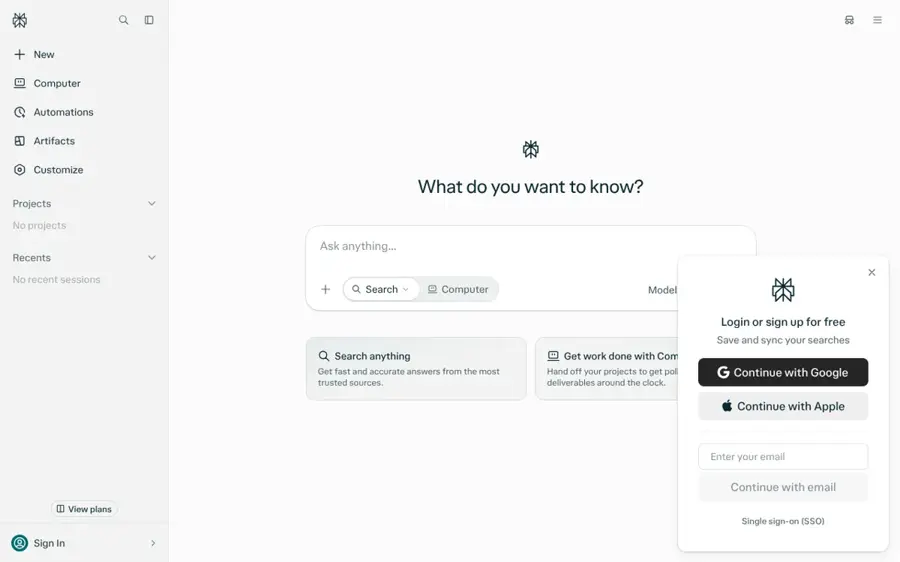
Perplexity is an AI search engine that answers questions in full sentences and cites its sources inline, which makes it the easiest to check. Try it at perplexity.ai.
Why it stands out
The free tier runs on Perplexity's own Sonar model with citations and about three Pro Searches a day, according to a pricing breakdown updated on October 6, 2026. Pro at $20 a month unlocks model switching, extended Pro Search and Comet Plus, the company's publisher revenue-sharing programme, while Max at $200 a month is aimed at heavy users of its Computer agent, with 10,000 credits a month. The real strength is trust: because every sentence links to a source, you spend less time wondering whether the answer is invented. If you only pick one AI search engine, pick this one. Our rating: 4.6/5.
Key features
- Inline citations: every answer links to its sources
- Sonar model: Perplexity's own model powers the free tier
- Pro Search: about three a day free, extended on Pro
- Model switching, uploads and images: on paid plans
- Computer agent: credit-based, aimed at Max users
Pros
- Free tier is useful for daily questions
- Half-price Pro for verified students and educators
- Fair $20 upgrade for model choice
Cons
- Credit rules for Computer and Max are confusing
- Max at $200 a month is expensive for individuals
Perplexity pricing: Free → paid plans from $20/month (Pro, or $200/year); Max $200/month; Education Pro $10/month; Enterprise Pro $40/seat/month (checked October 2026). Official site
Google AI Mode – best for free everyday AI search
AI Mode is a conversational mode inside Google Search that answers complex questions, handles follow-ups and accepts images and files. It sits alongside AI Overviews, the summaries shown above regular results.
Why it stands out
At I/O in May 2026, Google said AI Mode had passed 1 billion monthly users, made Gemini 3.5 Flash its default model and rebuilt the search box to accept images and files, as reported by Search Engine Journal. The same event cut the price of Google AI Ultra from $250 to $100 a month, per Engadget. Google has also responded to complaints that AI answers bury websites: on October 15 it said links would appear higher up in AI Mode and AI Overviews more often, and that it is testing a section for the official site to complete a task, 9to5Google reported. It is the best free AI search engine, and the default most people will end up using. Our rating: 4.4/5.
Key features
- Conversational search: long, multi-part questions with follow-ups
- Multimodal search box: accepts images and files
- Gemini 3.5 Flash: the default model since I/O 2026
- More prominent links: rolling out in AI Mode and AI Overviews
Pros
- Free with a Google account
- Built into the search box you already use
- Google is actively improving links to websites
Cons
- Sources are less prominent than in Perplexity
- Best agent features sit behind paid Google AI plans
- Tied to Google's ad business
Google AI Mode pricing: Free → Google AI Pro $20/month and AI Ultra from $100/month add higher limits and extra features (checked October 2026). Ultra price change (Engadget)
Related: Google AI Mode review
ChatGPT Search – best for search inside a chat assistant
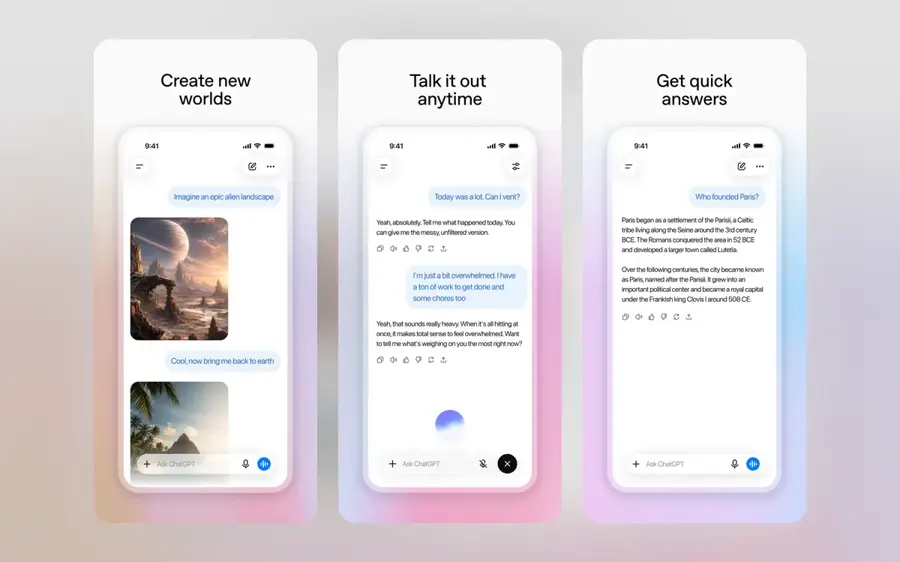
ChatGPT Search is the web search built into ChatGPT: the assistant decides when to look something up, then answers with linked sources inside the same chat.
Why it stands out
OpenAI began rolling out GPT-6 on October 7, 2026. Plus, Pro, Business and Enterprise get GPT-6 Sol, while Free and Go get GPT-6 Luna. OpenAI says GPT-6 "makes better decisions about when to look something up" and that GPT-6 Instant starts answering web-search questions 44% sooner than GPT-5.6 Instant, according to its launch post. Plan prices come from Lindy’s pricing guide, updated September 30, 2026. ChatGPT is less a search engine than an assistant that can search, which makes it the best choice when search is one step in a bigger writing or analysis job. Our rating: 4.3/5.
Key features
- Automatic search: GPT-6 decides when to look something up
- Linked sources: answers cite pages inside the chat
- Faster answers: GPT-6 Instant starts answering web-search questions 44% sooner, per OpenAI
- Search plus drafting: research and write in one conversation
Pros
- No need to toggle search on
- Cheap Go tier at $8 a month
- Turns results straight into drafts or analysis
Cons
- Free and Go users get the lighter Luna model
- Not built for quickly scanning many sources
- Pro tiers are expensive
ChatGPT pricing: Free → paid plans from $8/month (Go); Plus $20/month; Pro $100, $200 or $500/month; Business $25/user/month ($20 annual) (checked October 2026). See pricing
Related: ChatGPT with GPT-6 review
Microsoft Copilot – best for Bing users and Microsoft 365
Copilot is Microsoft's AI assistant, grounded in Bing web results, with free web chat, image generation and voice. Try it at copilot.microsoft.com.
Why it stands out
The free consumer Copilot handles web chat, images and voice, while Microsoft 365 Premium at $19.99 a month adds Copilot inside Office apps, according to a June 2026 pricing guide. Business customers pay $18 to $21 per user on top of a Microsoft 365 licence, with the $18 rate a promotion through December 31, 2026. As a pure AI search engine, Copilot is solid but unremarkable; its value is the Microsoft ecosystem around it. Use it if you are already in Microsoft's world. See our Microsoft AI review for the full picture. Our rating: 3.8/5.
Key features
- Bing grounding: answers built on Bing web results
- Free web chat, images and voice: on the consumer app
- Copilot in Office apps: with Microsoft 365 Premium
- Windows and Edge integration: built into Microsoft's own software
Pros
- Generous free tier
- Strong fit for Microsoft 365 workplaces
- No new app needed on Windows
Cons
- Business pricing is an add-on to a base licence
- Search answers trail Perplexity on sourcing
- Product lineup changes often
Microsoft Copilot pricing: Free → paid plans from $9.99/month (Microsoft 365 Personal); Family $12.99/month; Premium $19.99/month; Copilot Business $18 to $21/user/month (checked October 2026). Official site
Kagi – best for private, ad-free search
Kagi is a paid, ad-free search engine with an AI assistant, and higher tiers add a research mode and flagship models from several labs. Try it at kagi.com.
Why it stands out
Kagi's pricing page lists Starter at $5 a month for 300 searches, Professional at $10 for unlimited search, and Ultimate at $25, which adds research mode and models including Claude 4.8 Opus, GPT 5.5 and Gemini 2.5 Pro. You are not charged for months you do not use. It suits people who want classic results without ads plus an AI assistant when they need it, and Professional at $10 is the sweet spot. Our rating: 4.2/5.
Key features
- No ads: you pay instead of being the product
- AI assistant: alongside classic search results
- Research mode: on the Ultimate plan
- Multiple flagship models: Claude 4.8 Opus, GPT 5.5 and Gemini 2.5 Pro on Ultimate
- Fair billing: unused months are not charged
Pros
- Clean, ad-free results
- Ultimate bundles several top AI models for $25
- Unlimited search from $10
Cons
- No free plan beyond a 100-search trial
- Starter caps you at 300 searches a month
- Small company compared with Google or Microsoft
Kagi pricing: No free plan (100-search trial) → paid plans from $5/month (Starter); Professional $10/month; Ultimate $25/month; 10% off annual (checked October 2026). See pricing
Brave Search (Ask Brave) – best for free private AI answers
Brave's independent search engine includes Ask Brave, a mode that combines search results and AI chat in one interface. Try it at search.brave.com.
Why it stands out
Brave describes Ask Brave as a single interface that "consolidates both search and AI chat," and says "It's free and available on any browser or platform," on its announcement page. You tap Ask at the top of search.brave.com, or go straight to brave.ai to start a chat. It is the most straightforward free alternative to Google here, and you do not need the Brave browser to use it. Our rating: 4.0/5.
Key features
- Ask Brave: search results and AI chat in one interface
- Independent index: Brave runs its own search engine
- Mixed results: AI answers alongside videos, pages and products
- Direct chat: start a conversation at brave.ai
Pros
- Completely free
- Works in any browser
- Outside the Google and Microsoft ecosystems
Cons
- Fewer power features than Perplexity
- Smaller ecosystem
- Brave publishes less detail about Ask Brave's models than rivals do
Brave Search pricing: Free (checked October 2026). Ask Brave announcement
Semrush AI Visibility Toolkit – best for brand tracking for small teams
The toolkit tracks how often AI assistants mention and cite your brand, with sentiment and share of voice against competitors. It is part of Semrush.
Why it stands out
In Meltwater’s September 2026 roundup of AI search monitoring tools, the toolkit costs $99 a month per domain, tracks 25 custom prompts daily, and covers competitor mentions, sentiment, citations and share of voice across four AI platforms. Meltwater notes it does not cover Claude or Copilot. That clear flat price makes it the easiest, most affordable way to start tracking AI search for a single brand. Our rating: 4.3/5.
Key features
- Daily prompt tracking: 25 custom prompts at the base price
- Four AI platforms: per Meltwater
- Sentiment and share of voice: against competitors
- Citation tracking: see which pages AI answers cite
Pros
- Clear flat price
- Competitor and sentiment data included
- Part of a familiar SEO suite
Cons
- Only 25 prompts at the base price
- No Claude or Copilot coverage, per Meltwater
- Priced per domain
Semrush AI Visibility Toolkit pricing: No free plan → $99/month per domain (checked October 2026). Official site
Ahrefs Brand Radar – best for large-scale AI mention data
Brand Radar is an AI search tracking tool from Ahrefs, built on a large index of AI responses, with custom prompt tracking and citation analysis.
Why it stands out
Meltwater reports that Brand Radar's index covers over 454 million prompts across six AI platforms, with daily, weekly or monthly custom prompt tracking and beta data from YouTube, TikTok and Reddit, in its 2026 roundup. The catch is cost: the $199 add-on needs an Ahrefs base plan, so you start at roughly $328 a month. It offers the best data depth for existing Ahrefs customers but is too pricey as a standalone purchase. Our rating: 4.2/5.
Key features
- Prebuilt AI answer index: over 454 million prompts
- Six AI platforms: tracked in one place
- Flexible schedules: daily, weekly or monthly prompt tracking
- Social data (beta): YouTube, TikTok and Reddit
Pros
- Huge dataset without setting up prompts first
- Widest platform coverage here
- Fits existing Ahrefs workflows
Cons
- Requires a separate Ahrefs subscription
- Real starting cost is over $300 a month
- Social data is still in beta
Ahrefs Brand Radar pricing: No free plan → $199/month add-on, on top of an Ahrefs plan from $129/month (checked October 2026). See pricing
Profound – best for enterprise AI search monitoring
Profound is an enterprise AI search monitoring platform with prompt demand research, AI crawler tracking and AI shopping analysis. Find it at tryprofound.com.
Why it stands out
Profound offers a seven-day trial covering 50 prompts across three platforms, then custom Enterprise pricing, according to Meltwater. Standout features include real user question data filterable by region and intent, server-side AI crawler tracking, and SOC 2 Type II compliance with SSO. It is the best AI search monitoring platform for large brands with compliance needs, and overkill for a small business. Our rating: 4.1/5.
Key features
- Prompt demand research: real user question data by region and intent
- AI crawler tracking: server-side, on your own site
- AI shopping analysis: see how products surface in AI answers
- Enterprise security: SOC 2 Type II and SSO
Pros
- Deep demand data, not just mention counts
- Shows which AI crawlers hit your site
- Built for compliance-heavy teams
Cons
- No public pricing
- Trial is short and limited
- Built for big teams
Profound pricing: No free plan (seven-day trial) → custom-priced Enterprise plan (checked October 2026). Official site
Otterly AI – best for budget AI search tracking
Otterly is a lightweight AI search tracking tool that monitors brand mentions and citations across ChatGPT, Google AI Overviews, Perplexity and Copilot. Find it at otterly.ai.

Why it stands out
Otterly's Lite tier is $29 a month for 15 prompts and includes citation tracking, competitor comparisons and website audits, per Meltwater. Adding Gemini or AI Mode costs more, so check the final price before you commit. It is the cheapest credible way to see whether AI tools mention you. Our rating: 3.9/5.
Key features
- Four AI surfaces: ChatGPT, Google AI Overviews, Perplexity and Copilot
- Citation tracking: see which pages get cited
- Competitor comparisons: benchmark against rivals
- Website audits: included on Lite
Pros
- Lowest entry price in this list
- Simple to set up
- Useful basics for freelancers and small agencies
Cons
- Only 15 prompts on Lite
- Gemini and AI Mode are paid extras
- Lighter analytics than Semrush or Ahrefs
Otterly AI pricing: No free plan → paid plans from $29/month (Lite, 15 prompts); Gemini and AI Mode tracking cost extra (checked October 2026). See pricing
How to choose the right AI search tools
Start with what you are trying to do. Finding information and tracking your brand are different jobs, and very few people need both.
Match the engine to the job
Choose Perplexity if you research for school or work and need to check sources fast. Choose Google AI Mode if you want AI answers for free and do not want to learn a new tool. Choose ChatGPT if search is the first step and writing or analysis comes next.
Decide what privacy is worth to you
Choose Kagi or Brave if privacy and fewer ads matter more to you than convenience. Kagi charges for that; Brave does not.
Size brand tracking to your budget
Choose Semrush if you are a small business testing AI search tracking for the first time. Choose Ahrefs Brand Radar or Profound if you need market-wide data or enterprise controls, and Otterly if money is tight.
Check sources and ask specific questions
Two habits apply whichever AI search engine you pick. First, click the sources for anything important; AI answers can still be wrong or out of date. Second, ask specific questions. Our guide on writing better AI prompts works just as well for search. If you are a student, our list of the best free AI tools for students pairs well with this one.
Free vs paid: what you actually get
For AI search engines, free is good enough for most people. Google AI Mode, Brave Search and the free tiers of Perplexity, ChatGPT and Copilot all answer everyday questions with sources. Here is what paying adds:
| Tool | Free gets you | Paying adds |
|---|---|---|
| Perplexity | Sonar answers with citations, about 3 Pro Searches a day | Model choice, extended Pro Search, uploads, images ($20/mo) |
| Google AI Mode | Full AI Mode in Search | Higher limits and extra Gemini features via AI Pro ($20) or Ultra ($100+) |
| ChatGPT | Search with GPT-6 Luna | GPT-6 Sol and higher limits from Plus ($20) |
| Kagi | 100-search trial | Ad-free search from $5; research mode at $25 |
| AI search monitoring | Little or nothing (Profound has a 7-day trial) | Prompt tracking, citations, competitor data from $29 to $328+ |
The budget rule is simple. Individuals should stay free until they hit a limit they feel every week, then pay $20 for one tool, not three. Businesses should budget at least $99 a month for meaningful AI search tracking and expect to pay more as prompt counts grow.
Final verdict
Most people should start with Perplexity. It gives you the clearest sourcing, a usable free plan and a fair $20 upgrade. If you do not want another app, Google AI Mode is free, fast and improving its links. Kagi is the pick for paying users who want no ads, and Brave is the free privacy alternative.
For marketers, start with Semrush at $99 a month for one domain. Move to Ahrefs Brand Radar or Profound when you need wider data or enterprise controls. If money is tight, Otterly at $29 tells you the basics.
FAQ
What are the best AI search monitoring tools?
The strongest options in late 2026 are the Semrush AI Visibility Toolkit ($99 a month per domain), Ahrefs Brand Radar ($199 add-on to an Ahrefs plan), Profound (custom enterprise pricing) and Otterly AI (from $29 a month). Semrush is the best starting point for small teams; Profound suits large brands. Pricing comes from Meltwater’s 2026 comparison.
What is AI search?
AI search is a way of finding information where you ask a question in natural language and a large language model writes an answer from live web results, usually with links to its sources. Instead of scanning ten blue links, you get a summary and can ask follow-up questions. Perplexity, Google AI Mode and ChatGPT Search all work this way.
What is the best AI search engine?
For most people, Perplexity is the best AI search engine because every answer cites its sources and the free plan is useful every day. Google AI Mode is the best free alternative and needs no new app. If you care most about privacy and ads, Kagi (paid) or Brave Search (free) are better fits.
Is Komo AI worth trying?
Komo is an ad-free AI search engine with a free tier and paid plans, but one 2026 review flagged inconsistent accuracy, thin source attribution and conflicting price information on its own listing. That is why it did not make our top ten. It is fine to try for free; check its sources carefully.
Sources
- Perplexity Pricing 2026: Plans, Pro, Max, and Is It Worth It? (GEO Toolbox)
- SEO Pulse: Google Launches Core Update Amid I/O AI Search Overhaul (Search Engine Journal)
- Google AI Mode and AI Overviews make links more prominent (9to5Google)
- The Google AI Ultra plan now starts at $100 a month (Engadget)
- GPT-6 for everyone (OpenAI)
- ChatGPT Pricing (Lindy)
- Microsoft Copilot Pricing (GEO Toolbox)
- Kagi Pricing (Kagi)
- Introducing Ask Brave (Brave)
- Best AI Search Monitoring Tools for 2026 (Meltwater)
- Komo AI Review - Features, Pricing & Deals (Tools for Humans)
- ChatGPT Pricing (OpenAI)
- Plans & pricing (Ahrefs)
- What are the plans and the pricing of OtterlyAI? (Otterly.AI)