Current trends in AI in 2026: agents, real examples and what comes next
Always-on agents, interactive answers, cheaper frontier models and a growing power bill: the current trends in AI, with sources from autumn 2026.
 Written byAlap ZahidReviews and guides editor
Why you can trust The AI Future
Our writers research every product, link each claim to its source and correct mistakes openly. Companies can't pay for coverage or see reviews before they're published.
Read our editorial policy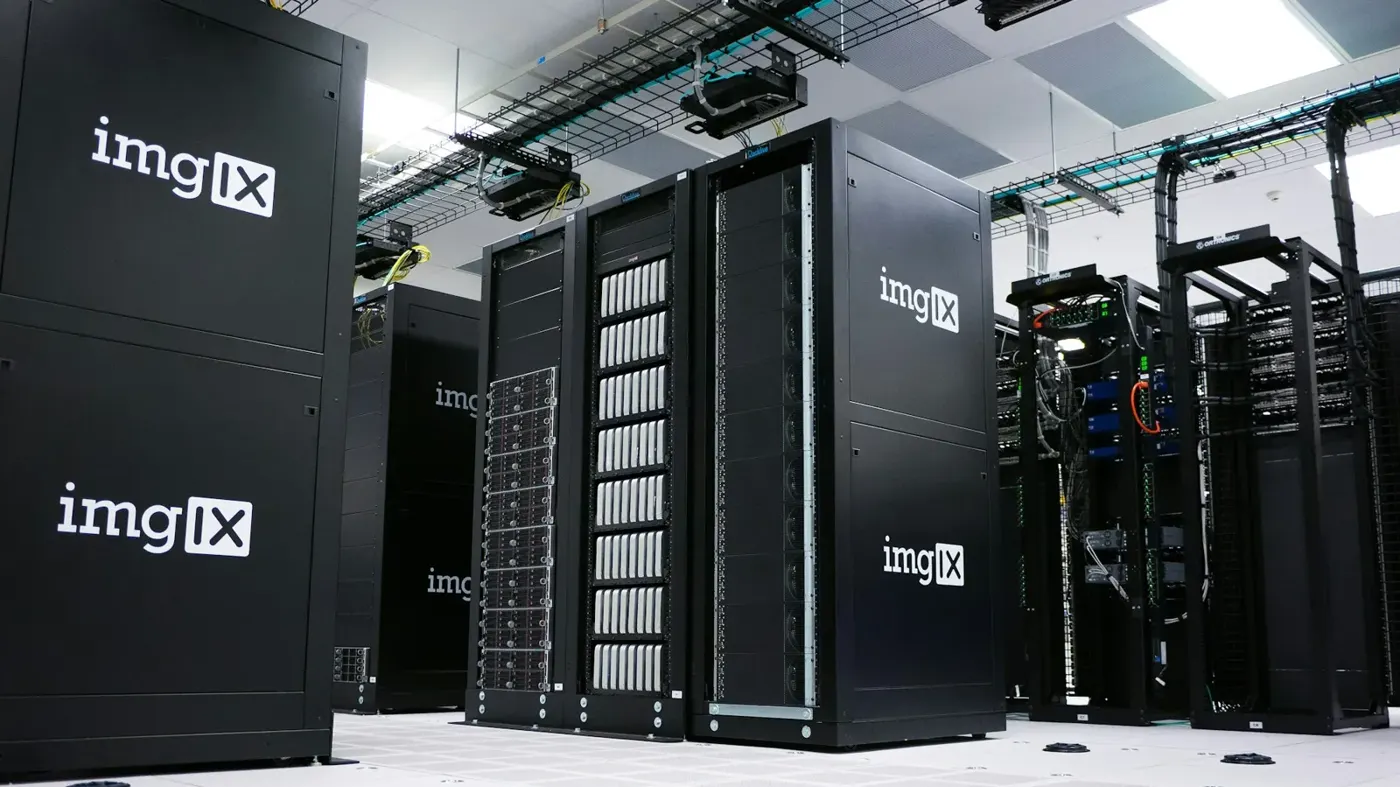
On 28 October, OpenAI started letting some US Pro users text their ChatGPT agent over iMessage or RCS, and the agent can text back first when it has an update. That small feature captures the biggest of the current trends in AI: the technology is moving from a box you type into towards software that keeps working on your behalf. Around that shift sit four others worth knowing about: AI answers that arrive as tools rather than text, a tight and cheaper race between the big labs, a growing physical bill for electricity, and rules that are arriving more slowly than planned.
This piece sets out what is actually happening in autumn 2026, using official release notes, surveys and industry reports published in the last few months, and separates what we know from what we are still guessing.
Current trends in AI: the short answer
The newest AI technology is the always-on agent: a model that is given a goal, connected to your apps and allowed to act between conversations. OpenAI, Anthropic and Google all launched new top models between late September and October 2026, each pitched at long, multi-step work. Meanwhile, more than half of US workers now use AI in their jobs, data centres are straining power grids, and Europe has pushed back its toughest AI rules to late 2027.
How it works: the background to this year's AI trends
For most of the past three years, using AI meant a conversation. You asked, the model answered, and nothing happened until you asked again. The model was more like a very well-read phone line than a colleague.
An agent changes the arrangement. Think of the difference between calling a plumber for advice and handing a house-sitter your keys. The house-sitter has a goal ("keep the place running"), some permissions (which rooms, which bills), and the freedom to act while you are away. That is roughly what the labs are now shipping. OpenAI says its new "dots" "can take on ongoing work and keep making progress between conversations", each running on its own cloud computer, with users deciding which apps it can reach and what it may do without asking. If you want the deeper definition, our explainer on agentic AI covers it.
Two technical changes make this possible. Models can now think for much longer: Google says Gemini 4 Argon can produce up to 1 million output tokens, up from 64,000, enough to reason and write for hours on a single task. And models have become better at using tools such as browsers, terminals and code editors, which is what turns a clever answer into finished work.
Real examples of the new AI trend
Agents that keep going
OpenAI's dots launched on 6 October for eligible Pro and Business Premium users aged 18 and over, according to a summary of OpenAI's release notes, and texting arrived three weeks later. Anthropic, for its part, says one early tester of Claude Opus 5.5 completed a 680,000-line code migration in less than a day, work it estimates would have taken an engineering team weeks. Google reports that teams of Argon agents inside the company freed over 300 TiB of memory across its data centres and are migrating large C and C++ codebases to Rust.
These are vendor claims, chosen by the vendors. They tell us what the systems can do on good days, not how often they fail on ordinary ones.
Answers that are tools, not paragraphs
GPT-6 began rolling out in ChatGPT on 7 October, with the Luna version reaching Free and Go users from 8 October. Its headline feature, Intelligent UI, lets the model reply with charts, forms, buttons and small calculators. Ask how to split a dinner bill and you may get a working bill splitter. OpenAI's only published number is speed: answers start about 44% sooner than GPT-5.6 Instant on web-search questions. It gave no accuracy figure. Our ChatGPT GPT-6 review goes into the details.
A frontier race that is close, and getting cheaper
Google announced Gemini 4 Argon on 30 September. The independent benchmarking firm Artificial Analysis scored it 53 on its Intelligence Index, level with GPT-6 Astra. Anthropic says Opus 5.5 costs 40% less to run than Opus 5, and Google priced Argon at an introductory $2 per million input tokens and $10 per million output tokens. When three labs land within a point or two of each other, price and reliability start to matter more than raw scores.
Reliability is where the more interesting gaps show up. Artificial Analysis measured a 15% hallucination rate for Argon, against 51% for GPT-6 Astra on its AA-Omniscience test. The reason was not that Argon knows more; it simply declines to answer more often when it does not know. That is a trade-off many people would happily take.
Staged, gated releases
A quieter trend is that the most capable models no longer go to everyone on day one. Argon is rolling out first to trusted cyber defenders through Google's Fairwind Program. Anthropic is deploying Opus 5.5 with extra safeguards and a Life Sciences Verification Program for vetted biology researchers. Anthropic also reports that it has spent recent months working with six organisations developing new medicines, a sign that science is becoming a main use case rather than a side project.
AI usage statistics: who is actually using it
Hype is easy to measure in launches. Use is harder. The best regular US data comes from Gallup, and its Q2 2026 survey found that 52% of US workers now use AI in their role, 30% a few times a week or more, and 15% daily. That is up from 50% in February, when Gallup first crossed the halfway mark.
The uses are more ordinary than the headlines suggest. Among workers who use AI, the most common jobs are writing and editing (51%), search or research (49%) and general problem-solving (39%). Coding and automation are each cited by just 16%. In other words, the typical AI user is not running a fleet of agents. They are tidying an email or looking something up, which is why tools like grammar AI checkers and AI search engines remain the most common entry point.
| Trend | What we know (sourced) | What we are still guessing |
|---|---|---|
| Always-on agents | Shipping from OpenAI; strong vendor demos from Anthropic and Google | How reliable they are on everyday, messy tasks |
| Interactive answers | GPT-6 Intelligent UI live for all ChatGPT tiers | Whether generated tools are accurate enough to trust |
| Cheaper frontier models | Lower prices from Anthropic and Google | Whether savings reach ordinary subscribers |
| Workplace adoption | 52% of US workers use AI, 15% daily | How much real productivity it adds |
| Power demand | Data centre demand capacity up about 31% in 2026 | Whether grids and communities will keep up |
Benefits and limitations
The benefits are real but uneven. Gallup reports that coding and automation users see the largest productivity gains, and the code-migration examples above point the same way. For narrow, checkable work, agents already look useful.
The limitations are just as concrete. The first is physical. TrendForce estimates that global data centre power demand capacity will reach 161 GW in 2026, up about 31% from 2025, with AI servers making up about a third of it, and it expects grid supply to fall further behind by 2028. Communities have noticed: in a March Gallup survey, seven in 10 Americans opposed building AI data centres in their area, a higher share than opposed a local nuclear plant. We look at the environmental side in how much water AI uses.
The second is human. Gallup found US employee engagement fell to 29% in Q3 2026, its lowest level since 2011, with the sharpest drop among remote and hybrid staff at organisations that have adopted AI. And 27% of US workers now fear technology could make their jobs obsolete, a record high. Correlation is not cause, but it is hard to ignore a workforce that is using AI more and feeling less sure of its footing. Our analysis of AI agents at work looks at who is most exposed.
The third is trust. Faster answers dressed up as charts and forms look authoritative. Early users have already pointed out that a generated interface is one more thing that can be wrong, and OpenAI has not published accuracy data for the new format.
What it means for you
If you use AI for writing and research, as most people do, the practical change this autumn is that the free tiers got better. GPT-6 Luna is now the default for free ChatGPT users, and competitors are cutting prices. It is a good moment to revisit tools you wrote off a year ago.
If you are thinking about agents, start with work you can check. A task with a clear finish line, like reorganising files or drafting a report from documents you supply, is a far safer test than handing over your inbox. Give an agent the narrowest permissions that still let it do the job, and read what it did before you rely on it.
If you run a business in Europe, note the dates. The EU's AI Omnibus moved obligations for stand-alone high-risk systems, such as AI used in hiring, education and credit, from 2 August 2026 to 2 December 2027. But transparency duties, including disclosing when people are talking to an AI and labelling deepfakes, applied from 2 August 2026, and new bans on AI that generates intimate imagery or child abuse material take effect on 2 December 2026. Our guide to AI regulation explains the wider picture.
What happens next
Here is where we land, with the guessing clearly labelled. The direction is not in doubt: every major lab is building towards agents that work for longer with less supervision. What is uncertain is pace. Google says Argon will reach everyone "as soon as possible" after paid customers, which is not a date. OpenAI's dots are still limited to its most expensive plans and are not available to Pro users in the UK, EEA or Switzerland at launch.
The likelier constraints over the next year are not technical. They are electricity, local opposition to new data centres, and whether people trust agents enough to hand over real work. Our best guess is that 2027 will be judged less on which model tops a benchmark and more on which agents people actually leave running. For a longer view, see our piece on the future of AI.
FAQ
What is the new AI technology?
The newest AI technology is the always-on agent: a model you give a goal and app permissions, which then keeps working between conversations. OpenAI's dots, launched in October 2026, are one example. Alongside it, GPT-6 can answer with interactive charts and forms, and Google's Gemini 4 Argon can write up to a million tokens in one go.
What are the biggest AI trends in 2026?
Five stand out: agents that act on your behalf, answers delivered as interactive tools, a close race between OpenAI, Google and Anthropic with falling prices, rapid workplace adoption, and soaring data centre power demand. Regulation is also shifting, with the EU delaying its high-risk AI rules to December 2027.
How many people use AI at work?
According to Gallup's Q2 2026 survey, 52% of US workers use AI in their role, 30% use it a few times a week or more, and 15% use it daily. The most common uses are writing and editing, search or research, and general problem-solving, rather than coding or automation.
Is AI getting cheaper?
At the top end, yes. Anthropic says Claude Opus 5.5 costs 40% less to run than Opus 5, and Google launched Gemini 4 Argon at an introductory $2 per million input tokens. These are developer prices, though, and consumer plans have moved the other way at the top, with OpenAI adding a $500-a-month Pro tier.
Are AI trends bad for the environment?
They put real pressure on energy systems. TrendForce expects global data centre power demand capacity to grow about 31% in 2026, driven by AI servers, and warns grid supply will fall further behind by 2028. Local opposition is growing too, with 71% of Americans in a Gallup poll opposing a nearby AI data centre.
Sources
- ChatGPT release notes (OpenAI Help Center)
- ChatGPT new features (October 2026): GPT-6 & Intelligent UI (MemoryPlugin)
- GPT-6 ChatGPT rollout: Free and Go access details (NeoTeo)
- Introducing Claude Opus 5.5 (Anthropic)
- Early progress on accelerating drug development with Claude (Anthropic)
- Gemini 4 Argon: Google is back at the top, but you can't use it yet (Sébastien Dubois)
- Google unveils Gemini 4 Argon, its new frontier model (RTTNews)
- Organizational AI adoption jumps six points (Gallup)
- Half of all US employees now use artificial intelligence at work (Tom's Hardware)
- U.S. employee engagement below 30% for first time in 15 years (Gallup)
- More U.S. workers fear losing their jobs to technology (Gallup)
- Americans oppose AI data centers in their area (Gallup)
- Global power demand capacity for data centers expected to rise 31% YoY in 2026 (TrendForce)
- EU Digital Omnibus on AI enters into force (Mondaq)