Sonauto AI review 2026: now Treblo, free and unlimited, but is it worth it?
Sonauto AI is now Treblo: a free, uncapped AI song generator that lets you keep your songs. We weigh its features, the new Pro tier, quality and the artist-voice controversy.
 Written byBurhan AqibSenior writer, policy and analysis
Why you can trust The AI Future
Our writers research every product from its official pages, independent tests and user reports, link each claim to its source and correct mistakes openly. Unless an article says otherwise, we haven't tested the product hands-on ourselves. Companies can't pay for coverage or see reviews before they're published.
Read our editorial policy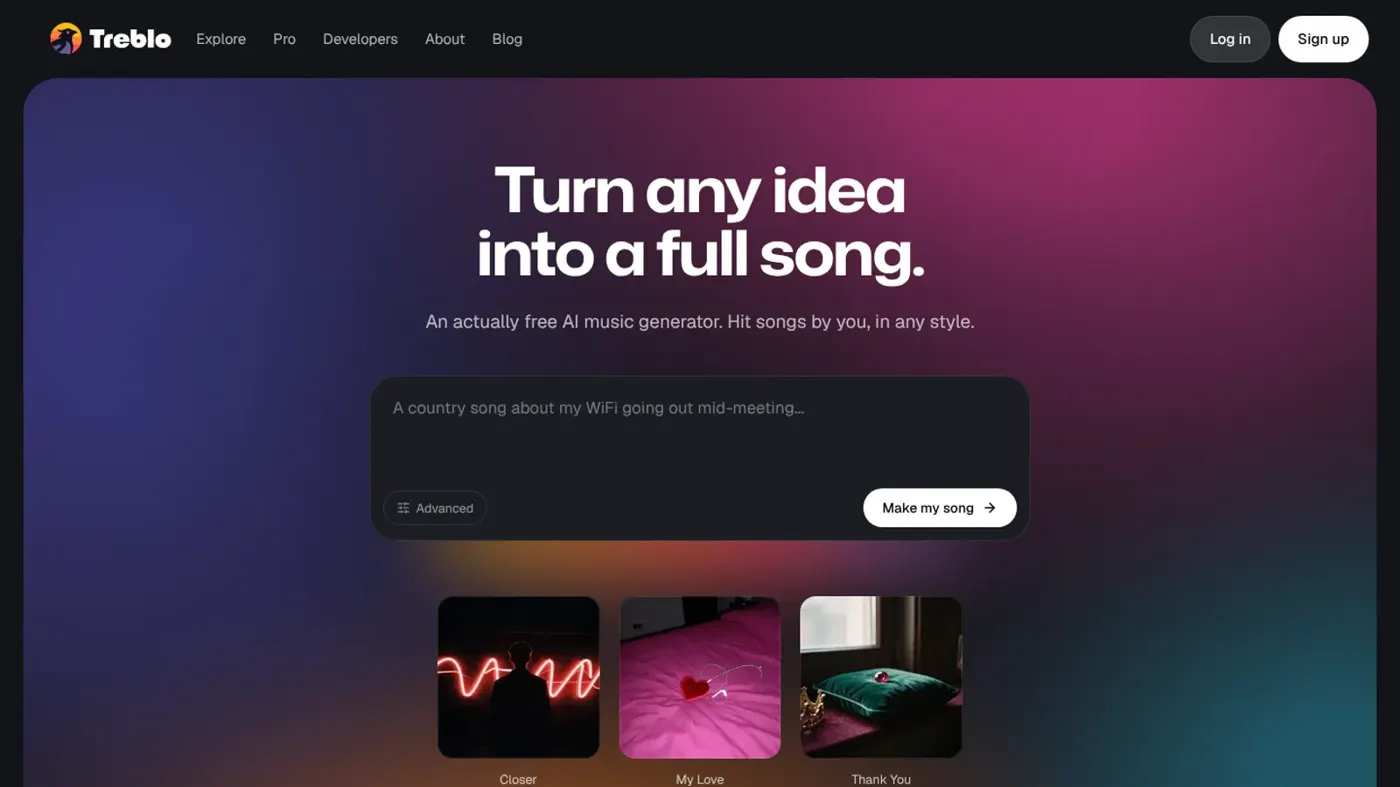
Our verdict on Sonauto AI (now Treblo)
Sonauto (now Treblo) is the most generous free AI song generator we know of, with ownership of your outputs and useful section editing. Hobbyists and creators needing background music should try it; skip it if you need release-grade audio or airtight licensing.
Pricing Free (unlimited song generation, commercial use of outputs); Treblo Pro subscription (price not published on the web); developer API with 3,000 free credits, then paid credit plans
Visit Sonauto AI (now Treblo)Sonauto AI still exists, it just has a new name. In June 2026 the four-person team behind it renamed the app Treblo and moved it to treblo.com, and the consumer song generator is free with no generation cap. My short verdict: if you want to make lots of AI songs without paying, and you're happy with audio that's good rather than best-in-class, it's one of the most generous deals in AI music right now. The catch is a messy few months around artist-voice imitation and copyright guardrails, which shows up loudly in user reviews.
Quick honesty note before anything else. Nobody at The AI Future ran hands-on tests for this review, so you won't find my own screenshots or stopwatch timings here.
We reviewed Sonauto as it stands in early November 2026 using the official terms, blog and developer pages, the app store listings, other reviewers' published write-ups and about 44 recent user reviews. When someone else did the testing, I'll say who.
Sonauto AI in brief
Sonauto (the "sonauto ai music" app people still search for, and sometimes misspell as "sunauto ai") is a text-to-song generator. You describe a song, pick style tags or paste lyrics, and it returns a full track with vocals and instruments. It's built by Sonauto, Inc., a San Francisco company, and the about page describes the team as "a frontier audio AI lab" of four people.
The rename is the first thing to understand. Going by the announcement post, sonauto.ai now redirects to treblo.com, your login, songs and shared links carry over, and developers should move from api.sonauto.ai to api.treblo.com. Why change? The team says people couldn't pronounce it ("Son-auto? Sono-to?") and kept mistyping it. Fair enough, honestly; I'd have struggled too.
Under the hood it runs the company's own model, Melodia, rather than renting someone else's. The developer page names the current version Melodia v3 and claims audio starts streaming about 15 seconds after you hit generate. A newer model arrived on September 22, 2026, according to a notice on the Treblo detector page, though I couldn't find a public name or changelog for it.
There's some disagreement about how the model works. Kompozy describes Melodia as a latent diffusion model, while the developer page talks about a "language model architecture", and a Korben report says the app stacks two separate models, one for vocals and one for the instrumental.
I'd treat the technical details as unsettled until the company publishes something clearer.
Key features
Text-to-song with thousands of style tags
The core loop is simple: prompt, tags, generate. Stork.AI counted 4,160 style tags, from pop and metal to drill and lo-fi, and you can supply your own lyrics or let the app write them. There's also an instrumental mode. Kompozy says downloads come in OGG, MP3, WAV, FLAC or M4A, which is more choice than most free tools give you.
Editing after generation
This is where Sonauto looks stronger than a basic toy. Per Stork.AI's rundown, you can rewrite lyrics, regenerate sections you don't like (inpainting), extend a track, make a cover in a new style, remix other people's songs and split stems. The App Store listing lists "Extend tracks. Swap sections. Upload audio to cover." as headline features. I think section-level regeneration is the feature that matters most here, because it means a song with one bad verse isn't a write-off.
A social side: profiles, groups and radio
Songs can stay private, be shared unlisted or go public on your profile, in groups and on the site's radio. One Google Play reviewer, Ghost Lad3y, called the radio "a little community". (I'm less sure the world needs another feed of AI songs, but plenty of users clearly enjoy it.)
Languages
Stork.AI reports that Treblo says vocals work well in Latin-alphabet languages, while Japanese, Korean, Chinese, Arabic, Russian and Hindi work but pronunciation may be off. If you're writing in English, Spanish or French, you're probably fine.
A developer API
There's a separate paid API for apps and games. On the developer page, verifying a card gets you 3,000 free credits before you pick a plan. Under the API terms, you can use API outputs in commercial products and the company says it won't train on API content (section 4 is headed "No model training").
An open-source detector for its own songs
This one surprised me. In a blog post, Treblo released a classifier that checks whether a song was made with Treblo, claiming a false positive rate below 1 in 10,000 on its own evaluations. It only covers Treblo's models, and the detector page warns that songs made with the September 22 model "are not supported" yet. Like any detector, it's a probability tool, not proof; our explainer on how AI detectors work goes into why.
Sonauto AI pricing and plans
Pricing is the main reason people pick this app. The store listings promise songs "For free. No limits." and the Play listing's tagline is "Unlimited access to our latest AI music model." Three independent sites back up the no-cap claim: Kompozy, AI Video Sensei and Soundverse all describe consumer generation as free and unlimited as of August to October 2026.
There is now a paid tier, though. The terms of service (dated November 3, 2026) mention "Treblo Pro" subscriptions, and the Play listing's latest update notes say "Pro subscription is now available". I couldn't find a published price or feature list for Pro on any page I could read, so I won't guess. AI Video Sensei says the paid tier only speeds up your place in the queue and adds higher-fidelity export, but that predates the Pro launch notes, so check in the app before you buy.
| Plan | Price | What you get |
|---|---|---|
| Free (web, iOS, Android) | $0 | Unlimited song generation, editing tools, ownership of your outputs including commercial use |
| Treblo Pro | Not published on the web | Paid features listed in the app; recently launched |
| Developer API | 3,000 free credits, then paid plans (Starter about $11/month per Soundverse and Kompozy) | Programmatic generation, commercial use, no training on API content |
Prices checked November 2026.
What the free plan really includes matters more than the price tag. Section 8 of the terms says you own your outputs and that the company "hereby assign[s] to You all our right, title, and interest, if any". That covers commercial use. Two caveats sit right next to it, though. You also grant the company a perpetual license to use your outputs, prompts and lyrics to improve its models, and it makes no promise that your songs are copyrightable or legal to use. Compare that with Suno, whose free plan doesn't allow downloads, as our Suno AI review found, and the gap is big.
Performance and independent testing
Since we didn't test it ourselves, here's what others found. Kompozy's review (August 2026) gives Treblo 4.3 out of 5 overall but only 3.8 out of 5 for audio quality, saying "a paid tool like Suno often edges it on raw fidelity and mix" and that top-end quality "can be inconsistent across genres and prompts". Worth knowing: Kompozy sells a content-publishing tool and pitches it throughout that review, so read it with that in mind.
On YouTube, ChillPanic's review video (about 20,000 views, posted roughly two months ago) is titled "Treblo Ai: The Free AI Music Generator Suno Should Worry About", which tells you the reviewer's leaning. I'd watch it to hear actual outputs before you commit any time.
The most public "test" of Sonauto wasn't a review at all. In summer 2026, the rap track "Rubberz" reached No. 63 on the Billboard Hot 100, per Korben, and producer Medasin argued it was made with Treblo. AI Weekly, summarising Wired's reporting, says detection firm HumanStandard first cleared the song as human-made, then reversed after retraining on Treblo outputs, and now claims about 90% accuracy on Treblo tracks. Both credited artists denied using AI, and AI Weekly calls the specifics "contested rather than settled". Still, I think the episode says two things: the vocals can be convincing, and that realism comes with real risk.
Artist voices and the new guardrails
This is the uncomfortable part. Korben reported that Treblo could produce "a voice imitating any artist, simply by typing their name". Plenty of App Store reviews from July and August praise exactly that. The current terms now ban uploading anyone's voice without consent and ban presenting songs as "by," "inspired by," or "sounding like" a named artist without that person's consent. Making songs that pass off a real singer's voice as theirs is harmful to artists, and it can create legal trouble for you, whatever any app allows.
The tightening shows up in the reviews. A September 1-star review titled "Was great until the restrictions kicked in" complains about copyright blocks, and several others say uploads now get rejected with "This upload matches existing audio and cannot be used", even for their own beats. I suspect some of those flags are false positives, which is frustrating for honest users. But the direction of travel seems right to me.
Ratings and user feedback at a glance
The app stores are kind to it. On the App Store it averages about 4.8 from 463 ratings, and on Google Play it shows 4.6 from about 1.97K reviews with 100K+ downloads (both checked November 7, 2026). We read the 41 most recent App Store reviews (July to November 2026) plus the top Play reviews. Roughly 60% were positive, 20% mixed and 20% negative by my count. Praise centres on the price ("100% free, and Ad-free", wrote one reviewer) and owning your songs. Complaints focus on upload flags, lost artist-name prompts and lyrics drifting into "gibberish", in one July reviewer's word. One ex-Suno subscriber begged the team to "Please never change", which made me smile.
Best suited to
- Hobbyists who want to make a lot of songs for fun without rationing credits.
- Video creators who need background tracks they own, with commercial use allowed on the free plan.
- Lyricists and poets who want to hear their words sung without learning a DAW.
- Developers building music into an app or game who want cheap API credits and a no-training clause.
It's a weaker fit if you need release-grade audio every time, or if your plan depends on imitating a famous voice (don't). Labels and brands with strict clearance rules will probably want a tool with a clearer licensing trail.
Sonauto AI alternatives worth considering
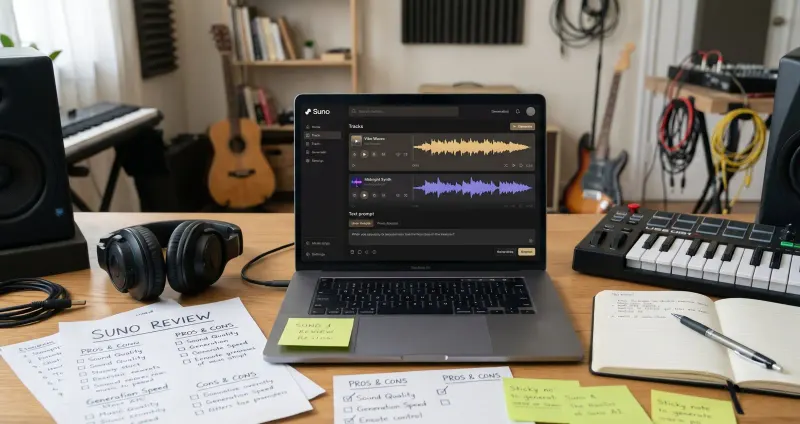
Suno is the obvious comparison. It has a deeper toolset and, by Kompozy's account, often better fidelity, but its free plan has no downloads and paid plans start at $10 a month, according to our Suno review. It also has a bigger community and more tutorials, which helps if you're new. I'd pick it over Sonauto only if you plan to pay anyway and care most about polish.
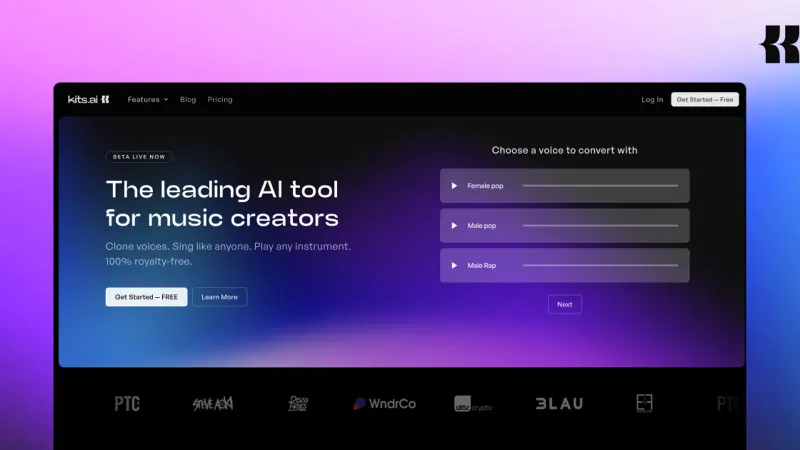
Kits AI suits producers who want licensed AI voices, voice conversion and stem tools rather than whole songs. Its free plan has no downloads and paid plans start at $10 a month, per our Kits AI review.
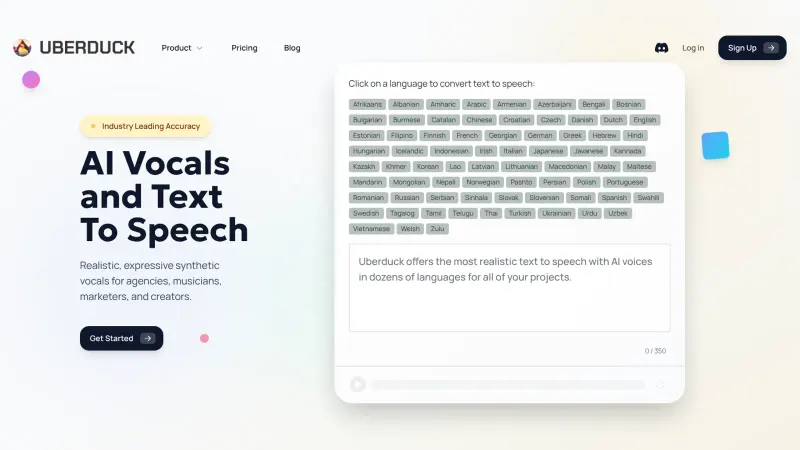
Uberduck AI is a cheap all-rounder for AI vocals, raps and songs, with commercial use starting on its $5-a-month (billed yearly) Creator plan, as our Uberduck review notes. If you'd like to stretch tracks you already have, our list of AI music extender tools is worth a look too.
Verdict
I'd give Sonauto 3.5 out of 5. For pure value it's hard to argue with: unlimited free songs, ownership of what you make and an editor that lets you fix one bad section. I'd use it as a sketchpad and for background music. But the audio seems a notch below Suno's best, the Pro tier's price is still a mystery, and the artist-voice saga makes me want to see the company settle its policies before anyone builds a business on it. If you're curious, try it; it costs nothing. If you need guaranteed quality or airtight licensing, I'd look elsewhere.
FAQ
Is Sonauto AI the same as Treblo?
Yes. Sonauto renamed itself Treblo in June 2026 and moved to treblo.com. Same company, same four people, and old accounts, songs and shared links still work, according to the rebrand post.
Is Sonauto AI free?
The consumer app is free with no generation cap, according to the app store listings and several independent reviews. A paid Treblo Pro subscription launched recently, but its price wasn't published on the web when we checked in November 2026. The developer API is separate and credit-based, with 3,000 free credits to start.
Can I use Sonauto AI music commercially?
The terms say you own your outputs and that commercial-use limits elsewhere in the terms don't restrict them, so yes on paper. But the company gives no guarantee your songs are copyrightable, it can use your outputs to train its models, and you can't present songs as by or sounding like a real artist without consent.
Is Sonauto AI better than Suno?
It depends on what you value. Sonauto wins on price and rights; Suno has more tools and, per Kompozy, often better fidelity. I think most hobbyists will be happy starting with Sonauto.
Can people tell a song was made with Sonauto?
Sometimes. Treblo offers its own free classifier at treblo.com/detect and claims under 1 in 10,000 false positives, but it doesn't yet support songs from the September 22 model. HumanStandard says it now spots Treblo tracks about 90% of the time. Detectors aren't perfect; see our piece on whether AI detectors are accurate.
What video reviewers say
Videos load from YouTube only when you press play.
Ratings around the web
Ratings as of 12 Nov 2026. Scores change over time; follow the links for the latest.
What users are saying
We read the 41 most recent US App Store reviews (July to November 2026) plus the top Google Play reviews, about 44 in all. Most users love that it is free, ad-free and lets them keep their songs, while the negative reviews mostly blame new copyright guardrails, upload flags and removed artist-name prompts.
Common praise
- Free and unlimited, with no ads
- You own the songs you make
- Easy to use, with strong results from the newer model
Common complaints
- Uploads rejected as "matches existing audio", even for original beats
- New restrictions on artist names and covers
- Lyrics drifting into gibberish or instrumental mode adding vocals
Based on: Treblo - AI Music reviews (App Store), Treblo - AI Music reviews (Google Play)
What we like
- Unlimited free song generation with no daily cap
- Terms assign you ownership of your songs, including commercial use
- Section regeneration, extend, covers and stem splitting
- Thousands of style tags and five download formats, per Kompozy
- High app store ratings: about 4.8 on iOS and 4.6 on Google Play
What could be better
- Audio fidelity trails Suno at the top end, per Kompozy
- Treblo Pro price and features not published on the web
- Upload checks reject some users' own audio as matching existing tracks
- Your outputs and prompts can be used to train its models