Robotics vs AI in 2026: the differences, the overlap and which matters for you
Robotics builds machines that act in the physical world; AI is software that learns from data. Here is how they differ, overlap and compare on cost.
 Written byRahis SaifiCo-founder and news editor
Why you can trust The AI Future
Our writers research every product, link each claim to its source and correct mistakes openly. Companies can't pay for coverage or see reviews before they're published.
Read our editorial policy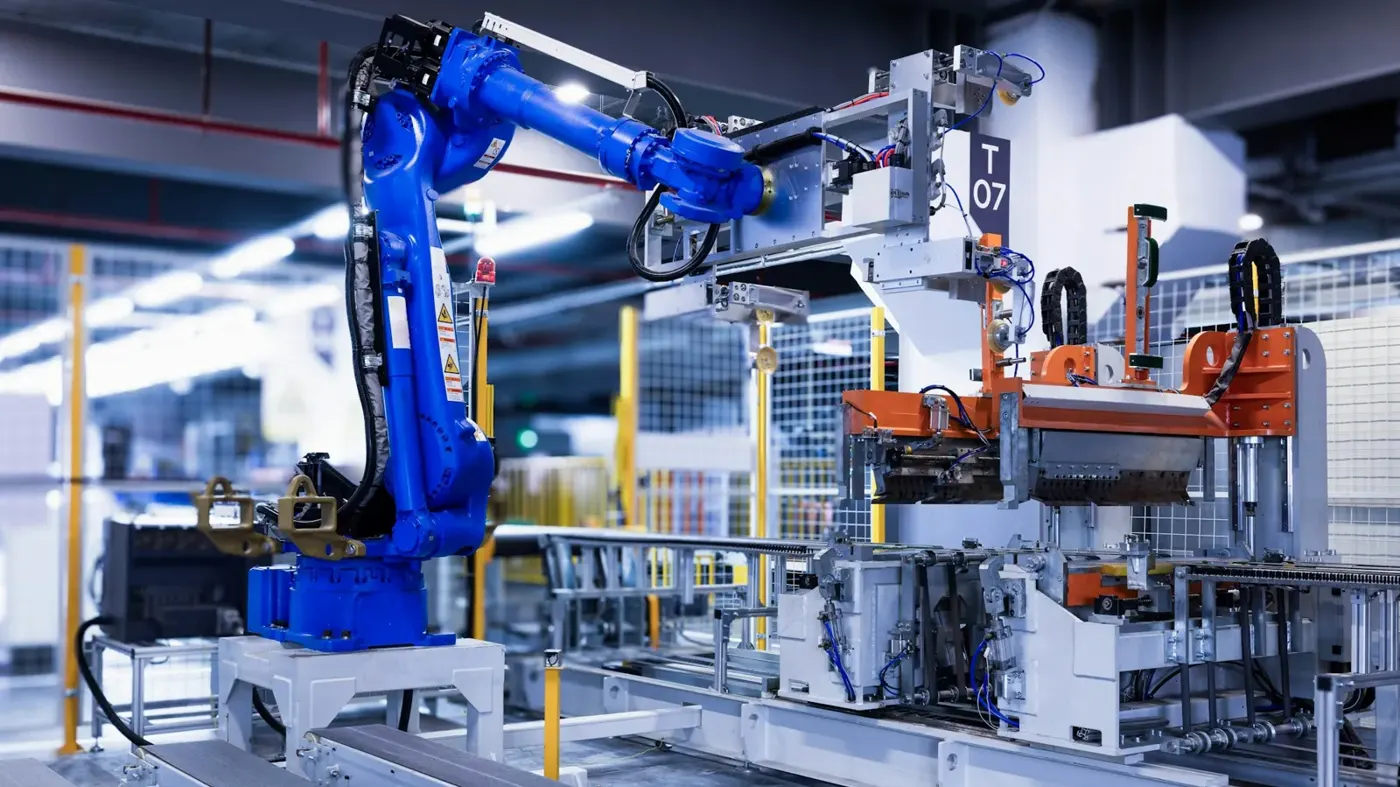
Robotics vs AI isn't a contest between two rival products. Robotics is the engineering of physical machines that sense and move in the real world. Artificial intelligence is software that learns patterns from data. It makes predictions or decisions. A robot can run without AI, and most AI never touches a robot.
I think the two fields are converging fast, though that's a judgement more than a measurement. In 2026, the biggest robotics stories are about AI models acting as a robot's "brain", while most AI products people use remain pure software. This explainer sets out the differences, the overlap, the costs and where the optimists and sceptics stand, based on official documentation, industry statistics and published reporting as of late October 2026. Nobody at The AI Future tested robots or models hands-on for this piece.
Quick verdict: who wins for which use case
There's no overall winner, I'd say. Each field solves a different kind of problem.
- Choose AI (software) when the work is information. Writing, search, analysis, coding, forecasting and customer chat need no body. A model on a server or phone does the job.
- Choose robotics when the work is physical. Welding, lifting, picking parcels and moving through a warehouse need motors, sensors and a frame.
- Choose AI in robotics when the physical work varies. Classic robots repeat one fixed motion well. AI lets a robot handle new objects, spoken instructions and messy surroundings.
My take: for most people and businesses, AI software is probably the cheaper, faster place to start. Robotics pays off where the task is physical, repetitive and high-volume. General-purpose AI robots are real but still early, and honestly I'd treat the humanoid hype with some caution.
Robotics vs AI: side-by-side comparison table
| Aspect | Robotics | Artificial intelligence |
|---|---|---|
| What it's | Machines that sense, decide and act physically | Software that learns from data to predict, generate or decide |
| Core parts | Sensors, actuators, motors, controllers, power, frame | Data, algorithms, trained models, computing hardware |
| Where it runs | On a physical machine in the real world | On servers, PCs, phones or inside a robot |
| Needs the other? | No. Many factory robots follow fixed programs | No. Chatbots and recommendation systems have no body |
| Typical outputs | Movement: welding, lifting, sorting, walking | Information: text, images, code, predictions, decisions |
| Main limits | Cost, safety, battery life, dexterity, maintenance | Errors, bias, data quality, energy use, explainability |
| Cost to start | Thousands to hundreds of thousands of dollars per machine | Free tiers; consumer plans around $8 to $20 a month |
| Key disciplines | Mechanical, electrical and control engineering | Computer science, statistics, machine learning |
Features compared
Robotics in practice
A robot follows a loop: sense, decide, act. Cameras, lidar, force sensors and encoders read the world. A controller picks the next move, and motors and grippers carry it out.
Most robots in use today are industrial arms with fixed routines. The International Federation of Robotics (IFR) counted 4,664,000 industrial robots in operational use worldwide in 2024, up 9% on the year before. Installations that year reached 542,000 units, more than double the figure a decade earlier, according to the same World Robotics 2025 report. China alone installed 295,000.
Many of those arms run without machine learning. Engineers program exact paths, and the robot repeats them with high precision. That's robotics without AI.
AI in practice
AI covers systems that learn from data rather than following hand-written rules alone. Today that means large language models, image generators, recommendation engines and predictive models. Our guide to what AI is covers the basics, and AI vs machine learning vs deep learning explains the layers.
Most AI has no body. ChatGPT, Claude and Gemini run in data centres and answer through a screen. That's AI without robotics. A common mix-up treats the two as the same thing; our explainer "Is AI a robot?" covers why they differ.
Overlap: AI in robotics
AI in robotics is the fastest-moving part of both fields. The idea is simple. A traditional robot knows one task. An AI-driven robot can, in principle, take a spoken request, look at a scene and work out what to do.
Google DeepMind is one example. Its Gemini Robotics models are vision-language-action models built on Gemini and first launched on 12 March 2025. On 30 July 2026, DeepMind released Gemini Robotics ER 2, which it frames as a high-level "brain" that plans multi-step tasks and hands motor control to lower-level action models, according to Technobezz. The model is publicly available to developers through the Gemini API and Google AI Studio, the report said.
Nvidia is pushing the same idea under the label "physical AI". At its GTC conference it announced Cosmos 3, a world model for generating simulated training environments, and the GR00T N1.7 robot foundation model in early access, eWeek reported. Nvidia said Boston Dynamics, Figure AI and Agility Robotics use its tools.
The common thread is training. Robots are hard to train in the real world because every mistake costs time and hardware. Simulation and large pretrained models aim to cut that cost, and as far as I can tell that's the sensible bet.
Same task, two approaches: three examples
You can't run the same prompt through a field of engineering, and the site did no hands-on testing. Instead, the examples below show how each approach handles the same job, based on the documented deployments cited.
Task 1: placing sheet metal parts on a car line
Classic robotics: a fixed arm repeats one programmed path. It's fast and precise but needs reprogramming when the part or layout changes.
AI-driven robotics: Figure's humanoid ran an eleven-month pilot at BMW's Spartanburg plant. It logged more than 1,250 operating hours and loaded more than 90,000 parts, with above 99% placement accuracy per shift and an 84-second cycle time, according to Figure's November 2025 report as summarised by Humanoid.guide. The cycle is slower than a dedicated arm, but the same robot can be moved to a new task.
AI alone: software can plan schedules or spot defects in camera images. It can't lift the part.
Task 2: answering "Where is my order?"
AI alone: a chatbot reads the order database and replies in seconds. No robot is involved.
Robotics: irrelevant to the answer, though warehouse robots may have picked and packed the order. Agility Robotics says its Digit robot has logged more than 65,000 operating hours across nine customer facilities, with customers including GXO and Mercado Libre.
Task 3: "Fetch the blue cup from the kitchen"
Classic robotics: difficult. The robot would need the cup's exact position and a pre-built route.
AI in robotics: this is what models like Gemini Robotics ER 2 target. DeepMind demonstrated the model driving Boston Dynamics' Spot to fetch objects on natural-language request, and halting a humanoid when a person entered its workspace, Technobezz reported. These are company demonstrations, not independent tests.
The pattern is consistent: AI handles understanding and planning, robotics handles the physical act, and the hard part is joining them reliably.
Pricing compared
The cost gap is large, since AI software is sold by subscription or by usage. Robots are capital equipment with maintenance, integration and safety costs on top.
| Option | Type | Price (checked October 2026) |
|---|---|---|
| ChatGPT Free / Go / Plus | AI software | Free; Go $8/mo; Plus $20/mo |
| ChatGPT Pro | AI software | $100, $200 or $500/mo |
| Gemini API (incl. Gemini Robotics ER 2) | AI for developers | Free tier plus pay-per-token paid tier |
| Unitree G1 humanoid | Robot hardware | From $13.5K |
| Tesla Optimus | Robot hardware | Not for sale; public sales "likely by the end of 2027", per Musk |
Unitree lists the G1 from $13.5K on its official page. Humanoid.guide put the starting price at around $16,000 and said the company shipped about 5,500 humanoid units across its range in 2025. Full-size Western humanoids cost far more, though most makers don't publish list prices. Honestly, $13.5K is lower than I'd have guessed for a humanoid.
Investor money tilts toward robots that use AI. Figure raised over $1 billion in committed capital at a $39 billion valuation in September 2025, TechCrunch reported.
Reviewers and sceptics on each
The case for AI-driven robots
Nvidia CEO Jensen Huang is the loudest optimist. "Physical AI has arrived — every industrial company will become a robotics company," he said in a statement at GTC, as quoted by eWeek. Nvidia also claims its next model, GR00T N2, helps robots succeed at unfamiliar tasks in new environments more than twice as often as leading vision-language-action models. That's a company claim.
The case for caution
Rodney Brooks, iRobot co-founder and former MIT professor, is the best-known sceptic. In a September 2025 essay, he argued that "today's humanoid robots will not learn how to be dexterous" despite heavy investment. TechCrunch summarised his point: human hands have about 17,000 touch receptors, and machine learning has no deep tradition of touch data. He called learning dexterity from human videos "pure fantasy thinking".
I think his point about touch is the strongest argument against the hype, though he's one voice among many. Brooks also expects that successful "humanoid" robots in 15 years will have wheels, multiple arms and specialised sensors, according to TechCrunch.
The deployment record
The evidence seems to sit between the two views. A July 2026 Technology.org review, summarised by Humanoid.guide, found that real industrial humanoid use exists but is concentrated in a small number of named sites. On Tesla's Q4 2025 earnings call, Elon Musk said Optimus was "not in usage in our factories in a material way", the review noted. Tesla has never published an Optimus production count.
The wider point holds for AI too: software adoption has been fast because copying code is cheap. Building, shipping and maintaining machines isn't.
Robotics, AI and jobs
AI software probably affects office and knowledge work first, because it needs no hardware. Robotics affects physical work, but slowly, because each robot must be built, installed and serviced. Our analysis of what jobs AI will replace covers the data.
For a wider view of where machine intelligence may head, see our explainers on the AI singularity and AI alignment. If your interest is in rule-based machines versus learning systems, automation vs AI covers that split.
Choosing between them
For a business
Start with AI software if your bottleneck is information: documents, support tickets, reports, code. Costs are low and you can trial tools on free plans. Look at robotics if your bottleneck is physical throughput and the task is repetitive. Traditional arms remain the proven choice there. Treat general-purpose humanoids as pilots, not replacements, based on the current deployment record.
For a student or career changer
AI offers the broader job market and a lower barrier to entry. A laptop is enough to learn it. Robotics needs hardware skills too, such as mechanics, electronics and control theory, but the overlap with AI is where much of the investment is going. A robotics engineer who understands machine learning covers both sides.
For a curious reader
AI is roughly the mind and robotics the body. Either can exist alone. The open question for the next decade is how well they work together.
What happens next: watch whether Tesla starts Optimus production at Fremont, whether BMW extends humanoids to its Leipzig plant as planned, and whether models like Gemini Robotics ER 2 move from demonstrations into routine work.
FAQ
What is the main difference between robotics and AI?
Robotics builds physical machines that sense and act in the real world. AI builds software that learns from data to make predictions, generate content or decide. A robot is a body; AI is a form of reasoning. Many robots run on fixed programs with no AI, and most AI, like chatbots, has no physical form at all.
Is AI part of robotics?
Sometimes. AI in robotics is a growing field where models handle perception, planning and language, while the robot handles movement. Google DeepMind's Gemini Robotics and Nvidia's GR00T models are examples. But robotics also includes many machines that follow precise, hand-coded paths, such as most of the 4.66 million industrial robots the IFR counted in 2024.
Can a robot work without AI?
Yes. Most industrial robots repeat pre-programmed motions in controlled settings, such as welding or painting on a car line. They're precise and reliable but can't adapt to new objects or instructions. AI becomes useful when the environment changes or the robot must understand what a person asks.
Which is better to study, robotics or AI?
It depends on what you enjoy. AI suits people who like software, data and maths, and you can start with only a laptop. Robotics suits people who also enjoy building physical things and working with electronics and mechanics. Skills that combine both, such as machine learning for robot control, are in high demand.
Are humanoid robots using AI already working in factories?
A few are, at limited scale. Figure ran an eleven-month pilot at BMW's Spartanburg plant, and Agility says its Digit robots work across nine customer sites. Tesla's Optimus wasn't used in its factories "in a material way" as of January 2026, according to Elon Musk.
Will AI robots replace human workers?
Probably not quickly. AI software is affecting office tasks faster than robots are affecting physical work, because hardware is costly to build, deploy and maintain. Current humanoid deployments are pilots at a small number of sites. The two camps disagree on pace: Nvidia expects rapid adoption, while roboticist Rodney Brooks argues dexterity remains unsolved.
Sources
- World Robotics 2025 report – Industrial robots – released by IFR (International Federation of Robotics)
- Humanoid deployments in 2026 favor Figure and Agility (Humanoid.guide)
- Google DeepMind launches Gemini Robotics ER 2 for embodied robot reasoning (Technobezz)
- Gemini Robotics (Wikipedia)
- Nvidia declares the rise of 'physical AI' (eWeek)
- Famed roboticist says humanoid robot bubble is doomed to burst (TechCrunch)
- Why today's humanoids won't learn dexterity (Rodney Brooks)
- Unitree G1 humanoid robot (Unitree Robotics)
- ChatGPT Go vs Plus vs Pro (Oct 2026) (The AI Career Lab)
- Gemini Developer API pricing (Google AI for Developers)