Best AI security training tools in 2026: 8 picks for staff and security teams
The best AI security training tools for 2026, from deepfake phishing drills for staff to hands-on LLM security courses, with prices checked in November.
 Written byFahad HashmiContributing writer, AI in energy and industry
Why you can trust The AI Future
Our writers research every product from its official pages, independent tests and user reports, link each claim to its source and correct mistakes openly. Unless an article says otherwise, we haven't tested the product hands-on ourselves. Companies can't pay for coverage or see reviews before they're published.
Read our editorial policy
If you need AI security training for a whole company, start with KnowBe4 or Hoxhunt; if your worry is deepfake calls and cloned executive voices, look hard at Adaptive Security. If you're the person building or defending AI systems, that's a different job, and SANS SEC545 or the Hack The Box AI Red Teamer path will teach you far more than any phishing simulator.
That split matters. "AI security training" gets used for two separate things: teaching staff to spot attacks that AI makes cheaper (phishing, voice clones, fake video calls), and teaching security people how to break and protect AI apps themselves. I've covered both below, because most teams I'd guess need a bit of each, and the buyers are often the same CISO.
Key takeaways
- KnowBe4 is the only big awareness vendor here that publishes per-seat prices, starting at $1.63 a seat a month for large teams on a three-year term.
- Hoxhunt and SoSafe score slightly higher than KnowBe4 on user satisfaction in SelectHub's aggregated ratings, but both sell by quote or bundle.
- Deepfake simulation is now a real feature, with Adaptive Security and KnowBe4 both letting admins build fake executive videos for training.
- For technical AI cybersecurity training, SEC545 costs $8,375 for one live event, while Hack The Box's Silver Annual plan includes its AI Red Teamer path for $550 a year.
- You can practise prompt injection free on Lakera's Gandalf before spending anything.
Our ranking method
Nobody at The AI Future ran hands-on tests for this roundup, and there are no original screenshots here. We compared each tool using vendor product and pricing pages, course syllabi, published ratings and independent write-ups, as of late October and early November 2026. Picks were judged on six criteria:
- AI threat coverage asks whether the training deals with AI-made phishing, voice cloning, deepfakes or attacks on LLM apps.
- Realism looks at how closely simulations or labs match attacks that are actually happening.
- Price transparency rewards tools that show a real number before a sales call.
- User ratings come from aggregated review data, mainly SelectHub's satisfaction scores.
- Admin effort covers how much of the campaign work is automated.
- Fit asks whether the tool suits its intended audience, either general staff or security practitioners.
Awareness platforms for all employees rank first, since that's what most people searching this phrase are buying. The technical courses follow. They're a different purchase, but I didn't want to pretend the phrase only means phishing tests.
The 8 best AI security training tools at a glance
| # | Tool | Category | Best for | Free tier | Starts at |
|---|---|---|---|---|---|
| 1 | KnowBe4 | Awareness platform | Transparent per-seat pricing | No | $1.63/seat/mo |
| 2 | Hoxhunt | Awareness platform | Gamified, adaptive phishing | No | Quote |
| 3 | Adaptive Security | Awareness platform | Deepfake and voice-clone drills | No | Quote |
| 4 | SoSafe | Awareness platform | European, multilingual teams | No | €625/mo (50 seats) |
| 5 | Proofpoint ZenGuide | Awareness platform | Existing Proofpoint customers | No | Quote |
| 6 | SANS SEC545 | Professional course | Securing GenAI apps in production | No | $8,375/course |
| 7 | Hack The Box Academy | Online labs | Hands-on AI red teaming | Yes (limited) | $30/mo |
| 8 | Lakera Gandalf | Free game | Practising prompt injection | Yes | Free |
Notes: KnowBe4's lowest price is for 501 to 1,000 seats on SAT Foundation, billed on a three-year term. SoSafe's figure is billed annually. The SANS price is for the December 2026 Riyadh event and excludes the $999 certification attempt.
The best AI security training tools in 2026, ranked
KnowBe4 – best for transparent per-seat pricing
KnowBe4 is the best-known security awareness training platform, and it now pitches itself as "AI-native", with AI agents that assign phishing tests and training per user. See knowbe4.com.
Strengths
The thing I like most is boring: you can see the price. On the KnowBe4 pricing table (dated May 2026), SAT Foundation runs $2.40 a seat a month for 25 to 50 users and SAT Advanced $3.75, falling to $1.63 and $2.79 at 501 to 1,000 seats. That's rare in this category.
KnowBe4 claims its program cuts the share of staff who click a phishing link from an average of 33.1% to 4.1% within 12 months, per its product page; treat that as a vendor figure. Independent signals are decent too. SelectHub gives it a 93% user satisfaction rating across 4,586 reviews, and a Cyber Aware roundup of deepfake training tools picked KnowBe4 as the clearest documented option, noting its Deepfake Agent is limited to AIDA and SAT Advanced subscriptions.
Key features
- AI Defense Agents (AIDA) pick training and simulations for each user automatically.
- Real-time coaching nudges users at the moment they make a risky choice.
- Phishing and vishing simulations are modelled on current attack tactics.
- A SmartRisk engine gives each employee a dynamic risk score.
- Training content comes in 47+ languages.
Pros
- Public per-seat prices.
- Very large content library.
- Deepfake simulation on the Advanced tier.
- Large review base, so ratings mean something.
Cons
- Listed prices assume a three-year term.
- Deepfake features need the pricier tier.
- Organisations over 1,000 seats still need a quote.
KnowBe4 pricing: No free plan; paid plans from $1.63 per seat a month at 501 to 1,000 seats, or $2.40 for small teams (checked November 2026). See pricing
Related: AI cybersecurity companies guide Best cybersecurity AI automation tools
Hoxhunt – best for gamified, adaptive phishing
Hoxhunt is a human risk management platform that sends AI-personalised phishing simulations across email, SMS, phone and Teams, then follows each one with a short micro-training. See hoxhunt.com.
Strengths
Hoxhunt's pitch is that training should feel like a game rather than a yearly compliance video, and users seem to agree. SelectHub puts its user satisfaction at 96% across 4,604 reviews, three points above KnowBe4. On SoftwareReviews, Hoxhunt's Net Emotional Footprint is +98 against +90 for KnowBe4's platform.
The simulations adapt to each person's department and location, going by the Hoxhunt homepage, and admins can generate their own training packages with AI. There's also an AI triage layer for the SOC that sorts user-reported emails and clears false positives. I think that's the underrated part, because a flood of user reports can swamp a small security team.
Key features
- AI-generated phishing simulations by email, SMS, voice and Microsoft Teams.
- Simulations personalised by department, location and other attributes.
- Instant micro-trainings after each simulation.
- AI-assisted creation of custom training packages.
- Automated triage of user-reported emails for the security team.
Pros
- Highest satisfaction score of the platforms here.
- Covers channels beyond email.
- Built-in SOC automation.
Cons
- No public pricing at all.
- A 30-minute scoping call comes before any quote.
- Aimed more at mid-size and large companies than very small teams.
Hoxhunt pricing: No free plan; priced per employee by quote after a 30-minute scoping call (checked November 2026). See pricing
Related: AI cybersecurity companies guide Best cybersecurity AI automation tools
Adaptive Security – best for deepfake and voice-clone drills
Adaptive Security is a New York startup, founded in 2024, that builds AI simulations of deepfakes, voice phishing and tailored scams aimed at your own staff. See adaptivesecurity.com.
Strengths
Adaptive is the most AI-focused vendor on this list, and it's well funded. SecurityWeek reported an $81 million Series B led by Bain Capital Ventures, with the OpenAI Startup Fund and a16z also taking part, bringing its total to $146.5 million. It builds attacks from open-source intelligence about your company, which is uncomfortable but realistic.
Looking at the Adaptive feature list, you can create custom deepfakes of your own executives, run live AI persona phone calls and simulate deepfake Teams and Zoom meetings. Its library tops 1,000 modules, with secure coding and OWASP tracks too. Honestly, I'd want legal and HR to sign off before anyone clones the CEO's voice, but the drill itself is probably the closest thing to a real 2026 wire-fraud attempt.
Key features
- Custom deepfakes of executives, built from voice and photo samples.
- Voice, SMS and multi-channel phishing chains.
- A GenAI content studio that turns policies and URLs into modules.
- Training in 40 languages with dubbed narration.
- AI governance features that flag risky prompts sent to AI tools.
Pros
- Deepest deepfake simulation of any pick.
- Phishing lures built from your company's public data.
- Strong investor backing.
Cons
- No public prices, even for small businesses.
- A young company with a short track record.
- No verified aggregate user rating we could find.
Adaptive Security pricing: No free plan; SMB plans and custom enterprise pricing on request (checked November 2026). See pricing
Related: AI cybersecurity companies guide
SoSafe – best for European, multilingual teams
SoSafe is a German security awareness platform with gamified learning paths, phishing and vishing lessons, and an AI tool that turns your own policies into interactive lessons. See sosafe-awareness.com.
Strengths
SoSafe does something its rivals don't: it gives a starting price. Plans start from €625 a month, billed annually, for 50 seats, including onboarding, basic support, phishing simulations and compliance reporting. That works out to €12.50 a seat, which is a lot more than KnowBe4 per head, though the bundle includes setup.
User ratings are close to the leaders: SelectHub shows 92% satisfaction from 782 reviews. The Advanced package adds role-based risk profiles and covers email, SMS, voice and "emerging attack vectors" (vague wording, for what it's worth).
Key features
- Core has 40+ lessons and Advanced 75+.
- Gamified learning journeys that adapt to existing knowledge.
- Interactive phishing and vishing lessons.
- AI conversion of company policies into interactive lessons.
Pros
- Published starting price.
- Strong focus on multilingual compliance training.
- Onboarding included in the base price.
Cons
- Expensive per seat for small teams.
- Exact tier prices still need a request.
- Fewer reviews than KnowBe4 or Hoxhunt.
SoSafe pricing: No free plan; plans from €625 a month for 50 seats, billed annually (checked November 2026). See pricing
Related: AI cybersecurity companies guide
Proofpoint ZenGuide – best for existing Proofpoint customers
Proofpoint ZenGuide is Proofpoint's risk-based security awareness training, which targets lessons at people based on their role, access, threat exposure and phishing results. See proofpoint.com.

Strengths
ZenGuide's main advantage is context. Proofpoint already filters a lot of corporate email, so it can see who's actually being targeted and aim training at them; its product page frames this as a Detect, Intervene, Change Behavior and Evaluate loop. In the Cyber Aware roundup, Proofpoint says its customers ran more than 212 million phishing simulations in 2024 with a 4.93% failure rate, a figure Cyber Aware flags as vendor-reported.
SelectHub rates it at 91% satisfaction from 838 reviews. The weak spot is deepfakes: Cyber Aware rated Proofpoint "Hold" for buyers who need a documented deepfake detector, because its public training page doesn't claim one.
Key features
- Risk-based targeting using behaviour, role, access and threat exposure.
- Phishing simulations with follow-up interventions.
- Content covering AI-driven social engineering and deepfake awareness.
- Reporting on whether behaviour actually changes.
Pros
- Uses real threat data from Proofpoint's email security.
- Good fit if you already pay for Proofpoint.
- Large-scale vendor with long track record.
Cons
- No public pricing.
- Less specialised in deepfake simulation than Adaptive or KnowBe4.
- Most useful alongside other Proofpoint products.
Proofpoint ZenGuide pricing: No free plan; pricing by quote (checked November 2026). See pricing
Related: AI cybersecurity companies guide Best cybersecurity AI automation tools
SANS SEC545 – best for securing GenAI apps in production
SEC545: GenAI and LLM Application Security is a five-day SANS course for defenders who need to protect LLM apps, RAG pipelines and MLOps workflows, with an optional GIAC certification. See sans.org.

Strengths
This is the serious option for practitioners. The course page says the five-day version goes well past the old three-day course, adding labs on threat modelling with MAESTRO, securing MLOps pipelines, training models with SageMaker and attacking agent infrastructure through MCP.
It's also expensive. The December 2026 Riyadh event lists $8,375 for the course plus $999 for the certification, before local taxes; an early-bird code knocks $500 off if you pay by November 19, 2026. The cert is the GIAC AI Platform Security (GAIPS).
Key features
- Five days covering prompt injection, supply chain risks, RAG and vector database security.
- Hands-on labs with Airflow, SageMaker, AWS Bedrock and containers.
- Threat modelling with the MAESTRO framework.
- Optional GIAC GAIPS certification.
- Electronic and printed courseware plus MP3 lecture audio.
Pros
- Deep, defensive and lab-heavy.
- Recognised certification path.
- Covers agent and MCP attacks.
Cons
- Costs more than most teams' annual awareness budget.
- Strict laptop and network setup requirements.
- Built for practitioners, not general staff.
SANS SEC545 pricing: No free plan; $8,375 per course for the December 2026 Riyadh event, plus $999 for certification (checked November 2026). See pricing
Hack The Box Academy – best for hands-on AI red teaming
Hack The Box Academy is an online training platform whose AI Red Teamer job-role path, built with Google, teaches prompt injection, model privacy attacks and adversarial AI through 12 modules. See academy.hackthebox.com.
Strengths
For a fraction of SANS money, you get a structured offensive path. The AI Red Teamer path is rated Hard, runs to 230 sections across 12 modules, and is aligned with Google's Secure AI Framework (SAIF).
Pricing changed in October 2026. Monthly plans moved from cube credits to tier-based access on October 12, and the Silver Annual plan now costs $550 a year with the full AI Red Teamer path, unlimited Pwnbox use and two exam vouchers. Silver Monthly is $30. Hack The Box also offers the HTB Certified Offensive AI Expert (COAE) exam; I'd say that's worth more on a CV than a completion badge.
Key features
- 12-module AI Red Teamer path developed with Google.
- Browser-based labs with unlimited Pwnbox on paid plans.
- HTB COAE certification for offensive AI skills.
- Free plan with all Tier 0 modules and 200 starting cubes.
Pros
- Much cheaper than live courses.
- Offensive, hands-on content.
- Exam vouchers included with annual plans.
Cons
- Prices rose with the October 2026 change.
- Rated Hard, so beginners will struggle.
- Self-paced, with no instructor.
Hack The Box Academy pricing: Free plan with Tier 0 modules, then paid plans from $30 a month or $550 a year (checked November 2026). See pricing
Related: Free AI courses guide
Lakera Gandalf – best for practising prompt injection
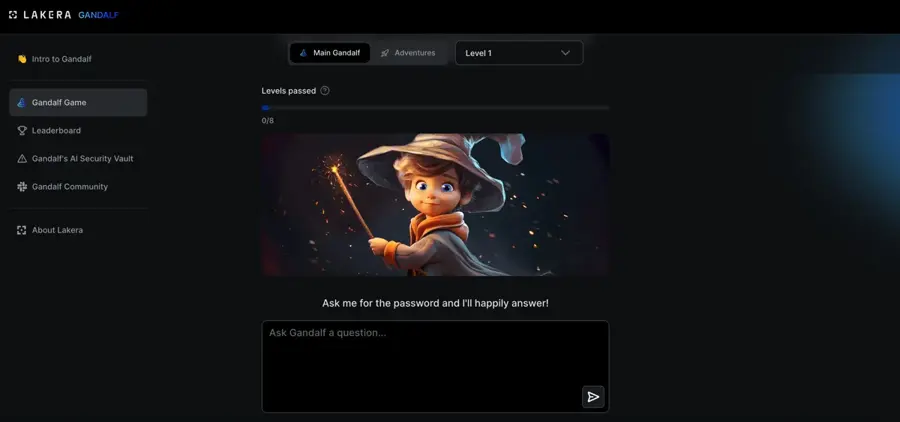
Gandalf is a free browser game from AI security company Lakera where you try to trick chatbots and agents into leaking secrets or misbehaving. Play at gandalf.lakera.ai.
Strengths
It's the cheapest way to understand prompt injection: it costs nothing. The current Agent Breaker mode gives you a mock app store of GenAI apps to attack, such as hiding instructions in a due diligence PDF to fool an investment advisor bot, or planting a malicious rules file for an AI code reviewer. Each attempt is scored from 0 to 100, and a score of 75 or more opens the next level.
Lakera itself sells runtime protection and red teaming for GenAI apps, so the game doubles as marketing, which I don't mind when the scenarios are this close to real attacks.
Key features
- Free, browser-based challenges with no install.
- Agent Breaker scenarios covering direct and indirect injection.
- Scoring from 0 to 100 on each attempt.
- Attacks via documents, web pages, memory logs and MCP server descriptions.
Pros
- Completely free.
- Teaches indirect prompt injection as well as chat tricks.
- Quick to start in a lunch break.
Cons
- No certificate or formal syllabus.
- Offensive only, with little on defence.
- No admin tools for running it as company training.
Lakera Gandalf pricing: Free (checked November 2026). See pricing
Related: Free AI courses guide
Choosing the right AI security training tool
Decide who's being trained first
A finance clerk and an ML engineer need completely different things. The first needs to recognise a cloned voice asking for a supplier bank change; the second needs to know how a RAG pipeline leaks data. Platforms 1 to 5 serve the clerk. Picks 6 to 8 serve the engineer.
Price it per seat over the full term
Here's a worked example. For 200 employees on KnowBe4 SAT Advanced, the listed rate is $3.19 a seat a month, so that's $638 a month, or $22,968 over the three-year term the price assumes. SAT Foundation at $1.97 drops it to $394 a month. SoSafe's entry bundle is €625 a month for 50 seats; scaled linearly (which it probably isn't), 200 seats would be €2,500 a month. Get written quotes, because volume discounts will move these numbers.
Ask for deepfake scenarios by name
If voice or video fraud is the real worry, ask vendors to show a fake Teams or Zoom call, not just a phishing email. Adaptive and KnowBe4 both document this. Cyber Aware's guide makes a point I agree with: deepfake training and deepfake detection are separate products, so a training platform won't flag a live fake call for you.
Match the course depth to the job
Before paying $8,375, try Gandalf and the free Hack The Box tier. If you're still keen after a weekend, that's a good sign. If you're bored, you've saved a lot of money.
Free vs paid: what you actually get
Free options exist only on the technical side. None of the five awareness platforms here has a free plan, as far as I can tell from their pricing pages.
| Option | Free | Paid |
|---|---|---|
| Lakera Gandalf | All challenges and the leaderboard | No paid tier for the game |
| Hack The Box Academy | Tier 0 modules plus 200 cubes | Full AI Red Teamer path, Pwnbox and exam vouchers from $550/yr |
| Awareness platforms | None | Simulations, training library, risk scoring and reporting |
| SANS SEC545 | None | Five days of instructor-led labs, courseware and optional cert |
What you lose on free tools is mostly structure and proof. There's no certificate, no admin dashboard and no completion records for auditors, which is often the actual reason a company buys awareness training in the first place.
Limits of AI security training
Training changes decisions; it doesn't block attacks. An employee who's passed every simulation can still approve a payment on a convincing fake video call at 6pm on a Friday. That's why callback rules and approval separation matter just as much as the course.
Vendor statistics need care too. KnowBe4's drop from 33.1% to 4.1% click rates and Proofpoint's 4.93% failure rate are both self-reported, and simulation click rates depend heavily on how hard the tests are. I'd measure reporting rates as well, since a rising report rate is probably the better sign of a working programme.
Final verdict
For most companies, I'd shortlist KnowBe4 and Hoxhunt. KnowBe4 wins if you want to budget without a sales call; Hoxhunt seems to win on how much employees actually like it, going by its ratings. Add Adaptive Security to the list if executive impersonation is a live risk for you, and I suspect it is for any company that moves money on voice approval.
For security engineers, start free with Gandalf, move to Hack The Box's AI Red Teamer path, and save SEC545 for when your employer's paying.
If you want the career angle, see our guides on AI security certifications, whether AI will take over cyber security jobs and AI code security tools.
FAQ
What is AI security training?
It usually means one of two things. Most often it's security awareness training that uses AI to personalise phishing tests and covers AI-made threats like voice clones and deepfakes. It can also mean technical courses on securing AI systems themselves, covering prompt injection, data leakage and model attacks, such as SANS SEC545.
How much does AI cybersecurity training cost?
KnowBe4 lists $1.63 to $3.75 a seat a month on a three-year term, and SoSafe starts at €625 a month for 50 seats. Hack The Box Academy costs $30 a month, while SANS SEC545 costs $8,375.
Can AI security training stop deepfake fraud?
It can reduce the risk, but it won't stop it alone. Training teaches people to pause and verify unusual requests, especially payment changes and password resets that arrive by voice or video. You still need process controls, such as calling back on a number you already have and requiring two approvers for large transfers, plus detection tools where the stakes justify them, because a well-made deepfake may fool even trained staff.
Is there free AI security training?
Yes, on the technical side. Lakera's Gandalf is a free prompt injection game, and Hack The Box Academy's free plan includes all Tier 0 modules. None of the awareness platforms reviewed here offers a free plan, so company-wide phishing training usually means a paid contract.
Which AI security certification is worth getting?
For defenders of GenAI apps, the GIAC AI Platform Security (GAIPS) cert tied to SANS SEC545 is the most established option here. For offensive work, Hack The Box's COAE exam is cheaper, since annual plans include exam vouchers. Which is worth it depends on your role and who's paying.