8 best AI inventory management tools in 2026, compared and ranked
We compared 8 AI inventory management tools on forecasting, pricing and real user reviews. Here is the right pick for Shopify brands, distributors, makers and tight budgets.
 Written byMuhammad Usman SiddiquiFounder and editor-in-chief
Why you can trust The AI Future
Our writers research every product, link each claim to its source and correct mistakes openly. Companies can't pay for coverage or see reviews before they're published.
Read our editorial policy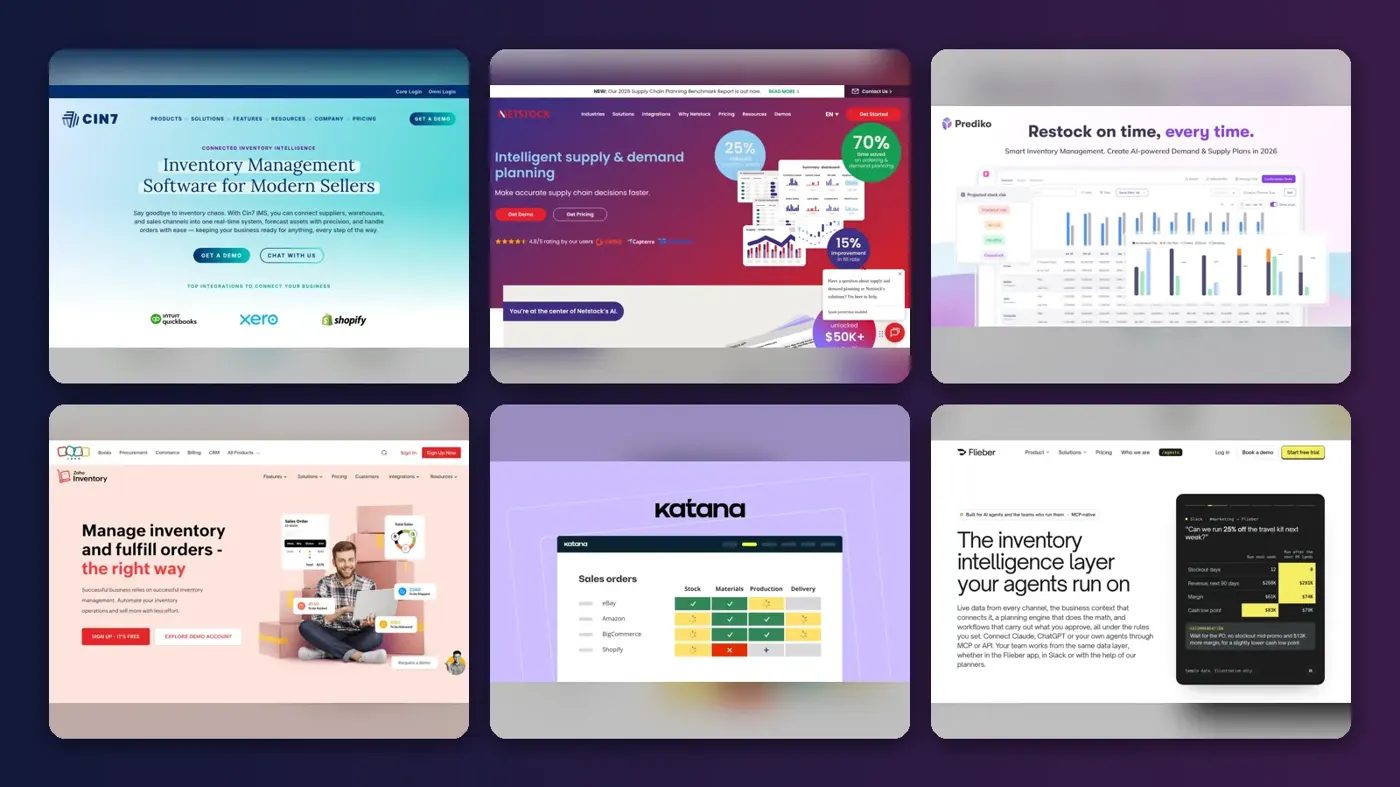
Short answer: AI inventory management uses machine learning to forecast demand, set reorder points and flag stock problems before they cost you sales. If you run a growing product business and want one system for stock, orders and forecasting, start with Cin7 Core. If you already have an ERP and only need sharper planning on top, pick Netstock. Shopify brands should look at Prediko first.
Everything else on this list is a specialist. Zoho Inventory is the budget pick at $29 a month billed annually. Katana suits manufacturers. Flieber and Inventory Planner by Sage are planning layers for multichannel brands, and Linnworks is for sellers whose real headache is order volume across marketplaces. Below you get a comparison table, a breakdown of each pick, prices checked in late October 2026, and a real user review line for every tool.
Key takeaways
- Forecasting is the core AI feature. Every tool here uses sales history to predict demand and suggest purchase orders. Cin7 says its ForesightAI forecasts up to 24 months ahead.
- Prices span a huge range. You can start free with Katana (30 SKUs), pay $29 a month for Zoho Inventory, or spend $900+ a month on Netstock.
- Many vendors hide prices. Inventory Planner, Linnworks and Katana Advantage are all quote-only, so budget time for sales calls.
- Clean data comes first. No AI forecast beats bad stock counts. Fix your SKUs and sales history before you pay for planning software.
How we ranked them
Nobody at The AI Future ran hands-on tests or took screenshots for this roundup. We compared each tool using official product, pricing and help pages, verified user reviews on Capterra and the Shopify App Store, and published reporting, as of late October 2026. Each tool was scored on six criteria:
- AI depth: whether the AI actually forecasts and recommends orders, or is just a chatbot bolted on.
- Core inventory features: multi-location stock, purchase orders, bundles, barcode scanning.
- Integrations: how well it connects to stores, marketplaces, accounting and ERP systems.
- Pricing transparency and value: public prices score higher than quote-only plans.
- User sentiment: ratings and recurring complaints in verified reviews.
- Time to value: how long setup takes before forecasts are usable.
All-in-one systems rank higher because they replace the most spreadsheets. Planning-only tools rank lower overall but are often the better buy if you already run an ERP you like. Prices are in US dollars and exclude tax.
The 8 best AI inventory management tools at a glance
| # | Tool | Category | Best for | Free tier | Starts at |
|---|---|---|---|---|---|
| 1 | Cin7 Core | All-in-one inventory system | Growing product businesses | No | $349/mo |
| 2 | Netstock | Planning on top of ERP | Distributors with an ERP | No | $900/mo |
| 3 | Prediko | Shopify planning app | Shopify brands | No | $49/mo |
| 4 | Zoho Inventory | All-in-one inventory system | Small budgets | No | $29/mo |
| 5 | Inventory Planner by Sage | Planning and forecasting | Multichannel retailers | No | Custom quote |
| 6 | Katana | Manufacturing inventory | Small manufacturers | Yes (limited) | Custom quote |
| 7 | Flieber | Planning and forecasting | Amazon and marketplace brands | No | $299/mo |
| 8 | Linnworks | Multichannel operations | High-volume marketplace sellers | No | Custom quote |
Notes: Zoho's $29 is the Standard plan billed annually. Prediko and Flieber prices come from their Shopify App Store listings, and both offer 14-day free trials. Katana's free plan covers up to 30 SKUs.
The best AI inventory management software in 2026, ranked
Cin7 Core – best for growing product businesses
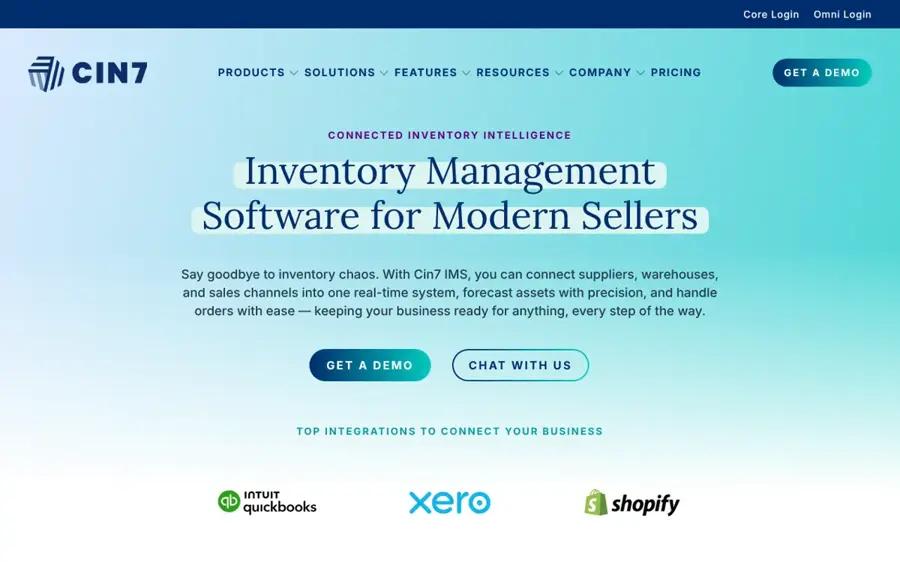
Cin7 Core is a full inventory, order and warehouse system with an AI forecasting module, ForesightAI, for brands selling across wholesale, retail and ecommerce. See it at cin7.com.
Why it stands out
Cin7 covers the whole chain: products, purchases, stock, production, accounting sync and CRM. Its ForesightAI module uses machine learning to forecast sales up to 24 months in advance and can automatically generate purchase orders. Cin7 says it connects to over 700 platforms, including QuickBooks, Shopify and Amazon.
Users on Capterra rate Cin7 Core 4.3 out of 5 across 739 reviews. One reviewer wrote that "Automation is a big plus things like stock updates, order syncing, and invoicing save a lot of manual effort." The complaints are about implementation and support. Another reviewer warned that a promised 30-day setup ran far longer: "expect a minimum of 90 days, which is standard."
Key features
- ForesightAI forecasting: demand forecasts by SKU with automated purchase order suggestions
- 700+ integrations: ecommerce, marketplace, accounting and shipping connections
- Manufacturing: bills of materials and production tracking
- Warehouse management: included on the Advanced plan for high-volume operations
- Multi-location stock: balance inventory across warehouses and stores
Pros
- One system replaces several tools
- Long forecasting horizon
- Public pricing for Core plans
- Large integration catalog
Cons
- Starts at $349 a month, steep for very small sellers
- Advanced forecasting is an extra-cost add-on
- Mixed reviews on onboarding and support
Cin7 Core pricing: No free plan → paid plans from $349/month (Standard), $599 (Pro) and $1,199 (Advanced), checked October 2026. See pricing
Related: Best AI supply chain tools Generative AI in ecommerce
Verdict: the safest all-round choice if you are ready to leave spreadsheets and can budget for a proper rollout.
Netstock – best for distributors with an ERP
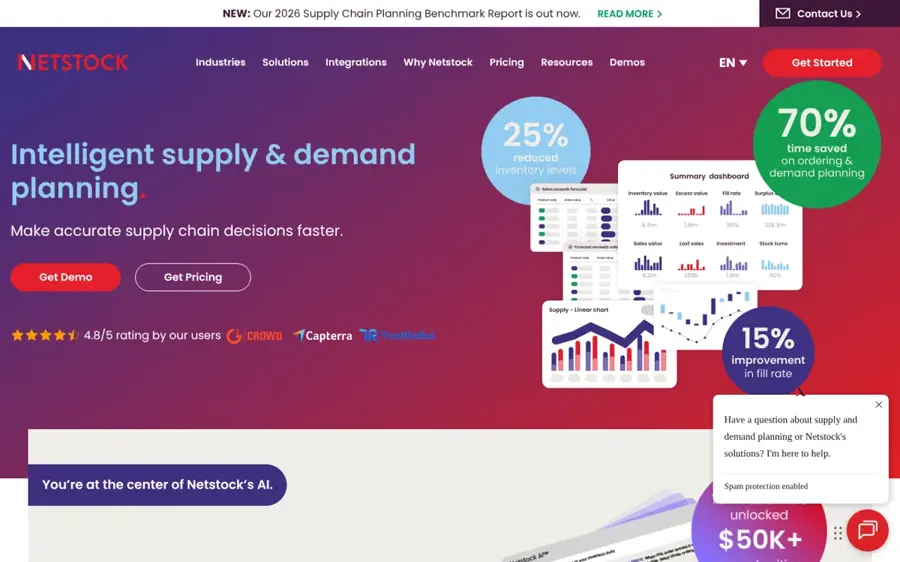
Netstock is a demand and supply planning layer that sits on top of your existing ERP and turns its data into forecasts and order recommendations. Learn more at netstock.com.
Why it stands out
Netstock does not replace your ERP. It plugs into it, and the company says it integrates with over 60 leading global ERP systems. Its generative AI feature, the Opportunity Engine, surfaces recommendations inside the dashboard. TechCrunch reported that Netstock had served 1 million recommendations and that 75% of customers had received a suggestion valued at $50,000 or more (Netstock's own figures).
Netstock has the strongest user ratings here: 4.8 out of 5 from 75 Capterra reviews. One reviewer said it gives "clear insights into stock levels, demand, and purchasing needs, which helps reduce guesswork and make better decisions." A recurring gripe is lag: another user noted data "being 1 day behind our ERP" as a challenge.
Key features
- Opportunity Engine: AI-generated recommendations you can accept or dismiss
- Flexible forecasting: by product, group, sales channel and key customer
- Risk management: supplier and forecast risk refreshed every 24 hours
- 60+ ERP integrations: pulls data automatically from your system of record
- ISO 27001 certified: both products are certified for data security
Pros
- Top-rated by users
- Works with the ERP you already have
- AI suggestions stay optional, not forced
- Implementation in 6 to 10 weeks
Cons
- Pricing starts at $900 a month
- No free trial
- Data can trail your ERP by a day
Netstock pricing: No free plan → pricing from $900/month on annual subscriptions (checked October 2026). See pricing
Related: Best AI supply chain tools
Verdict: if your ERP is fine but your purchasing is guesswork, Netstock is the upgrade with the happiest users.
Prediko – best for Shopify brands
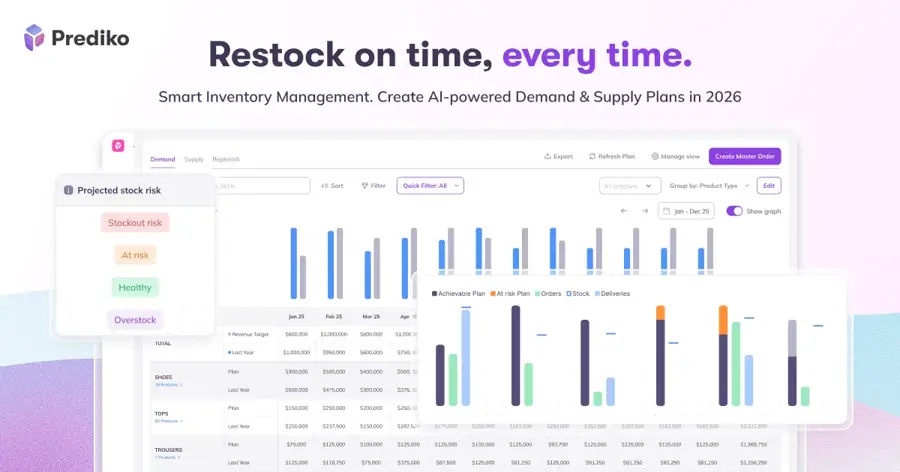
Prediko is a Shopify-certified AI inventory planning app for direct-to-consumer brands, covering forecasting, purchase orders and raw materials. Visit prediko.io.
Why it stands out
Prediko is built for Shopify first, with Amazon, 100+ WMS and 3PL integrations, and Xero and QuickBooks sync. Its listing highlights an AI inventory agent called Pia, MCP support, AI demand forecasting by SKU and seasonality, and a tool to replace Stocky by migrating suppliers and purchase orders automatically. Prediko's pricing page says you can connect unlimited SKUs, stores and warehouses.
The app has 266 reviews on the Shopify App Store. Shopify's own summary says merchants praise "clear demand forecasts, replenishment recommendations, strong purchase order workflows." One retailer wrote that "the days-of-stock approach to ordering suits a store with thousands of SKUs."
Key features
- Pia AI agent: an inventory planning agent with MCP access
- AI demand planning: forecasts by product, SKU and seasonality
- Purchase orders and transfers: unlimited POs and multi-location stock moves
- Raw materials: bills of materials to forecast component needs
- Unlimited users and SKUs: no seat-based pricing
Pros
- Low entry price for a planning tool
- Deep Shopify integration
- Highly rated support
- Simple path off Stocky
Cons
- Revenue-based pricing rises as you grow
- Best fit only if Shopify is your main channel
- Exact tier prices are on the vendor site, not public in the listing
Prediko pricing: No free plan (14-day free trial) → revenue-based plans from $49/month (checked October 2026). See pricing
Related: Generative AI in ecommerce
Verdict: the obvious starting point for Shopify stores that have outgrown basic reorder alerts.
Zoho Inventory – best for small budgets
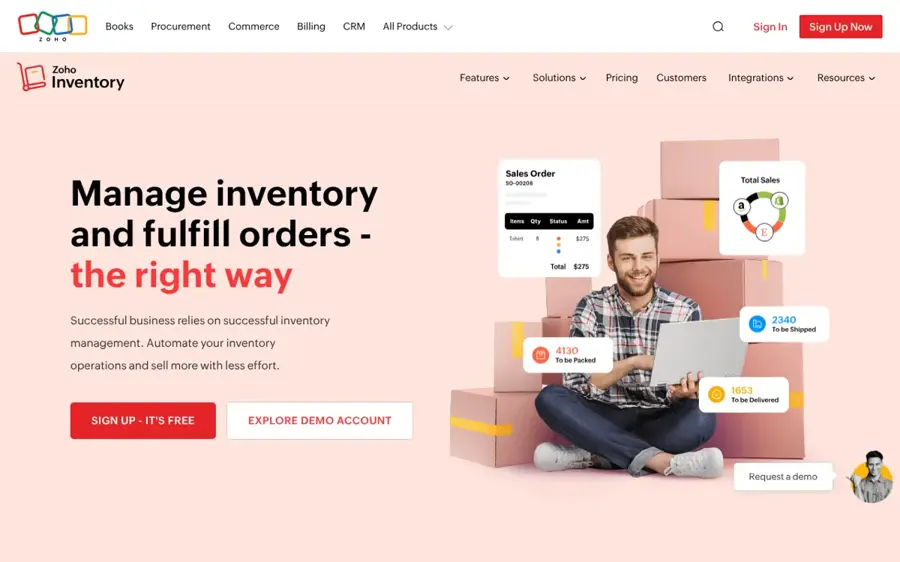
Zoho Inventory is an affordable cloud inventory and order system with Zia, Zoho's built-in AI assistant, for forecasting and anomaly detection. See zoho.com/inventory.
Why it stands out
Zia turns reports into charts, forecasts trends based on your historical data and detects anomalies in your numbers. The newer CoCreate Agent can create sales orders, purchase orders, inventory adjustments and transfer orders from a plain-English prompt. You can review each step and take control at any point.
Capterra users rate it 4.5 out of 5 from 423 reviews. One called it "extremely easy and user-friendly," and another liked "the tight integration of Zoho Inventory with the accounting software I use." The common complaint: "certain integrations and features are only available on higher tier plans."
Key features
- Zia AI insights: forecasts, anomaly detection and charts on reports
- CoCreate Agent: creates transactions from natural-language prompts
- Order limits by plan: 500 orders a month on Standard, up to 15,000 on Enterprise
- Serial and batch tracking: from the Premium plan
- Zoho ecosystem: native links to Zoho Books and Zoho Analytics
Pros
- Cheapest paid plan on this list
- Strong accounting integration
- Public, simple pricing
- AI agent for routine data entry
Cons
- AI forecasting is lighter than dedicated planners
- Key features locked to higher tiers
- Order and user caps per plan
Zoho Inventory pricing: Free trial → paid plans from $29/month (Standard, billed annually), up to $249 for Enterprise (checked October 2026). We could not confirm a free plan on the current pricing page. See pricing
Verdict: the best value if you want AI help on a small-business budget and can live with lighter forecasting.
Inventory Planner by Sage – best for multichannel retailers
Inventory Planner by Sage is a dedicated forecasting and replenishment tool that sits on top of Shopify, Amazon, WooCommerce, Cin7 and other systems. See its official site.
Why it stands out
Inventory Planner focuses purely on planning: demand forecasts, automated replenishment, multi-location planning, cash flow and SKU-level profitability. It works with Amazon, Cin7, Linnworks, QuickBooks, ShipBob and WooCommerce, so it fits brands that sell in many places.
It holds 4.3 out of 5 from 154 Shopify App Store reviews, but sentiment is split. One merchant called it "an exceptional tool as far as forecasting is concerned." Others are scathing. One reviewer said they were told their company was too small and to come back above $1 million in annual revenue, and another described paying a full year up front before onboarding began (read the reviews).
Key features
- Demand forecasting: SKU-level forecasts with seasonality
- Automated replenishment: purchase order suggestions across locations
- Cash flow planning: inventory turnover and open-to-buy views
- Broad integrations: Shopify, Amazon, WooCommerce, Cin7 and more
- Expert onboarding: guided setup included with plans
Pros
- Mature, forecasting-first product
- Works across many channels and back ends
- Backed by Sage
Cons
- Quote-only pricing tied to revenue
- Reviews suggest a shift toward larger merchants
- Mixed support experiences
Inventory Planner by Sage pricing: No free plan → custom quote based on your business (checked October 2026). See pricing
Related: Best AI supply chain tools
Verdict: strong forecasting for mid-size multichannel brands, but get the contract terms in writing first.
Katana – best for small manufacturers
Katana is a cloud inventory and manufacturing platform for makers, with AI replenishment and an MCP connector for Claude, ChatGPT and Gemini. See katanamrp.com.
Why it stands out
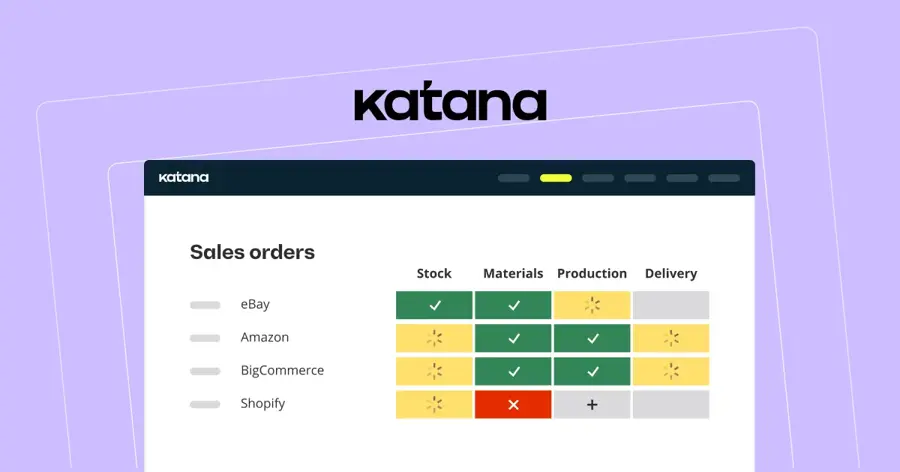
Katana combines inventory, production planning, bills of materials and traceability. Its AI Replenishment feature makes AI-powered purchase order recommendations based on demand history plus context you write in plain language. Katana MCP lets you run Katana from Claude, ChatGPT or Gemini to ask questions and create records.
Capterra users give it 4.6 out of 5 across 171 reviews. One said "The UI is well designed and easy to use with good features." But several long-time small customers complain the company now favours bigger accounts, with one writing that its "strategy seems squarely aimed at upmarket customers."
Key features
- AI Replenishment: PO recommendations from demand history and your notes
- Katana MCP: use Katana from AI assistants
- Manufacturing: routings, BOMs and production insights
- Traceability: batch and serial number tracking
- Unlimited users: on both the free and paid plans
Pros
- Free plan for small catalogs
- Built for makers, not just resellers
- Modern AI assistant integrations
Cons
- Paid plan is custom-priced only
- Free plan caps you at 30 SKUs
- Some small customers report pricing and policy changes
Katana pricing: Free plan (up to 30 SKUs) → Advantage plan on custom annual pricing (checked October 2026). See pricing
Related: Best AI supply chain tools
Verdict: the pick for small manufacturers, and the free plan makes it easy to try.
Flieber – best for Amazon and marketplace brands
Flieber is a multichannel inventory planning platform with AI demand forecasting, built for brands selling on Amazon, Shopify, Walmart and wholesale. See flieber.com.
Why it stands out
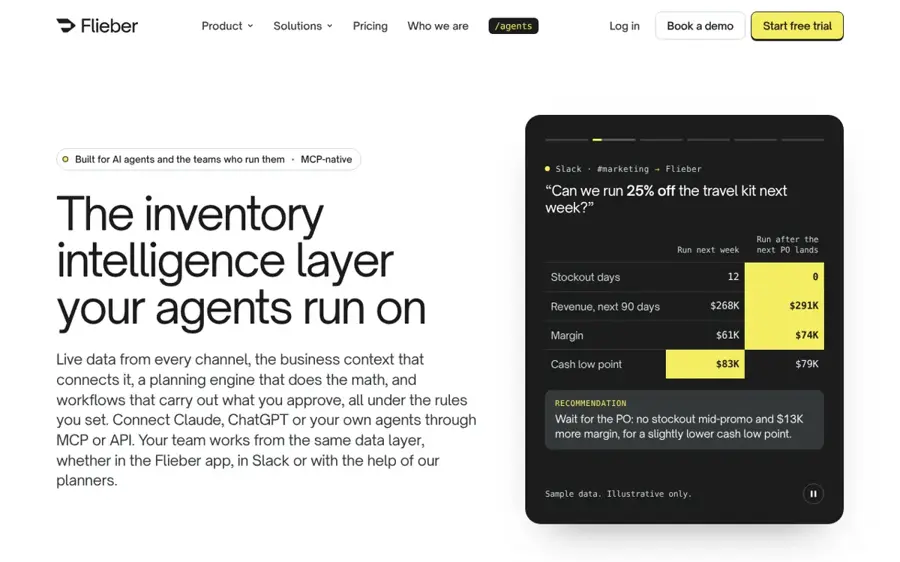
Flieber works on top of your existing ERP or inventory system. It offers AI demand forecasting with anomaly correction, scenario analysis for purchase and transfer orders, a Google Sheets bridge, and access through MCP and API, so your own AI agents can use its data. Monthly contracts carry no annual commitment.
Its Shopify listing has only five reviews, all 5 stars, so treat that as a small sample. One seller wrote: "We sell on 8 marketplaces and this software allows us to quickly and accurately forecast, replenish stock, and place more accurate POs to our supplier."
Key features
- AI forecasting: multichannel, anomaly-adjusted forecasts (Pro plan and up)
- SKU roll-ups: combine aliases and listings into one forecast
- Scenario analysis: test purchase and transfer orders before placing them
- MCP and API access: feed Flieber data to your own agents
- Google Sheets bridge: automate the spreadsheets you already use
Pros
- Strong fit for Amazon-heavy brands
- No annual commitment
- 14-day trial on your own data
Cons
- AI forecasting models start on the $399 Pro tier
- Small public review base
- Pricier than Prediko for Shopify-only stores
Flieber pricing: No free plan (14-day free trial) → Shopify listing shows plans from $299/month, with Self-Serve priced to your data volume (checked October 2026). See pricing
Related: Generative AI in ecommerce Best AI supply chain tools
Verdict: the specialist to call if Amazon and other marketplaces drive most of your sales.
Linnworks – best for high-volume marketplace sellers
Linnworks is a multichannel commerce operations platform that syncs inventory across 100+ channels and uses Spotlight AI to find work you can automate. See linnworks.com.
Why it stands out
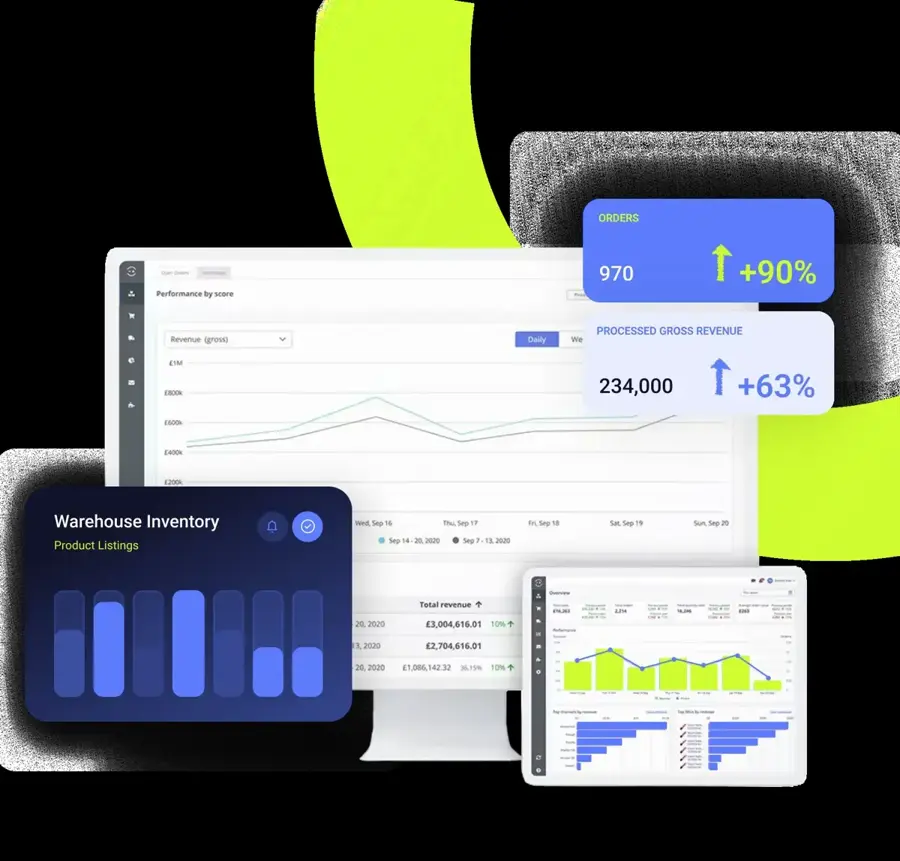
Linnworks is less about forecasting and more about running volume. It syncs stock across 100+ channels, routes orders, and its Spotlight AI detects repetitive manual work and shows you how to automate it. Plans are priced on order volume, not revenue, with no percentage fees.
It scores lowest on user sentiment here, at 4.1 out of 5 from 47 Capterra reviews. One operations manager said it "allowed us to continue to run an efficient team" but was "a little disappointed in the lack of customization that is allowed."
Key features
- Spotlight AI: flags repetitive tasks and suggests automations
- Inventory sync: real-time stock across 100+ channels
- Rules engine: unlimited order routing rules
- Replenishment alerts: automatic reorder calculations
- 70+ shipping integrations: including Amazon Shipping, FedEx and Royal Mail
Pros
- Handles very high order volume
- Pricing by orders, not revenue
- Wide channel and carrier coverage
Cons
- AI is about workflow, not forecasting
- Quote-only pricing
- Users report limited customization and slow support
Linnworks pricing: No free plan → tailored pricing based on order volume (checked October 2026). See pricing
Related: Generative AI in ecommerce
Verdict: choose it when overselling and order chaos hurt more than forecasting errors.
How to choose the right AI inventory management tools
Decide whether you need a system or a planner
This is the biggest fork. If you track stock in spreadsheets today, you need a system of record first: Cin7 Core, Zoho Inventory or Katana. If you already run an ERP or a solid inventory system, add a planning layer such as Netstock, Inventory Planner or Flieber instead of migrating everything.
Match the tool to your main sales channel
Choose Prediko if Shopify is your core. Choose Flieber if Amazon and other marketplaces drive most revenue. Choose Linnworks if you sell on many channels at high volume and overselling is your real problem.
Check what the AI actually does
Ask vendors one question: does the AI forecast demand and recommend order quantities, or does it only answer questions about your data? Both are useful, but forecasting is what saves cash. Sortly makes a fair point in its own guide: AI needs a rich history of transactions, movements, and stock levels to give meaningful insights.
Budget for setup, not just the subscription
Netstock quotes 6 to 10 weeks to implement. One Cin7 reviewer said to expect at least 90 days. Add onboarding time and data clean-up to your real cost, and ask for contract terms before you sign an annual deal.
Free vs paid: what you actually get
True free plans are rare in this category. Here is what each budget level buys you.
| Budget | What you get | Example |
|---|---|---|
| Free | Full features on a tiny catalog | Katana free plan, up to 30 SKUs |
| Free trial | 14 days on your own data | Prediko, Flieber, Zoho Inventory |
| $29 to $129 a month | Inventory system with AI insights and order caps | Zoho Inventory |
| $49 to $600 a month | Dedicated AI forecasting and PO planning | Prediko, Flieber |
| $349 to $1,199+ a month | All-in-one system with forecasting add-ons | Cin7 Core |
| $900+ a month or custom | Enterprise-grade planning on top of your ERP | Netstock, Inventory Planner, Linnworks |
The honest trade-off: free plans let you learn the workflow, but AI forecasting needs months of clean sales history across your full catalog. That almost always means a paid plan.
How AI and IoT work together in inventory
Software forecasts are only as good as the stock counts behind them. That is where IoT comes in. RFID tags, sensors and cameras feed real-time counts to the AI. Market researcher IDTechEx, cited by VMSD, expects the global RFID market to grow from $15.6 billion to $23 billion by 2036, driven partly by Walmart's mandate to tag items beyond apparel.
Computer vision is moving onto shop floors too. At NRF 2026, Simbe unveiled Tally 4.0, a shelf-scanning robot with edge AI that reports what’s in stock, how it’s priced, and where it’s placed. Most small businesses will not need robots, but barcode scanning in tools like Zoho Inventory and Katana is the same idea at a smaller scale. For the wider picture, see our guide to AI supply chain tools.
Final verdict
If you only pick one, pick Cin7 Core. It covers stock, orders, production and forecasting in one place, and its prices are public.
- Choose Netstock if you have an ERP and want the best-rated planning layer.
- Choose Prediko if you sell mainly on Shopify and want AI forecasting from $49 a month.
- Choose Zoho Inventory if budget is the deciding factor.
- Choose Katana if you make products, not just resell them.
- Choose Flieber if Amazon and marketplaces lead your sales.
Whatever you choose, start a trial with your own data and judge it on forecast accuracy against last season, not on the demo. If you are still mapping where AI fits across your business, our explainer on generative AI in ecommerce and our guide on how to implement AI in business are good next reads.
FAQ
How is AI used in inventory management?
AI analyzes sales history, seasonality, lead times and stock levels to forecast demand and recommend what to reorder, when and how much. It also flags anomalies, such as sudden spikes or slow movers, and automates routine work like creating purchase orders. The goal is fewer stockouts and less cash tied up in excess stock.
How AI and IoT is used in inventory management?
IoT devices, such as RFID tags, sensors and shelf cameras, capture stock levels and movements in real time. AI then uses that live data to spot low stock, misplaced items or shrinkage and to trigger replenishment. Together they replace periodic manual counts with continuous, more accurate visibility across stores and warehouses.
How to use AI for inventory forecasting?
Start by cleaning your SKU data and importing at least a year of sales history. Connect your sales channels to a forecasting tool such as Prediko, Netstock or Cin7 ForesightAI. Set supplier lead times and safety stock, review the suggested purchase orders, then compare forecasts against actual sales each month and adjust.
Is there a free AI inventory management tool?
Katana offers a free plan with all features for up to 30 SKUs, which is enough to test the workflow. Most other tools, including Prediko, Flieber and Zoho Inventory, offer 14-day free trials instead. For real AI forecasting across a full catalog, expect to pay for a plan.
Sources
- Cin7 Pricing | Inventory Software Price for Core & Omni Plans (Cin7)
- Inventory Demand Forecasting Software | Cin7 ForesightAI (Cin7)
- Cin7 Core Reviews 2026 (Capterra)
- Pricing | Netstock (Netstock)
- Netstock Reviews 2026 (Capterra)
- Netstock Software Pricing, Alternatives & More 2026 (Capterra)
- How a 16-year-old company is easing small businesses into AI (TechCrunch)
- Prediko Inventory Management (Shopify App Store)
- Pricing & Plans for Shopify Inventory Management App (Prediko)
- Inventory Plans and Pricing | Zoho Inventory (Zoho)
- AI Features | Help | Zoho Inventory (Zoho)
- Zoho Inventory Reviews 2026 (Capterra)
- Inventory Planner by Sage (Shopify App Store)
- Reviews: Inventory Planner by Sage (Shopify App Store)
- Katana Pricing: Advantage Plan for Multi-Channel Inventory (Katana)
- Katana Cloud Inventory Reviews 2026 (Capterra)
- Pricing: Flieber Self-Serve and Managed Services (Flieber)
- Flieber | Inventory planning (Shopify App Store)
- Ecommerce Software Pricing | Linnworks (Linnworks)
- Linnworks (Linnworks)
- Linnworks Reviews 2026 (Capterra)
- Benefits of AI in Inventory Management for Small Businesses (Sortly)
- RFID at NRF: Previewing the Innovations That Will Shape 2026 (RFID Journal)
- RFID Market Set to Reach $23B by 2036 (VMSD)