Most advanced AI chatbot in 2026: 6 picks ranked by benchmarks
Claude Opus 5.5 leads the public benchmarks, with ChatGPT's GPT-6 Astra close behind. Here's how six chatbots rank on current leaderboards.
 Written byRahis SaifiCo-founder and news editor
Why you can trust The AI Future
Our writers research every product from its official pages, independent tests and user reports, link each claim to its source and correct mistakes openly. Unless an article says otherwise, we haven't tested the product hands-on ourselves. Companies can't pay for coverage or see reviews before they're published.
Read our editorial policy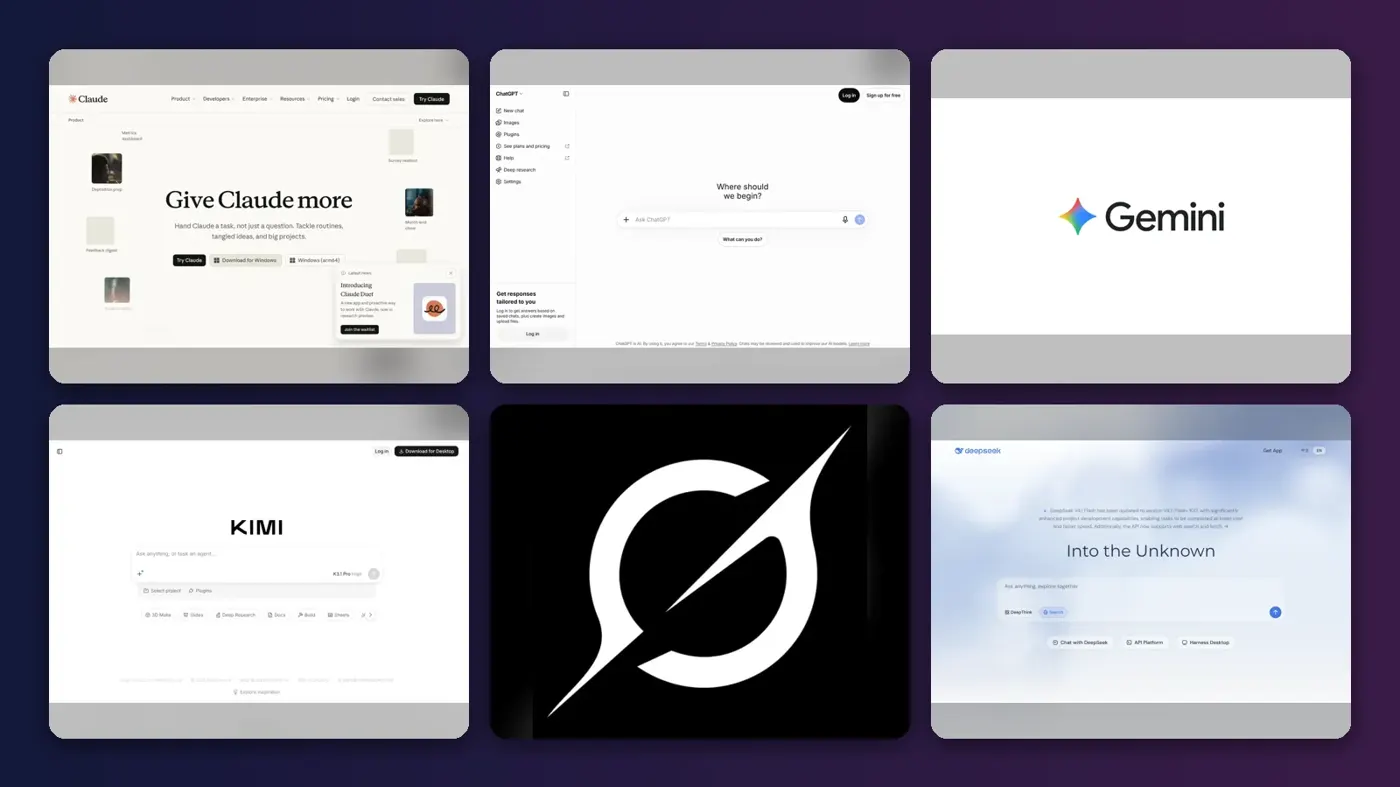
Short answer: the most advanced AI chatbot you can actually sign up for in November 2026 is Claude, running Anthropic's Claude Opus 5.5. It tops the Artificial Analysis Intelligence Index among publicly available models with a score of 59, and ChatGPT with GPT-6 Astra sits just behind at 57. Google's Gemini wins the human-preference vote on LMArena, though, so "smartest" depends a little on how you measure it.
There's one twist worth knowing up front. Google's new Gemini 4 Carbon scores 60 on that same index, one point above Claude, but only a subset of cyber defenders in Google's Fairwind Program can use it right now. You can't open it in the Gemini app. So I've ranked what you can use today, and I'd revisit this list the week Carbon goes public.
Key takeaways
- Claude Opus 5.5 is the highest-scoring chatbot model you can subscribe to, and it leads all six professional capability indexes on Artificial Analysis.
- ChatGPT's GPT-6 Astra is a close second and leads OpenAI's own tests on math, computer use and agent work, but you need the $100 Pro plan to use it in regular chat.
- Gemini 4 Argon ranked first on the LMArena text leaderboard on October 17, 2026, which measures which answers people prefer in blind votes.
- Free plans don't get the flagship models at Anthropic, OpenAI or Google, so the "smartest AI" costs at least $20 a month.
- Kimi, Grok and DeepSeek trail the top three on benchmarks but cost far less or nothing.
Our ranking method
Nobody at The AI Future ran hands-on tests for this piece. Instead, we ranked each chatbot on published benchmarks and leaderboards, checked between late October and 7 November 2026, plus each company's own release notes. If you want help picking a chatbot for everyday writing and planning, our guide to the best AI chat assistants covers that side. This list is about raw capability.
- Artificial Analysis Intelligence Index score for the best model each chatbot offers, read on 7 November 2026.
- LMArena text leaderboard rank (blind human votes), using the October 17, 2026 snapshot.
- Results on hard independent tests such as ARC-AGI-3, FrontierMath and OSWorld, where a third party reported them.
- Whether a regular person can actually use the top model in the chatbot app today.
- Price of the cheapest plan that includes the flagship model.
- Context window and long-task ability.
Benchmarks aren't the whole story. A model can ace a math test and still flatter you; our explainer on AI sycophancy covers that failure mode. Still, they're the most objective yardstick we have.
The 6 most advanced AI chatbots at a glance
| # | Tool | Category | Best for | Free tier | Starts at |
|---|---|---|---|---|---|
| 1 | Claude | General chatbot | Hard professional work | Yes (limited) | $20/mo |
| 2 | ChatGPT | General chatbot | Math, agents and computer use | Yes | $8/mo |
| 3 | Google Gemini | General chatbot | Answers people prefer | Yes | $20/mo |
| 4 | Kimi | General chatbot | Near-frontier power on a budget | Yes | Free |
| 5 | Grok | General chatbot | Live news from X | Yes | Free |
| 6 | DeepSeek | General chatbot | Free reasoning | Yes | Free |
The most advanced AI chatbots in 2026, ranked
Claude – best for hard professional work
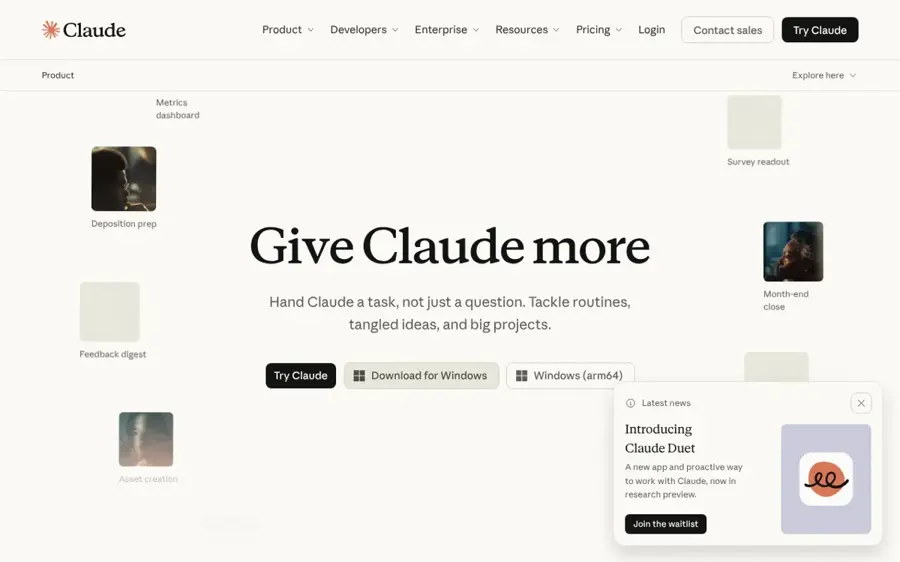
Claude is Anthropic's chatbot, and on paid plans it runs Claude Opus 5.5, the top-scoring model the public can use as of November 2026.
Strengths
On the Artificial Analysis leaderboard, Opus 5.5 at its "max" setting scores 59, behind only the restricted Gemini 4 Carbon. Its lead is clearer on the site's capability indexes: it ranks first in all six, covering finance, strategy, legal, healthcare, engineering and economics. It also held first place on LMArena's WebDev board and third on the text board as of October 17, according to Developers Digest's snapshot of the arena.
Anthropic says in its Opus 5.5 launch post that the model performs at the level of the pricier Claude Fable 5.1 on most work and writes more clearly than Opus 5. One early tester quoted there said "it writes the way I do." I think that matters more than people admit: a smart model you can't follow is hard to check. Even Google's own comparison, reported by Layer3Labs, shows Opus 5.5 beating Carbon on OSWorld-2.1 computer use, 87.2% to 81.5%.
Key features
- Opus 5.5 is available on Pro, Max and Ultra plans, with Sonnet and Haiku on the free plan.
- Every plan gets a context window of up to 1 million tokens.
- Research mode, Claude Code and Claude in Chrome come with paid plans.
- Projects, memory, web search and file creation work on the free plan too.
- Anthropic's top Fable model is available on Max and Ultra within weekly limits.
Pros
- Highest Intelligence Index score of any model you can subscribe to.
- First on all six Artificial Analysis capability indexes.
- Clear, readable writing, going by tester feedback.
- Opus is included at the standard $20 tier.
Cons
- The free plan doesn't include Opus.
- Usage resets every five hours and weekly, so heavy users may hit limits on Pro.
- It trails Gemini 4 Argon in the blind LMArena text vote.
Claude pricing: Free, then paid plans from $20/month for Pro, with Max at $100/month (checked November 2026). See pricing
Verdict: if you only pay for one chatbot to handle difficult work, pick Claude.
Related: Claude AI review Claude vs ChatGPT
ChatGPT – best for math, agents and computer use
ChatGPT is OpenAI's chatbot, and its top model, GPT-6 Astra, is the strongest OpenAI has shipped, though full access in chat sits behind the Pro plan.
Strengths
GPT-6 Astra scores 57 at its max setting on the Artificial Analysis index, level with Claude Opus 5.5 on xhigh. OpenAI's launch post claims 98% on FrontierMath Tier 4 and 99.9% on ARC-AGI-3. The ARC Prize Foundation's Greg Kamradt backed that up in the same post: "On ARC-AGI-3, Astra surpassed our human action-efficiency baseline on 96% of levels, effectively reaching human parity on the benchmark." It also leads FrontierSWE 2 at 65.5%, ahead of Gemini 4 Carbon's 61.2%, per Layer3Labs.
Access is messier. Notebookcheck reported that Plus subscribers get Astra only in ChatGPT Work and Codex, not in the normal chat window, and Sam Altman called the rollout "messy". In chat it's called GPT-6 Pro and needs Pro or a business plan, going by OpenAI's help page on Work and Codex. Honestly, that split confuses me, and I suspect it confuses plenty of paying users too.
Key features
- Free users get unlimited text chats with GPT-6, using the smaller GPT-6 Luna model.
- Plus adds GPT-6 reasoning models and limited Astra use in Work and Codex.
- Pro adds GPT-6 Pro in chat, powered by Astra, plus an always-on agent called Dot.
- ChatGPT Work handles longer agent jobs such as research, spreadsheets and slides.
- GPT-6.1 Sol has a 500,000-token context window in Work and Codex.
Pros
- Record scores on hard math and reasoning tests.
- Strong computer-use and agent results.
- The most generous free tier of the big three.
- Cheap $8 entry plan for lighter users.
Cons
- Astra in regular chat needs the $100 Pro plan.
- Astra burns through usage about twice as fast as GPT-5.6 Sol, according to The Decoder.
- Model names and surfaces (Chat, Work, Codex) are hard to keep straight.
ChatGPT pricing: Free, then paid plans from about $8/month for Go, $20 for Plus and from $100 for Pro (checked November 2026). See pricing
Verdict: pick ChatGPT if math and long agent tasks matter most and you'll pay for Pro.
Related: ChatGPT with GPT-6 review Best ChatGPT alternatives
Google Gemini – best for answers people prefer
Google Gemini is Google's chatbot, and its paid plans run Gemini 4 Argon, which topped the LMArena text leaderboard in October 2026.
Strengths
On LMArena, where people vote blind between two answers, Gemini 4 Argon (High) ranked first in text with 1524 points on October 17, ahead of Meta's Muse Wonder at 1509 and Claude Opus 5.5 at 1508, per Developers Digest. The score was marked preliminary, and the rank spread ran from 1 to 3. So it's a narrow lead.
On Artificial Analysis, Argon scores 50, well below Claude and ChatGPT. Google's bigger news is Gemini 4 Carbon, announced on October 28 and now first on the index at 60. SmartScope notes Google has only said general access is coming "soon", with no date. I'd guess Gemini jumps to first place on this list once Carbon reaches the app, but that's a bet, not a fact.
Key features
- Gemini 4 Argon is included with Google AI Pro and Ultra.
- The free plan uses a Flash-Lite model and still includes Deep Research and Gemini Live.
- Gemini can work with file uploads of up to 1,500 pages.
- Ultra adds the Project Genie world model on its $200 tier.
- Paid plans bundle Google storage and other Google perks.
Pros
- First in the blind LMArena text vote as of mid-October.
- Google's next model already leads the Intelligence Index.
- Good value if you'd pay for Google storage anyway.
Cons
- Argon scores well below Claude and ChatGPT on Artificial Analysis.
- Gemini 4 Carbon isn't available to consumers yet.
- The free model is a small Flash-Lite version.
Google Gemini pricing: Free, then $20/month for Google AI Pro, the cheapest plan with Gemini 4 Argon, and Ultra from $100 (checked November 2026). A cheaper AI Plus tier exists, but it uses the Flash model. See pricing
Verdict: choose Gemini if you live in Google's apps and want the answers voters liked best.
Related: Gemini vs ChatGPT Gemini performance vs other models
Kimi – best for near-frontier power on a budget
Kimi is Moonshot AI's chatbot, and since October 2026 it runs Kimi K3.1 Pro, the highest-scoring model on Artificial Analysis from any lab outside the US.
Strengths
Kimi K3.1 Pro scores 46 on the current Artificial Analysis leaderboard, ahead of Grok 4.7, DeepSeek and Alibaba's Qwen3.8 Max. On the site's capability indexes it ranks seventh or eighth in every category, and its best score, 58 on strategy and operations, is three points behind Claude. That's a big gap to Claude, but it's closer than any other Chinese lab gets right now.
Moonshot launched K3.1 Pro on October 23 with 2.8 trillion total parameters and a context window of about 1 million tokens, AiCybr reported. It's available on the Kimi website and apps, and Moonshot planned to publish the weights by November 4. Open weights mean companies can run it on their own servers; for a privacy-minded team, I think that's the real selling point.
Key features
- K3.1 Pro is available in the Kimi web and mobile apps.
- Kimi Work is a desktop agent for Windows and Apple silicon Macs.
- The model takes text and image input.
- API prices are $2 per million input tokens and $10 per million output tokens.
- Downloadable weights were scheduled for early November.
Pros
- Highest Intelligence Index score of any non-US model.
- Cheap API pricing.
- Open weights for self-hosting.
Cons
- A 13-point gap to Claude on the Intelligence Index.
- The main site defaults to Chinese.
- We couldn't confirm the price of Kimi's paid membership.
Kimi pricing: Free to use in the app; we couldn't verify paid membership prices in November 2026. See pricing
Verdict: try Kimi if you want strong answers without a $20 subscription.
Related: Moonshot AI review Best ChatGPT alternatives
Grok – best for live news from X
Grok is SpaceXAI's chatbot, built into X, and it runs Grok 4.7, released on September 21, 2026.

Strengths
Grok's edge is live information. The Grok page highlights real-time search across the web and X, so it's handy for breaking news. On raw smarts it's further back: Grok 4.7 (xhigh) scores 35 on the current Artificial Analysis leaderboard, about where Claude Opus 5.5 lands on its lowest setting.
ForkLog's launch report says Grok 4.7 improved on Grok 4.6 in SpaceXAI's own tests, with CursorBench 4.0 rising from 40.4% to 46.3%. There's a cost, though. In Artificial Analysis tests it used about 81,000 output tokens on average at xhigh, more than double Grok 4.6's 36,000.
Key features
- Live search across the web and X with citations.
- A multi-agent mode runs several agents in parallel on hard questions.
- Grok Imagine creates images and videos up to 15 seconds.
- Grok 4.7 has a 500,000-token context window.
- Voice chat works in more than 30 languages.
Pros
- Live X integration that no other chatbot here has.
- Free to try on web and mobile.
- Image and video generation in the same thread.
Cons
- Scores well behind the top three on Artificial Analysis.
- Uses many more tokens on hard tasks than its predecessor.
- SuperGrok's price isn't shown on the Grok page.
Grok pricing: Free to try, with a paid SuperGrok upgrade for higher limits and multi-agent mode; we couldn't confirm its current price in November 2026. See pricing
Verdict: use Grok for what's happening right now, not for your hardest problems.
Related: Grok vs ChatGPT Best Grok alternatives
DeepSeek – best for free reasoning
DeepSeek is a Chinese chatbot whose latest model, DeepSeek V4.1 Flash, is free to chat with on the web and in its app.
Strengths
DeepSeek V4.1 Flash 1017 at its max setting scores 33 on the Artificial Analysis leaderboard, close to Grok 4.7. Its cost per task on that page is just $0.60, against roughly $10 for Claude Opus 5.5 at max. For students or anyone who wants a reasoning model without paying, that's a decent deal.
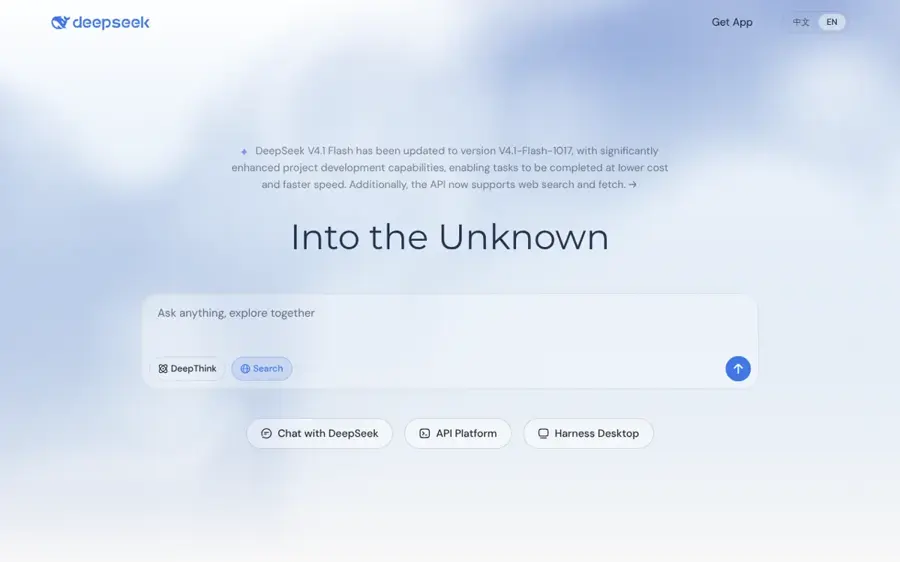
The DeepSeek homepage says the Flash model was updated to version 1017 with better project development skills, and the app includes DeepThink reasoning and search modes.
Key features
- DeepThink mode shows step-by-step reasoning.
- Built-in web search.
- Context window of about 1 million tokens, per Artificial Analysis.
- A desktop coding tool called DeepSeek Harness.
Pros
- Free chatbot with a reasoning mode.
- Very low cost per task on benchmarks.
- Fast updates to the Flash model.
Cons
- Scores 26 points below Claude Opus 5.5 on the Intelligence Index.
- Its larger V4 Pro model scores lower than V4.1 Flash on Artificial Analysis, which makes the lineup confusing.
- Companies with strict data rules may avoid a China-based service.
DeepSeek pricing: Free to chat on the web and app; no consumer subscription is listed on its homepage (checked November 2026). See pricing
Verdict: DeepSeek is the smartest free option here, if you're fine with a China-based service.
Related: Best ChatGPT alternatives
Choosing the right most advanced AI chatbot
Match the benchmark to your work
The Intelligence Index rewards hard reasoning, coding and agent tasks. LMArena rewards answers people like reading. If you write reports for humans, the LMArena lead for Gemini counts for more; if you hand off long technical jobs, Claude and ChatGPT's index scores matter more. Our LMArena review explains how those votes work.
Check which model your plan actually gets
This is the trap I'd watch most closely. ChatGPT Plus doesn't get Astra in regular chat, Claude's free plan doesn't include Opus, and Gemini's free tier runs Flash-Lite. Paying $20 for "ChatGPT" and paying $20 for "the smartest model" aren't the same thing.
Pick by price ceiling, then by score
At $20 a month, Claude Pro gets you the top-scoring model available. At $100, ChatGPT Pro and Claude Max both open up more. Below $20, Kimi and DeepSeek are probably the strongest picks.
Expect the order to change within weeks
Gemini 4 Carbon was announced on October 28, Kimi K3.1 Pro on October 23 and Muse Wonder on October 12. Meta's Muse Wonder Full scores 50 on Artificial Analysis, but The Batch reports it's only offered through a $50-a-month Muse Code subscription, which is why it isn't ranked here as a chatbot. Treat any "smartest AI" claim, this one included, as a snapshot.
Free vs paid: what you actually get
Free plans give you a capable chatbot, but not the flagship. ChatGPT Free has unlimited text chats with GPT-6, yet the model behind them is GPT-6 Luna, which scores 28 at max on Artificial Analysis versus 57 for Astra. Claude's free plan includes Sonnet and Haiku, not Opus, per the Claude plan comparison. Gemini's free tier runs Flash-Lite.
Paying $20 a month changes that most clearly at Claude, where Pro includes Opus 5.5 outright. At OpenAI, $20 gets you GPT-6 reasoning models plus limited Astra in Work, while full Astra chat starts at $100. I'm not convinced most people need the $100 tiers. If you're asking a few hard questions a day, Claude Pro or Google AI Pro will probably cover you.
| Chatbot | Free model | Flagship model | Cheapest plan with flagship |
|---|---|---|---|
| Claude | Sonnet, Haiku | Opus 5.5 | Pro, $20/mo |
| ChatGPT | GPT-6 Luna | GPT-6 Astra | Pro, from $100/mo (Plus gets limited Astra in Work) |
| Google Gemini | Flash-Lite | Gemini 4 Argon | AI Pro, $20/mo |
Final verdict
If you want the single most advanced AI chatbot you can buy today, get Claude Pro. It's $20, it includes Opus 5.5, and that model leads every capability index Artificial Analysis publishes. ChatGPT is the better choice if math or computer-use agents are your main job and the $100 Pro plan doesn't scare you. My honest expectation is that Gemini 4 Carbon will shake this up before the year's out, so if you're on the fence, a monthly plan beats an annual one right now.
FAQ
Which AI is the smartest?
Among models the public can use, Claude Opus 5.5 is the smartest by the Artificial Analysis Intelligence Index, scoring 59 as of 7 November 2026. GPT-6 Astra follows at 57. Google's Gemini 4 Carbon scores 60, but it's limited to selected cybersecurity partners for now, so you can't use it in a normal chatbot yet.
What's the smartest AI in the world right now?
On paper, it's Gemini 4 Carbon, first on Artificial Analysis at 60 after its October 28 announcement. In practice, it's Claude Opus 5.5 or GPT-6 Astra, because Carbon isn't publicly available. On LMArena's blind human vote, Gemini 4 Argon led the text board on October 17, 2026, with Claude Opus 5.5 in third.
Is the smartest AI also the best chatbot for everyday use?
Not necessarily. The top models are slower and use up your plan's limits faster; OpenAI's Astra, for example, gets about half the messages of GPT-5.6 Sol. For emails, quick questions and planning, a faster model is often fine.
Our AI chat assistant roundup ranks chatbots for daily use instead.
Can I use the smartest AI for free?
Not fully. Anthropic, OpenAI and Google keep their flagship models off free plans, so Opus 5.5, GPT-6 Astra and Gemini 4 Argon all need a paid plan. The strongest free options are probably Kimi K3.1 Pro, which scores 46 on Artificial Analysis, and DeepSeek V4.1 Flash, which scores 33.
Does a high benchmark score mean an AI is close to AGI?
I don't think so. Benchmarks like ARC-AGI-3 measure specific skills, and OpenAI's claim of near-human parity there is about one test, not general intelligence. Models still make confident mistakes. Our explainer on what AGI means covers why the definition is so disputed.