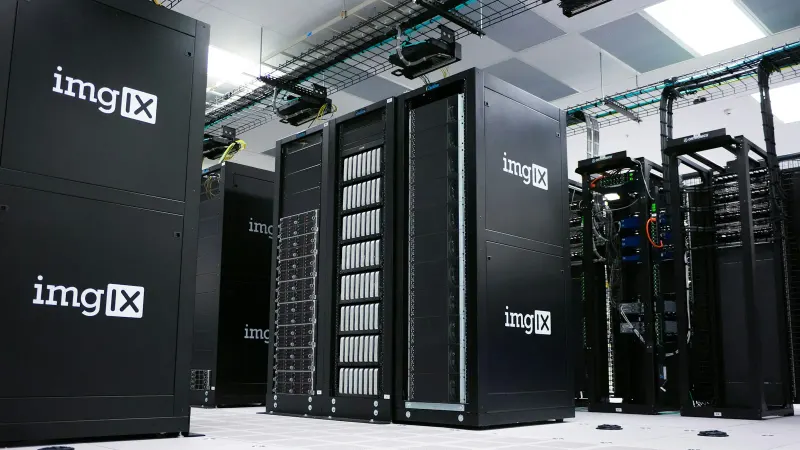
Harvard study puts US data center emissions above Denmark's as COP31 launches AI pledge
A Harvard study says 403 big US data centers produced about 28.3 million tons of CO2 in a year. COP31 launched a voluntary pledge on clean AI the same day.
 Written byRahis SaifiCo-founder and news editor
Why you can trust The AI Future
Our writers research every product from its official pages, independent tests and user reports, link each claim to its source and correct mistakes openly. Unless an article says otherwise, we haven't tested the product hands-on ourselves. Companies can't pay for coverage or see reviews before they're published.
Read our editorial policy
The 400 largest data centers in the United States put more heat-trapping gas into the air in one year than Denmark did, and that was before the artificial intelligence boom really got going, according to a Harvard University study published Monday. Negotiators at the UN climate talks in Antalya, Turkey, launched a voluntary pledge the same day on powering data centers with clean energy.
The timing matters because the two stories point at the same problem from opposite ends. One measures the damage; the other asks companies to sign up to fix it.
The Harvard findings
Researchers looked at 403 of the largest US data centers between May 2024 and April 2025, using available data and modeling to estimate electricity use and emissions. They put the resulting carbon dioxide at around 28.3 million tons (25.7 million metric tons), in a study in Nature Sustainability.
More than half of the centers' 82 terawatt hours of electricity came from fossil fuels. That's enough power for nearly 7 million homes for a year, per the researchers.
Senior author Francesca Dominici, a Harvard biostatistics professor, said the figure is two to three times what earlier studies showed. "It is the equivalent to the CO2 emission of an entire state like Michigan or a small European country," she said, adding that plans for 2,000 more data centers make the number more worrying for the future.
The method rests on modeling because companies don't publish detailed power and pollution data. Outside experts contacted for the story said the approach was reasonable. Fengqi You, a Cornell University energy systems scientist who wasn't part of the study, said: "We cannot manage environmental impacts effectively without reliable measurements and disclosure."
The Antalya pledge
The pledge was launched by UN climate talks host Turkey and the International Telecommunication Union (ITU). It says data centers should use clean power and efficient energy and water systems. It also says data center environmental impacts should be assessed and shared, and that signatories should support using AI as a climate solution.
It's voluntary. Going by the ITU's pledge page, endorsement stays open between COP31 and COP32, and governments, companies, research groups and civil society can sign. Signatories commit to measurable actions aligned with internationally recognized standards.
UN climate chief Simon Stiell used the launch to push back on the argument that AI's future benefits justify its present footprint. He said people can't be asked to accept higher bills, more pollution and deeper inequality now in exchange for promises of a better tomorrow.
Who it affects
The study covers US facilities, so the most direct effect is on communities near data centers and on the grids that feed them. The backlash has already played out in US elections and in local objections to new sites, per the AP, which fits what Stiell said about bills.
Health costs are a separate question. A different team, from UC Riverside, Caltech and Rochester Institute of Technology, projects the annual public health burden of US data centers could pass $20 billion by 2028. It also says the per-household burden in the hardest-hit counties could reach about seven times the national average. That's a preprint on air pollution, not carbon dioxide, so the numbers don't line up with Harvard's. Still, I think they show why where a data center sits matters as much as how big it is.
Not everyone's convinced
Opinions on AI's net effect differ sharply. Former US Vice President Al Gore told the AP he's less worried about AI emissions than others are, and he cited an estimate from economist Nicholas Stern of a 6 to 9 percent cut in greenhouse gas emissions by 2030 from advanced AI. Caleb Max, president of the National Artificial Intelligence Association, said the fears may be overblown.
Philip Newell of the advocacy group Climate Action Against Disinformation was skeptical. The group's new report says the biggest tech companies' electricity use rose 240% between 2022 and 2025.
Campaigners at Beyond Fossil Fuels have also criticised the pledge. They say it focuses on measuring AI systems and misses data center owners and operators, who they argue must disclose each site's energy and water use and energy mix. That's a fair gap, as far as I can tell, because the Harvard team had to estimate its numbers precisely since operators don't disclose them.
Next steps
Implementation cooperation is planned to begin immediately after COP31, per the ITU. The pledge asks for measurable results, but a voluntary text has no enforcement behind it, so the first signatory list will probably say more than the wording does.
On the study side, Dominici's point about 2,000 planned data centers means the figure is likely to climb unless the power mix changes. Honestly, I'd treat the pledge as a reporting test: if big operators publish site-level energy and water data, it'll mean something. If they don't, the next study will still have to guess.