Can AI do dubbing? A simple explanation for 2026
Yes, AI can dub video: it transcribes, translates, clones the voice and can even move the lips. Here's how it works, where it's used and where it still falls short.
 Written byBurhan AqibSenior writer, policy and analysis
Why you can trust The AI Future
Our writers research every product from its official pages, independent tests and user reports, link each claim to its source and correct mistakes openly. Unless an article says otherwise, we haven't tested the product hands-on ourselves. Companies can't pay for coverage or see reviews before they're published.
Read our editorial policy
On September 9, Prime Video started showing US viewers a German drama in which the actors' mouths had been digitally reshaped to match an English dub. The voices were human. The lips weren't. That one release says a lot about where things stand: yes, AI can do dubbing, and it's already doing it at scale, but the best results still lean on people somewhere in the chain.
Can AI do dubbing: in brief
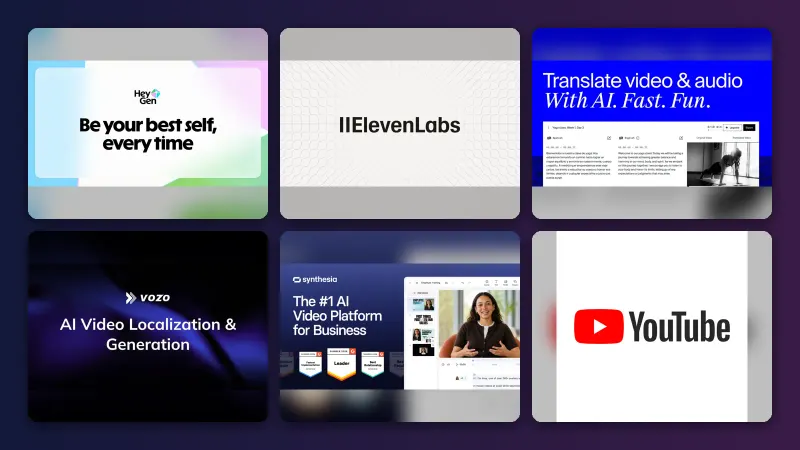
Yes. AI dubbing tools can transcribe speech, translate it, speak it again in a cloned version of the original voice and, in some cases, move the speaker's lips to match. YouTube, Instagram and Facebook already do this for free on eligible videos, and paid apps such as ElevenLabs and HeyGen do it in minutes. Quality is good enough for tutorials and talking-head clips; for emotional drama it's still hit and miss.
The four steps inside an AI dub
Traditional dubbing is slow work. A translator adapts the script, a director casts voice actors, the actors record line by line while watching the picture, and an engineer mixes the new voices back under the music and effects. It takes weeks for a feature film, and the cost is the reason so much foreign TV only ever gets subtitles.
An AI dub squeezes that into a pipeline of models, each handing off to the next:
- Speech recognition turns the original audio into a timed transcript and separates the voice from the background sound.
- A translation model rewrites the transcript in the target language, ideally trimming or stretching lines so they fit the same time slot.
- A text-to-speech model with voice cloning reads the translation aloud in something close to the original speaker's voice.
- An optional lip-sync model edits the video frames so the mouth shapes match the new words.
Here's the analogy I find most useful. It's a relay race with four runners, and the baton can drop at every handoff: a misheard word in step one becomes a wrong translation in step two, which becomes a confident, fluent, completely wrong sentence in step three. Nothing downstream can fix an error upstream.
Newer systems try to shorten the relay. ElevenLabs says its Dubbing v2 "conditions on the source performance, not a transcript", so tone and emotion are meant to carry over from the original audio rather than being rebuilt from text. I think that's the right direction, because the flat, emotionless delivery is what people complain about most. If you want the voice side explained on its own, our piece on whether text to speech is AI covers it.
Timing is the sneaky problem. German and Spanish usually take more syllables than English to say the same thing, so a literal translation runs long and the voice has to rush. YouTube won't even attempt a dub when the original speech is too fast, because the result would be "an unlistenable, sped-up dub".
Real examples of AI dubbing
You've probably heard an AI dub already without choosing to. YouTube's automatic dubbing is switched on by default for eligible creators, and dubbed videos carry an "auto-dubbed" label in the description. It covers 27 languages, eight of which get a more natural "Expressive Speech" voice, and YouTube counted over 6 million viewers a day watching at least 10 minutes of dubbed content by December 2025. Some channels can also switch on an experimental lip-sync feature.
Meta does something similar. Creators can dub and lip-sync Reels for free between English, Spanish, Hindi and Portuguese, with Bengali, Tamil, Telugu, Marathi and Kannada added later. On Facebook it's limited to creators with 1,000 followers or more; on Instagram any public account qualifies where Meta AI is available.
Then there's the cautionary tale. In November 2025 Prime Video added English AI dubs, labelled "AI beta", to anime including Banana Fish and Vinland Saga. Clips of the flat delivery spread fast, the National Association of Voice Actors called the dubs "AI slop", and Amazon pulled most of the English tracks. Honestly, I'm not surprised: dubbing an emotional eight-year-old show with no deadline pressure was about the worst possible test case for the tech. (Amazon's Maxton Hall experiment, with human voices and AI only on the lips, reads to me like a lesson learned.)
The table below is my own summary of four places you can get an AI dub now, built from each company's published plans.
| Option | Cost to start | Languages | Lip sync | Main limit |
|---|---|---|---|---|
| YouTube auto dubbing | Free | 27 | Experimental, select channels | You can't edit the dubs |
| Meta AI translations | Free | English, Spanish, Hindi, Portuguese and several Indian languages | Optional | Reels only |
| HeyGen | Free, then $29/mo | 175+ | Yes | Free videos are watermarked and capped at 1 minute |
| ElevenLabs | Dubbing from $6/mo | 90+ | Not advertised for dubbing | Credit-based, so long videos add up |
Looking at HeyGen's plans, the free tier gives you three watermarked videos a month of up to one minute each, which is enough to judge whether your voice clone sounds like you and not much more. ElevenLabs puts its Dubbing Studio on the Starter plan, which normally costs $6 a month. For a longer list of apps, see our roundup of the best AI video dubbing tools.
Benefits and limitations of AI dubbing
The case for AI dubbing is mostly about reach and money. A solo creator who'd never pay a studio to dub a cooking channel into Hindi can now flip a switch, and a training team can put one compliance video out in ten languages the same week. That's real.
The limits are just as concrete:
- Emotion is the weakest link, as the Banana Fish backlash showed.
- Overlapping speakers confuse the pipeline, and YouTube's own advice is to avoid overlapping speech.
- Idioms and jokes often get translated literally, so "it's a piece of cake" can come out as an actual cake.
- Videos with copyrighted content or no clear speech aren't eligible for YouTube's dubs at all.
- On YouTube you can't fix a bad line; you can only change the source language and let it regenerate.
There's also a trust question. Lip-sync dubbing changes how a real person's face moves, which puts it in the same technical family as deepfakes. Consent matters: dub your own videos, or footage you have the rights to, and don't clone someone else's voice without permission.
Practical takeaways if you make videos
If you're a YouTuber, check Studio before doing anything else. Auto dubbing may already be live on your channel, and you can tick "Manually review dubs before publishing" so nothing goes out unheard. I'd switch that on straight away.
For a free AI dubbing option on short clips, Meta's Reels translations and YouTube's built-in dubs are hard to beat, since both cost nothing. Paid apps make sense when you need to edit the translated script, pick the target languages yourself or dub video that lives outside those platforms. Our step-by-step guide on making a dub with AI walks through the process.
Speak clearly. Leave small pauses. Avoid two people talking at once, and write translated titles and descriptions yourself, because those help the dubbed version get found. My guess is that a cleanly recorded talking-head video gets you most of the way there, while a fast, jokey, multi-speaker podcast probably still needs a human pass.
And get a native speaker to listen to at least one dub per language before you rely on it. It's a small cost against an embarrassing mistranslation.
The next 12 months for AI dubbing
Some of this is announced, some is my guess, so it's worth keeping the two apart.
What's announced: YouTube says it's adding languages, bringing Expressive Speech to more of them and building tools so creators can adjust their dubs. Maxton Hall's third season is due on December 9 with the lip-synced English dub from launch, and Amazon has said more titles will follow. In the EU, the AI Act requires anyone deploying AI to make a deepfake to disclose it, with a lighter, non-disruptive disclosure for clearly artistic or fictional works; I'd expect visible "AI dubbed" labels to become the norm partly because of that.
What I'm guessing: the split Amazon chose (human voices, AI lips) seems likely to become common for premium drama, while fully automatic dubs take over YouTube, Reels and corporate video. Voice actors won't vanish, but I suspect more of their work will shift toward directing, fixing and performing the scenes that machines still flatten.
FAQ
Is there a free AI dubbing tool?
Yes. YouTube's automatic dubbing is free for eligible creators in 27 languages, and Meta lets you dub and lip-sync Reels for free in several languages. HeyGen also has a free plan with three watermarked videos a month of up to one minute each, which is fine for testing short clips but too small for regular use.
Can AI dubbing keep my own voice?
Usually, yes. ElevenLabs, HeyGen and Meta all use voice cloning so the dub sounds like the original speaker. Expect it to sound close, though probably not identical.
What is AI deepfake?
A deepfake is image, audio or video made or changed by AI so a real person seems to say or do something they didn't. The EU AI Act defines it as AI-generated or manipulated content that resembles real people, places or events and would falsely appear authentic. Lip-synced dubbing uses the same face-editing techniques, which is why disclosure and consent matter.
Are deepfakes AI?
Yes. The word comes from "deep learning", the branch of AI behind them. Deepfakes rely on neural networks trained on many images or recordings of a face or voice, then generate new frames or audio. Not all edited video counts, though; a manual cut or colour grade isn't a deepfake, because no model is inventing a new likeness. The label is about the person, not the tool. A lip-synced dub of your own video, clearly marked as translated, is a very different thing from a fake clip of a politician, even if the software underneath is similar.
Will AI replace voice actors?
Probably not entirely, at least for premium work. Amazon's Maxton Hall release kept human voice actors and used AI only on the actors' lips, and its fully synthetic anime dubs drew enough criticism that most were pulled. Lower-budget video is a different story; that's where automatic dubs are spreading fastest.