10 best AI visibility tracking tools in 2026, compared side by side
The best AI visibility tracking tools for monitoring brand mentions in ChatGPT, Gemini and AI Overviews over time, with prices checked October 2026.
 Written byRahis SaifiCo-founder and news editor
Why you can trust The AI Future
Our writers research every product, link each claim to its source and correct mistakes openly. Companies can't pay for coverage or see reviews before they're published.
Read our editorial policy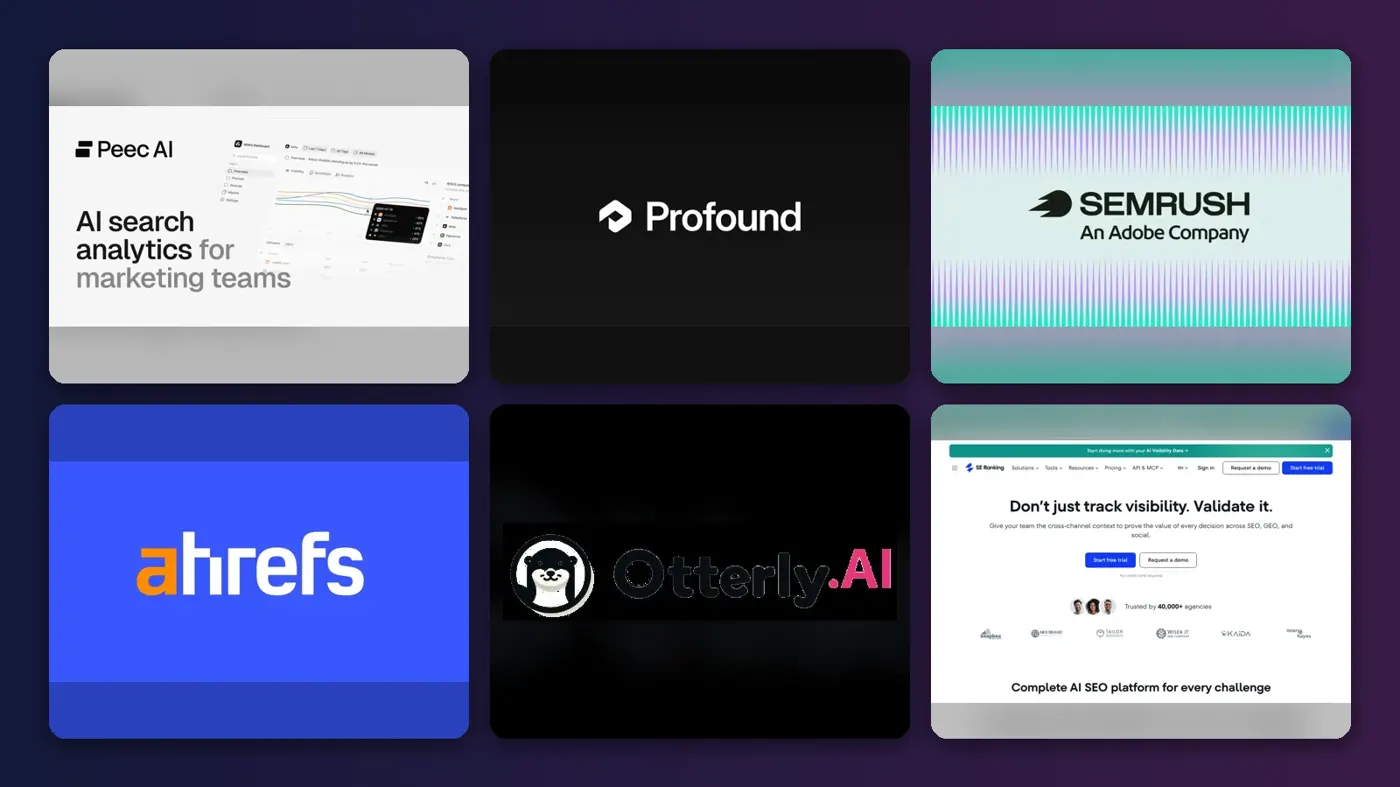
Short answer: most teams should start with Peec AI. It tracks your brand across the AI models you choose every day, gives the whole team access on every plan and shows the exact URLs behind each answer, from about €85 a month. If you are an enterprise with a content team and a budget, look at Profound. If you already pay for Semrush, Ahrefs or SE Ranking, switch on their AI tracking before you buy anything new.
This guide is about one job: finding the best AI visibility tracking tool for watching how ChatGPT, Gemini, Perplexity, Google AI Overviews and other answer engines mention your brand over weeks and months. If you want a one-off snapshot, read our guide to AI visibility checking tools. If you already have the data and want to improve it, see our picks for AI visibility optimization tools.
Key takeaways
- Tracking is about trends, not one answer. AI answers change from run to run, so you need the same prompts checked on a schedule, across several engines, for weeks.
- Prompt limits drive the price. Entry plans range from 15 prompts (Otterly.AI Lite, $29 a month) to 125 (Scrunch), and every vendor counts usage differently.
- Watch for engine add-ons. Several tools charge extra for Gemini, Google AI Mode or Claude. Check what is included before you compare prices.
- Agencies should check seats and white-labelling first. Peec AI includes unlimited users, while Rankscale and SE Ranking offer white-label options.
How we ranked them
Nobody at The AI Future ran hands-on tests or took screenshots for this roundup. We compared each tool using its official pricing and product pages, published independent reviews and agency write-ups, as of late October 2026. We weighed seven criteria:
- Engine coverage: which AI answer engines are included in the base price and which cost extra.
- Tracking cadence and history: how often prompts are re-run and how far back trend data goes.
- Prompt capacity per dollar: how many prompts, answers or credits you get at each price.
- Competitor benchmarking: share of voice, position and sentiment against named rivals.
- Citation data: whether the tool shows which domains and URLs the engines cite.
- Reporting and agency features: seats, exports, Looker Studio, API and white-label options.
- Price transparency: whether you can see and buy a plan without a sales call.
Prices change often in this category, so confirm on the vendor page before you buy.
The 10 best AI visibility tracking tools at a glance
| # | Tool | Category | Best for | Free tier | Starts at |
|---|---|---|---|---|---|
| 1 | Peec AI | Dedicated tracker | Most teams and agencies | No | €85/mo |
| 2 | Profound | Enterprise platform | Large brands | Yes (limited) | Custom |
| 3 | Semrush AI Visibility Toolkit | SEO suite add-on | Existing Semrush users | No | $99/mo |
| 4 | Ahrefs Brand Radar | SEO suite add-on | Historical benchmarking | No | $50/mo |
| 5 | Otterly.AI | Dedicated tracker | Small budgets | No | $29/mo |
| 6 | SE Ranking | SEO suite | SEO and AI in one plan | No | $129/mo |
| 7 | Rankscale | Dedicated tracker | Wide engine coverage | No | $99/mo |
| 8 | HubSpot AEO | CRM add-on | HubSpot users | No | $45/mo |
| 9 | AthenaHQ | Tracking and optimization | Trying before paying | Yes (limited) | $295/mo |
| 10 | Scrunch | Enterprise platform | Fixing inaccurate answers | No | ~$300/mo |
Profound’s “free tier” is a 7-day trial, and AthenaHQ’s is a small block of free credits. Ahrefs Brand Radar and the Semrush toolkit sit on top of a paid base subscription.
The best AI visibility tracking tools in 2026, ranked
Peec AI – best for most teams and agencies
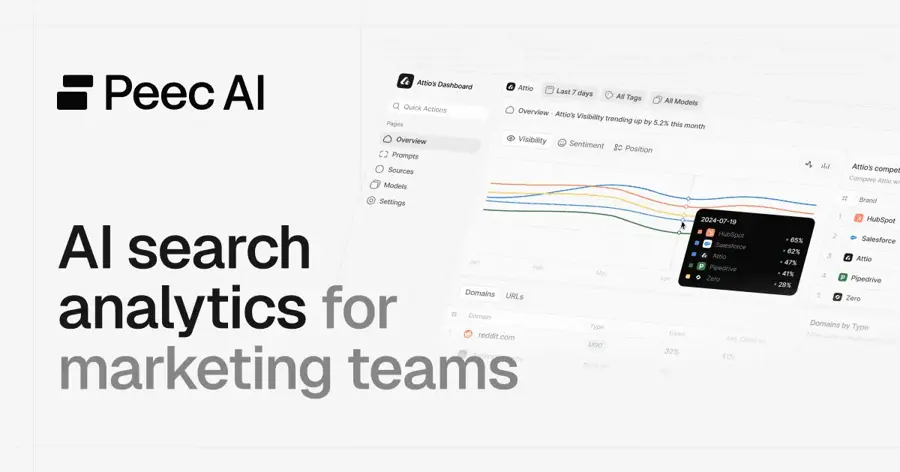
Peec AI is a dedicated AI search analytics tool that runs your prompts daily across the models you pick and tracks visibility, position, sentiment and share of voice against competitors.
Why it stands out
Peec is built for steady, daily tracking. Its pricing page lists daily tracking on every plan and calculates your monthly AI answers as prompts multiplied by active models and tracking frequency. That is a clear way to see what you are paying for. Every plan includes unlimited users, which matters for agencies that want clients and staff in the same dashboard.
The developer marketing agency Stateshift used Peec for three months and wrote in its Peec AI review: “Within a month, I’d recommended it to three clients.” It also flagged two limits: visibility percentages could be explained more clearly, and history only goes back to the day you start tracking.
Key features
- Daily tracking: every prompt re-runs each day on your chosen models.
- Source analytics: domains and exact URLs cited, classified as competitor, editorial, reference or UGC.
- Brand metrics: visibility, position, sentiment and share of voice over time.
- Prompt suggestions: ideas drawn from your brand context and coverage gaps.
Pros
- Unlimited users on every plan
- URL-level citation data explains why you appear
- Clear usage maths for budgeting
Cons
- Base plans include only three models
- Extra models are paid add-ons
Peec AI pricing: No free plan; paid plans from about €85/month for 50 prompts on three models, with Pro around €205 and Advanced around €425, according to Dupple (checked October 2026). See pricing
Verdict: the safest default if you want reliable daily trend data without an enterprise contract.
Profound – best for large brands
Profound is an enterprise AI search platform that tracks how your brand and competitors appear in up to nine answer engines, with an AI Marketer agent layered on top.
Why it stands out
Profound is the tool enterprise teams name most often. Its pricing page lists a free trial that runs 50 prompts daily for 7 days on ChatGPT, Gemini and Google AI Overviews, then an Enterprise plan with a tailored prompt tracking plan, up to nine answer engines, SSO and SOC 2 compliance.
On the same page, Statsig’s marketing lead Skye Scofield is quoted saying Profound “seemed like the deepest and most complete tool in the market.” Dupple gives the independent view: the catch is no published brand price after the trial, and it is overkill for a small startup.
Key features
- Answer Engine Insights: prompt tracking across up to nine engines on Enterprise.
- Agent Analytics: AI bot visits and AI-sourced traffic from your CDN or analytics.
- Prompt Volumes: estimates of what users actually ask AI engines.
- AI Marketer: an agent that drafts briefs, page rewrites and corrections.
Pros
- Broad engine coverage
- Crawler data alongside answer tracking
- Strong for multi-region, multi-team brands
Cons
- No self-serve brand plan after the trial
- Trial prompts and engines are fixed
Profound pricing: Free 7-day trial; after that, Enterprise at custom pricing (checked October 2026). See pricing
Verdict: the deepest option on this list, but only worth it if AI search is already a board-level channel for you.
Semrush AI Visibility Toolkit – best for existing Semrush users
Semrush’s AI Visibility Toolkit adds AI visibility scores, competitor research and daily prompt tracking to the SEO suite many marketing teams already use.
Why it stands out
The toolkit’s knowledge base page lists Prompt Tracking that monitors “specific, high-value prompts on platforms like Google AI Mode and ChatGPT” day by day, plus Brand Performance reports on share of voice and sentiment.
The trade-off is depth and cost per seat. Dupple says that “as a pure AI monitor it is less focused than Peec or Profound,” and the $99 price applies per user. The base toolkit also includes only 25 tracked prompts, which is thin for long-term tracking.
Key features
- Prompt Tracking: daily visibility for chosen prompts, 25 included.
- AI Visibility Score: a benchmark for any brand, worldwide or by region.
- Brand Performance: share of voice, sentiment and key narratives.
- Prompt Research: topic volume, difficulty and intent, like keyword research for AI.
Pros
- Sits next to your existing SEO data
- Prompt research helps pick what to track
- Report-ready exports
Cons
- Only 25 tracked prompts on the base toolkit
- $99 per extra user
Semrush AI Visibility Toolkit pricing: No free plan; $99/month for the toolkit, with 50 extra prompts at $60/month. Semrush One bundles start at $199/month, according to Dupple (checked October 2026). See pricing
Related: Best AI rank tracking tools
Verdict: an easy add-on if you already live in Semrush; not a reason to switch to it.
Ahrefs Brand Radar – best for historical benchmarking
Ahrefs Brand Radar tracks brand mentions, citations and AI share of voice across a database of pre-run prompts, plus custom prompts you define yourself.
Why it stands out
Most trackers start from zero on the day you sign up. Brand Radar is different. Its product page says the AI Visibility Index lets you search any brand or category “including historical responses back to 2025,” built from 496 million+ prompts modelled on Ahrefs’ keyword data.
The learning curve is real. The agency MRS Digital, writing in The Drum, said of its first try: “When we first used it, we admittedly floundered.”
Key features
- AI Visibility Index: instant data for any brand, with history back to 2025.
- Custom prompts: your own buyer questions, checked daily to monthly per platform.
- Core metrics: mentions, citations, AI share of voice and estimated impressions.
- Platforms: AI Overviews, AI Mode, ChatGPT, Perplexity, Gemini and Copilot, with Claude for custom prompts.
Pros
- Historical trend data from day one
- Prompts tied to real search demand
- Strong competitor benchmarking
Cons
- Needs a paid Ahrefs plan
- Busy interface for newcomers
Ahrefs Brand Radar pricing: No free plan; a small number of custom prompts is included with paid Ahrefs plans, extra tracking starts at $50/month and the full index starts at $199/month (checked October 2026). See pricing
Verdict: the best choice when you need a trend line today rather than in three months.
Otterly.AI – best for small budgets
Otterly.AI is a low-cost AI search monitoring tool that checks your prompts daily across ChatGPT, Perplexity, Google AI Overviews and Microsoft Copilot.
Why it stands out
Otterly is the cheapest credible way to start a tracking habit. Dupple lists the Lite plan at $29 a month for 15 prompts, with Gemini, AI Mode and Claude as paid add-ons. Stateshift, which used Otterly before moving to Peec, wrote in its review that “It was helpful for monitoring, good for alerts and seeing when a brand appeared in AI answers.”
The weak spot is scale. Fifteen prompts fill up fast, and the next tier jumps to $189 a month for 100 prompts.
Key features
- Daily checks: prompts re-run each day on four core engines.
- Competitor benchmarks: side-by-side comparison with clean metrics.
- Alerts: notice when your brand appears or drops out.
- Add-on engines: Gemini, Google AI Mode and Claude for an extra fee.
Pros
- Lowest entry price on this list
- Good monitoring and alerts
- Unlimited team members, per Dupple
Cons
- Only 15 prompts on Lite
- Big price jump to the next tier
Otterly.AI pricing: No free plan; Lite from $29/month ($25 billed annually), Standard $189/month, Premium $489/month, according to Dupple (checked October 2026). See pricing
Verdict: the right first step on a tight budget; plan to upgrade once you know which prompts matter.
SE Ranking – best for SEO and AI in one plan
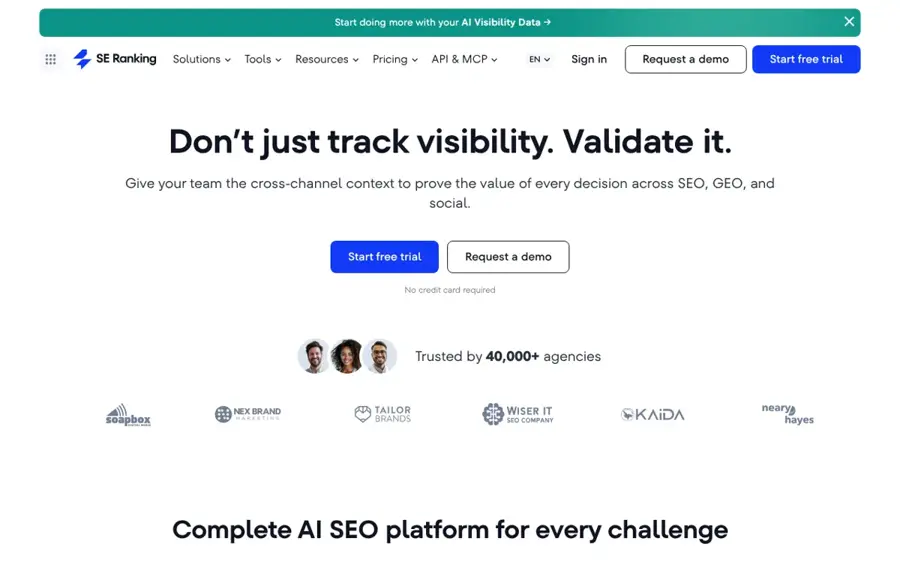
SE Ranking is an SEO platform whose standard plans now include daily AI prompt tracking alongside keyword rank tracking, audits and backlink research.
Why it stands out
SE Ranking puts AI tracking into the base plan rather than selling it separately. Its subscription page lists 100 prompts tracked daily on the entry plan and 250 on Growth, plus an Agency Pack with white-label reporting and 30 client seats.
Dupple calls it “the best value if you want AI visibility tracking bundled with a full traditional SEO suite,” but notes that “AI tracking depth isn’t as detailed as dedicated tools.”
Key features
- Daily prompt tracking: 100 prompts on Core, 250 on Growth.
- AI Results Tracker: AI Overviews, AI Mode and ChatGPT via the AI Search add-on.
- Agency Pack: white-label platform and reports.
- Integrations: Looker Studio, Google Analytics and Search Console.
Pros
- Strong prompt count for the price
- Full SEO suite included
- White-label for agencies
Cons
- Less AI detail than dedicated trackers
- Deeper AI features sit in a paid add-on
SE Ranking pricing: No free plan (14-day trial); Core from $129/month, with the AI Search add-on from $71.20/month billed annually, according to Dupple (checked October 2026). See pricing
Related: Best AI rank tracking tools
Verdict: the best value for small SEO teams and agencies that want one bill for everything.
Rankscale – best for wide engine coverage
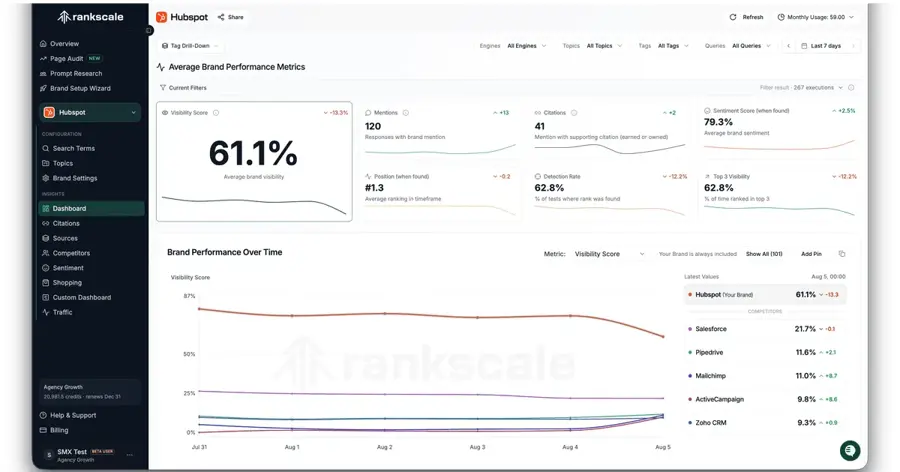
Rankscale is a credit-based AI visibility tracker covering 17+ engines, including ChatGPT, Perplexity, Claude, Gemini, Google AI Overviews, AI Mode, Copilot and DeepSeek.
Why it stands out
Rankscale gives you more control over tracking frequency than most. Its pricing page lets you schedule search terms hourly, daily, weekly or monthly. Its homepage promises “no per-engine upsell tiers,” which is a real difference from Peec and Otterly.
We found no independent user review of Rankscale we could read, so judge it on its published specs and a first paid month.
Key features
- 17+ engines: no per-engine upsells.
- Flexible scheduling: hourly to monthly per search term.
- Credit rollover: up to two or three times your monthly allocation.
- Page audits: AI visibility checks for any URL.
Pros
- Widest engine list here
- Cadence you can tune to budget
- Unlimited search terms
Cons
- Credit maths takes some getting used to
- Few independent reviews yet
Rankscale pricing: No free plan; Pro from $99/month with 1,200 credits, and a yearly-only Essentials tier also listed (checked October 2026). See pricing
Verdict: a strong pick for agencies that need many engines and many brands without per-engine fees.
HubSpot AEO – best for HubSpot users
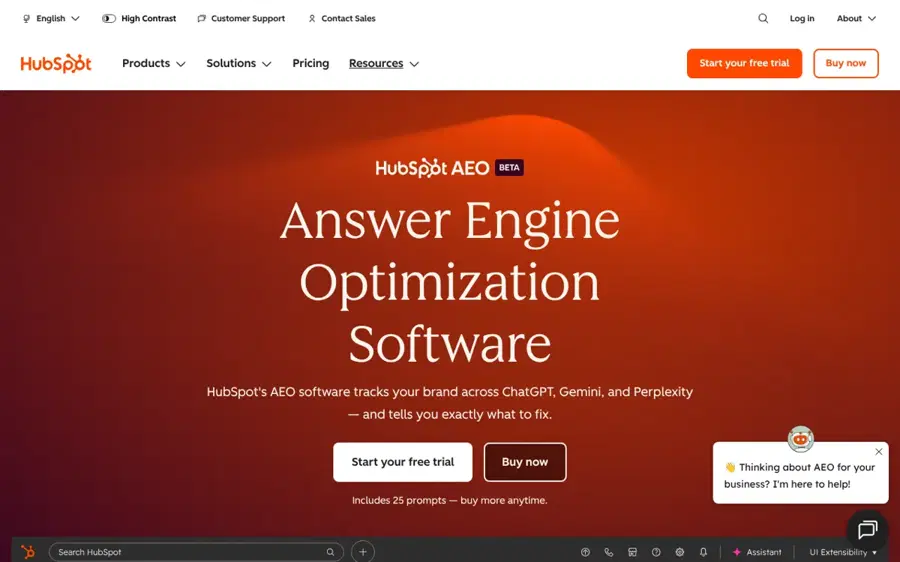
HubSpot AEO tracks your brand across ChatGPT, Gemini and Perplexity, measuring visibility score, share of voice, sentiment and citations.
Why it stands out
HubSpot’s pitch is that tracking should lead somewhere. Its product page says it monitors prompts over time, suggests which prompts to track based on your company and competitors, and turns gaps into prioritised recommendations.
On that page, Docebo data scientist Valeriia Frolova says she wanted “grounded data with real web search behind it, and that’s what we found.” That is a vendor-published quote. The limit is coverage: three engines, with no Google AI Overviews or Claude listed.
Key features
- Three engines: ChatGPT, Gemini and Perplexity.
- Visibility score and share of voice: tracked continuously against competitors.
- Prompt suggestions: based on your company, rivals and industry.
- Citation analysis: domains, pages and content types AI cites.
Pros
- Cheap entry price
- Suggested prompts save setup time
- Links into HubSpot CRM and content tools
Cons
- Only three engines
- 25 prompts in the base plan
HubSpot AEO pricing: No free plan (free trial with 25 prompts); $45/month billed annually or $50 month to month (checked October 2026). See pricing
Verdict: an obvious add-on for HubSpot customers; others will get wider coverage elsewhere.
AthenaHQ – best for trying before paying
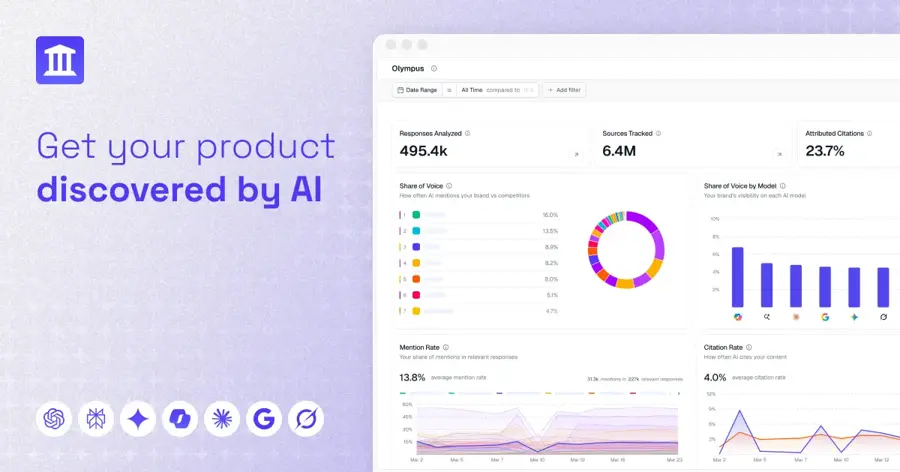
AthenaHQ is an AI search tracking and optimization platform that monitors 11 models and pairs the data with content recommendations and an AI agent.
Why it stands out
AthenaHQ is the only tool here with a standing free plan for tracking. Its pricing page lists a free Essential plan with 300 credits, where one credit equals one AI response. The paid Starter plan covers ChatGPT, Perplexity, Google AI Overviews, AI Mode, Gemini, Claude, Copilot, Grok and more.
The same page shows G2 awards with a rating of 4.9 out of 5 in the Answer Engine Optimization category. That rating is displayed by the vendor; we could not open G2 directly to confirm it.
Key features
- 11 models: on the Starter plan.
- Credit system: 1 credit = 1 AI response, 3,600 a month on Starter.
- Unlimited seats: with role-based access.
- Traffic link-up: GA4 and Search Console connect visibility to visits.
Pros
- Free plan to test with
- Broad engine coverage
- Unlimited users and competitors
Cons
- Big jump from free to $295
- API and extra credits cost more
AthenaHQ pricing: Free Essential plan; paid plans from $295/month (checked October 2026). See pricing
Verdict: a good way to see real data before you commit, if you can stretch to $295 afterwards.
Scrunch – best for fixing inaccurate answers
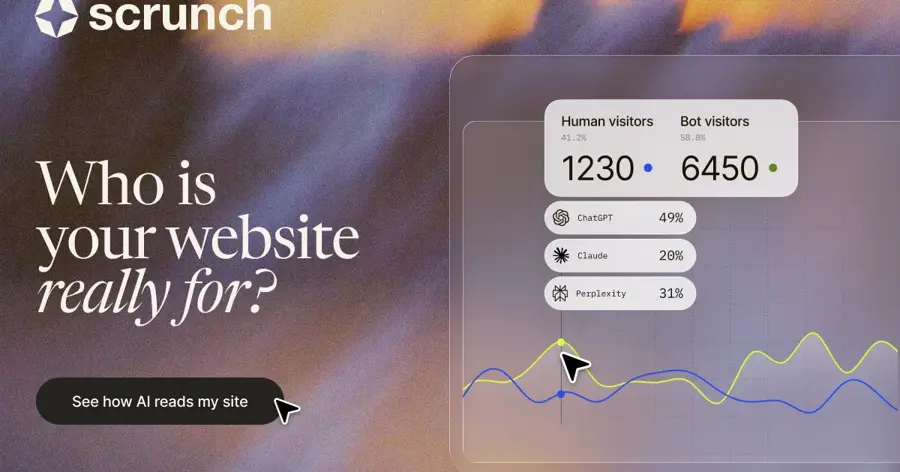
Scrunch is an AI customer experience platform that tracks prompts across AI engines and focuses on spotting and fixing what models get wrong about your brand.
Why it stands out
Scrunch suits brands that care about accuracy as much as mention counts. Its pricing page lists 125 unique prompts, 5,000 responses a month, sentiment analysis, citation data and AI bot traffic on its entry tier, across ChatGPT, Perplexity, Google AI Overviews and Copilot.
On its pricing page, Jessie Dawson, a senior director of web strategy, is quoted: “More and more of the buying cycle is happening in AI search—not on our website.” Dupple puts the entry price around $300 a month and calls it “firmly an enterprise spend.”
Key features
- 125 prompts: with 5,000 responses a month on the entry tier.
- Sentiment and citations: see tone and sources behind each answer.
- AI bot traffic: which agents visit your site.
- Site audits: five a month on the entry tier.
Pros
- High prompt allowance on the entry tier
- Strong on accuracy and misinformation
- Five user licences included
Cons
- Only four engines below Enterprise
- Price not shown on the official page
Scrunch pricing: No free plan (free 30-second audit); entry pricing around $300/month, according to Dupple (checked October 2026). See pricing
Verdict: pick it when wrong answers about your product are a bigger problem than missing ones.
How to choose the right AI visibility tracking tools
Start with the engines your buyers use
List the assistants your customers actually use, then check which ones each tool includes in the base price.
Do the prompt maths before you compare prices
Multiply your prompts by engines and by checks per month. Peec publishes this formula on its pricing page, and AthenaHQ and Rankscale price in credits per response.
Decide how much history you need
Only Ahrefs Brand Radar offers historical data from day one. With any other tool, start tracking before you change your content so you have a baseline.
Agencies: check seats, brands and white-labelling
The best AI visibility tool for agencies is usually the one that keeps per-client costs flat. Peec AI includes unlimited users, SE Ranking’s Agency Pack and Rankscale’s Growth plan add white-label options, and Profound offers an agency plan, according to Dupple.
How to track AI visibility over time
Whatever tool you pick, the method is the same:
- Write a fixed prompt set. Use real buyer questions, mixing branded prompts (“is [brand] good for X”) with non-branded ones (“best tool for X”).
- Add three to five competitors. Visibility only means something relative to rivals.
- Pick a steady cadence. Daily is standard for important prompts; weekly is fine for long-tail ones.
- Track the core metrics. Ahrefs defines them well on its Brand Radar page: mentions in answer text, citations of your pages, and AI share of voice against competitors. Add sentiment and average position.
- Read trends weekly, not daily. Single answers swing. Look at 7- and 30-day averages before you react.
When the data shows a gap, the fix is content and citations. Our guide to ranking in AI Overviews and our explainer on Google AI Mode are good next reads.
Free vs paid: what you actually get
| Option | What you get | What you miss |
|---|---|---|
| Asking ChatGPT or Perplexity yourself | A quick snapshot of one answer | Schedule, history, competitors, any reliable trend |
| Free plans and trials (AthenaHQ, Profound trial, HubSpot trial) | Real tracked data for a short period or a small credit pool | Long-term history; most trials end in 7 to 28 days |
| Entry paid plans ($29 to $129 a month) | 15 to 100 prompts, daily checks, competitor benchmarks | Some engines, multi-country tracking, API access |
| Mid and enterprise plans ($200 a month and up) | Hundreds of prompts, more engines, regions, SSO, BI exports | Nothing major, apart from budget |
In short, free options suit a one-off check. Tracking needs repeated runs, and that almost always means paying.
Final verdict
If you only pick one, pick Peec AI: daily tracking, unlimited users and URL-level citation data at a mid-market price. Choose Otterly.AI if you have under $50 a month. Choose Ahrefs Brand Radar if you need history now. Choose SE Ranking or Semrush if you want AI tracking inside your SEO tool. Choose Profound or Scrunch if you are an enterprise and AI answers are already a revenue channel.
FAQ
What are the best AI visibility products?
For tracking over time, the strongest products in late 2026 are Peec AI, Profound, the Semrush AI Visibility Toolkit, Ahrefs Brand Radar and Otterly.AI, followed by SE Ranking, Rankscale, HubSpot AEO, AthenaHQ and Scrunch. Which one is best depends on budget, team size and the engines you need.
How to track AI visibility?
Choose a fixed set of buyer prompts, add competitors, and have a tool re-run them on a schedule across the AI engines your customers use. Then watch mentions, citations, share of voice and sentiment as 7- and 30-day trends. Manual checks in ChatGPT give you a snapshot, but not a reliable trend.
Which is the best AI visibility tracking tool?
For most teams, Peec AI is the best AI visibility tracking tool because it combines daily tracking, unlimited users and URL-level source data from about €85 a month. Enterprises should look at Profound, and budget buyers at Otterly.AI.
Do AI visibility tracking tools show exact rankings like Google?
Not quite. AI answers vary from run to run, so these tools report averages: how often you are mentioned, your average position in lists and your share of voice. Treat them as trend indicators, not exact positions. For classic and AI rank tracking side by side, see our AI rank tracking tools roundup.
Sources
- Pricing for Peec AI (Peec AI)
- Pricing (Profound)
- AI Visibility Toolkit: Boost Brand Visibility in AI Search (Semrush)
- Ahrefs Brand Radar: See ANY brand’s AI visibility (Ahrefs)
- Otterly.AI pricing (Otterly.AI)
- Subscription (SE Ranking)
- Pricing (Rankscale)
- AI Visibility Platform for ChatGPT, Perplexity & AI Overviews (Rankscale)
- HubSpot AEO: AEO Tools to Track & Improve Your AI Visibility (HubSpot)
- Plans & Pricing (AthenaHQ)
- Scrunch Pricing (Scrunch)
- Best AI Search Visibility Tools 2026 (Dupple)
- Best AI Brand Monitoring Tools in 2026: 7 Platforms Compared (Dupple)
- Peec AI Review (2026): Is It Worth It for Developer Marketing? (Stateshift)
- The Best Tools for AI Search in 2026 – Ahrefs vs Otterly AI vs Peec AI (The Drum)