Best AI courses for beginners in 2026: 7 picks for every budget
The best AI courses for beginners in 2026, from free university courses to paid Google certificates, with current prices and what you actually get for free.
 Written byAlap ZahidReviews and guides editor
Why you can trust The AI Future
Our writers research every product, link each claim to its source and correct mistakes openly. Companies can't pay for coverage or see reviews before they're published.
Read our editorial policy
Short answer: the best AI courses for beginners in 2026 are Elements of AI if you want a free, university-built foundation, and AI For Everyone if you want the quickest non-technical overview from a big name. If you need a certificate an employer will recognise, pay for Google AI Essentials. Most people should start free and only pay once they know what they want to learn next.
That last point matters more than it used to. Several courses that were free a year ago now sit behind subscriptions, and plenty of "best free AI course" lists online have not caught up. We checked every course below against its official page in late October 2026, so the prices and free options here are current. Seven made the cut, from a 45-minute primer to a Harvard course that has you writing Python.
Key takeaways
- Elements of AI is the best free AI course for beginners. It is free, certificate included, and requires no complicated math or programming.
- Google AI Essentials is no longer free. AI Weekly confirmed it now costs $49/month on Coursera after a 7-day trial, despite older lists saying otherwise.
- "Free to audit" usually means no certificate. On Coursera and DeepLearning.AI you can often watch the videos for free, but graded work and certificates cost money.
- If you want to use chatbots better, Anthropic's AI Fluency course is the free sleeper pick. It is short, practical and comes with a certificate.
- Only take Harvard CS50 AI if you can already code. It is excellent, but it expects about a year of Python.
How we ranked them
To be straight with you: nobody at The AI Future took every course for this roundup. We compared them using official course pages, published independent reviews, learner ratings and Reddit discussion, as of late October 2026. We ranked them on six criteria:
- Beginner fit: can someone with no coding or maths background follow it?
- True cost: what you can do for free, and what the certificate costs.
- Time to finish: realistic hours, not marketing estimates.
- Credibility: who built it, and whether the certificate means anything.
- Practical value: whether you can use what you learn the next day.
- Learner feedback: ratings and reviews from people who finished it.
Our top picks at a glance
| # | Tool | Category | Best for | Free tier | Starts at |
|---|---|---|---|---|---|
| 1 | Elements of AI | University MOOC | Complete beginners | Yes | Free |
| 2 | AI For Everyone | Coursera course | Non-technical professionals | Yes (limited) | $59/mo |
| 3 | Google AI Essentials | Certificate program | Workplace AI skills | No | $49/mo |
| 4 | Generative AI for Everyone | Coursera course | Understanding generative AI | Yes (limited) | $59/mo |
| 5 | Anthropic AI Fluency | Vendor course | Using chatbots well | Yes | Free |
| 6 | Google Introduction to Generative AI | Short learning path | A fast primer | Yes | Free |
| 7 | Harvard CS50 AI | University course | Beginners who code | Yes | $299 (certificate) |
The Coursera "starts at" price is Coursera Plus at $59/month, which unlocks certificates across most of the catalogue. Some courses can also be bought individually for less.
The best AI courses for beginners in 2026, ranked
Elements of AI – best for complete beginners
Elements of AI is a free online course from the University of Helsinki and MinnaLearn that explains what AI is, what it can and cannot do, and how it affects daily life. Start at elementsofai.com.
Why it stands out
This is the answer to "which free AI course is best for beginners?" for most people. The Introduction to AI part is genuinely free, certificate included, and over 2 million students from more than 170 countries have signed up. It goes deeper than most beginner courses, covering search, probability, machine learning and neural networks, but it explains them with examples rather than code.
The trade-off is time. Self-Made Success, citing the University of Helsinki, puts the workload at about 30 hours, and its review scored the course 64 out of 100, calling it "one of the strongest choices for nontechnical AI literacy" while marking it down for that workload and weak job-specific proof. Learners on r/learnmachinelearning regularly post about finishing it, which tells you people actually complete it.
Key features
- Two parts: Introduction to AI (no coding) and Building AI, which recommends basic Python
- Free certificate: for completing at least 90% of exercises with 50% correct, per Self-Made Success
- Peer reviews: you review other learners' written answers
- Self-paced: no deadlines
- Many languages: available in multiple languages
Pros
- Completely free, certificate included
- Real university backing
- Teaches concepts, not just tool tips
- No programming needed for part one
Cons
- Around 30 hours is a big commitment
- Little on using today's chatbots day to day
- Certificate is not a job qualification
Elements of AI pricing: Free, with no paid plan for individuals (checked October 2026). See the course
Verdict: the best free starting point if you have a few weekends to give it.
AI For Everyone – best for non-technical professionals
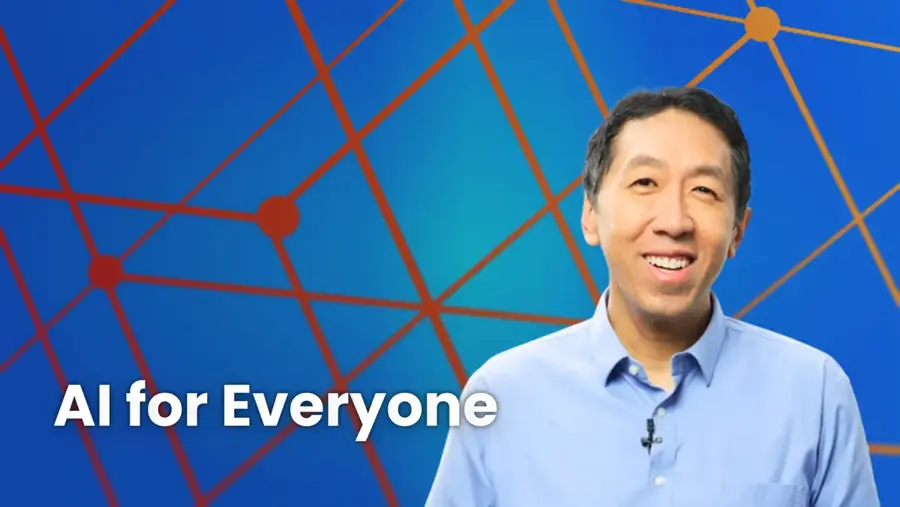
AI For Everyone is Andrew Ng's non-technical course from DeepLearning.AI, built to help you understand AI and spot where it fits in your own work. Find it at deeplearning.ai and on Coursera.
Why it stands out
If Elements of AI is the textbook, this is the briefing. It runs to four modules, and SkillScouter estimates about six hours, so you can finish it in a week of lunch breaks. The course page pitches it plainly: you will see examples of what today’s AI can – and cannot – do.
Learners rate it highly. On Coursera, 81.84% of its 53,455 reviews give it five stars. One reviewer wrote: "The course provided an excellent introduction, explaining what AI is and what it is actually capable of." The catch is that the material is older and focuses on AI strategy, not generative AI tools. Pair it with pick 4 if you want both.
Key features
- Four modules: short and non-technical
- Andrew Ng: taught by the co-founder of Coursera and DeepLearning.AI
- Business focus: how to spot AI projects in your organisation
- Society module: AI's wider impact on jobs and society
Pros
- Very short
- Huge learner base and strong ratings
- Good for managers and teams
Cons
- Older material with little on chatbots
- Certificate is paid
- Light on hands-on practice
AI For Everyone pricing: Free to audit, according to AI Weekly → certificate through Coursera Plus from $59/month (checked October 2026). See pricing
Related: AI training courses: what's worth your time
Verdict: the fastest credible overview for non-technical people.
Google AI Essentials – best for workplace AI skills
Google AI Essentials is a self-paced program from Google on Coursera that teaches you to use AI tools for everyday work, with a Google certificate at the end. See it at grow.google.

Why it stands out
This is the pick if a certificate on your CV is the goal. Google says it takes under 10 hours and needs zero experience. Its five modules cover AI basics, productivity tools, prompting, responsible AI and keeping up with new tools, per the official page. Reliablesoft reports a 4.8 rating from 25,448 reviews and almost 2 million enrolled learners, and says the prompting module is "the most valuable part of the whole program."
The big change is price. Many older lists still call it free, but AI Weekly checked in July 2026 and found it behind a $49/month subscription on both Coursera and Google Skills. Reliablesoft also points out that Google's newer AI Professional Certificate costs the same $49 and covers far more, so compare the two before you pay.
Key features
- Five short modules: about 8 hours in total, per Reliablesoft
- Prompting module: practical prompt-writing techniques
- Responsible AI: bias, privacy and security risks
- Google certificate: for your CV or LinkedIn
- AI Pro bonus: enrolling includes 3 months of Google AI Pro, per Reliablesoft
Pros
- Recognisable certificate
- Very practical and short
- Strong ratings
Cons
- No longer free
- Mostly built around Google's tools
- Too basic if you already use ChatGPT or Gemini daily
Google AI Essentials pricing: No free plan → $49/month after a 7-day free trial (checked October 2026). Because it is short, many learners finish within one month. See pricing
Verdict: worth $49 if you want a Google-branded certificate; skip it if you only want to learn.
Generative AI for Everyone – best for understanding generative AI
Generative AI for Everyone is Andrew Ng's three-module course on how generative AI works, what it can and cannot do, and how to use it at work. Find it on Coursera.
Why it stands out
This is the modern companion to AI For Everyone. It explains how large language models work, includes hands-on exercises and tips on prompting, and walks you through the lifecycle of a generative AI project, according to the course page. It is the best choice if your real question is "how does ChatGPT actually work, and where should I trust it?"
On Coursera, 83.68% of 5,369 reviews are five stars. One learner wrote: "The instructor uses plain language and example to explain complex concepts, that is really helpful." Just note that DeepLearning.AI moved to a two-tier model in 2026: videos stay free to watch, but labs, quizzes and certificates on its own platform need a Pro membership at $25/month billed annually.
Key features
- Three modules: short enough for a weekend
- How LLMs work: explained without maths
- Prompting tips: plus uses beyond prompting
- Risks and opportunities: for individuals, businesses and society
Pros
- Clear, plain-English teaching
- Focused on the tools people use now
- High learner ratings
Cons
- Certificate and graded work cost money
- Not a substitute for hands-on practice
Generative AI for Everyone pricing: Free to watch → certificates through Coursera Plus from $59/month or DeepLearning.AI Pro (checked October 2026). See pricing
Related: AI training courses guide
Verdict: the best way to understand the chatbots you already use.
Anthropic AI Fluency – best for using chatbots well
AI Fluency: Framework & Foundations is a free course from Anthropic, the company behind Claude, on working with AI effectively, efficiently, ethically and safely. It sits in Anthropic's Claude Academy.
Why it stands out
Most beginners do not need to know how a neural network is trained. They need to know how to hand a task to a chatbot, describe it clearly and check the result. That is exactly what this course teaches through its 4D framework: Delegation, Description, Discernment and Diligence. The course outline also covers what generative AI is, its capabilities and limits, and prompting techniques, and ends with a certificate of completion.
AI Weekly called Anthropic's course catalogue "the sleeper pick" of 2026, noting that its courses are free with completion certificates. The lessons are tool-neutral enough to help with ChatGPT or Gemini too, though the wider Anthropic Academy catalogue leans towards Claude.
Key features
- 4D framework: Delegation, Description, Discernment and Diligence
- Capabilities and limits: a realistic mental model of chatbots
- Prompting deep dive: effective prompting techniques
- Free certificate: on completion
- Spin-offs: versions for students, educators and nonprofits
Pros
- Free, certificate included
- Practical from the first lesson
- Teaches judgement, not just prompts
Cons
- Less on how AI works under the hood
- Wider catalogue focuses on Claude
Anthropic AI Fluency pricing: Free (checked October 2026). See the course catalogue
Related: Claude AI review How to write better AI prompts
Verdict: the most useful free course if you just want to get better results from AI.
Google Introduction to Generative AI – best for a fast primer
Beginner: Introduction to Generative AI is a short learning path on Google Skills that covers large language models and responsible AI. Find it at skills.google.
Why it stands out
If you have an afternoon rather than a month, start here. The path has four activities and gives an overview "from the fundamentals of large language models to responsible AI principles." AI Weekly says the whole path takes about two hours with a free badge, and calls the 45-minute headline course "the fastest credible orientation to LLMs we know of."
It is now Google's main genuinely free beginner option, since Google AI Essentials went paid. It will not make you an expert, but it gives you the vocabulary to follow the longer courses on this list.
Key features
- Four activities: short videos and quizzes
- About two hours: in total, per AI Weekly
- Free badge: on completion
- Responsible AI: included as a core topic
Pros
- Free
- Very short
- From Google Cloud's own team
Cons
- Only an overview
- Needs a Google sign-in
- A badge, not a full certificate
Google Introduction to Generative AI pricing: Free (checked October 2026). See the path
Verdict: the best two hours you can spend before choosing a longer course.
Harvard CS50 AI – best for beginners who code
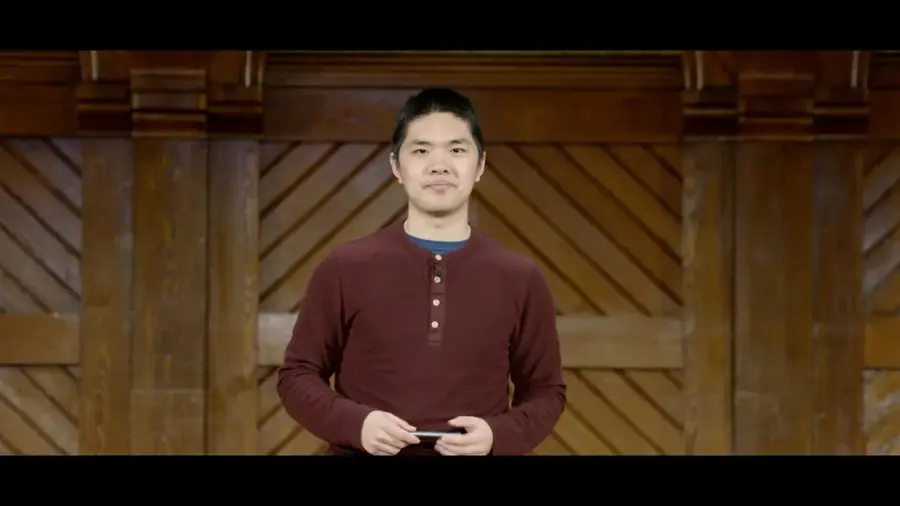
CS50's Introduction to Artificial Intelligence with Python is Harvard's seven-week course on the algorithms behind AI, taught through hands-on Python projects. Take it free at cs50.harvard.edu/ai.
Why it stands out
This is a beginner AI course, not a beginner programming course. Harvard lists the prerequisite as CS50x or at least one year of experience with Python, and its own catalogue labels it Intermediate at 10 to 30 hours a week. If you meet that bar, it is one of the best free AI courses online. You build projects on search, optimisation, machine learning and, in the current version, large language models.
AI Weekly lists it among the best free university-level courses, with seven graded projects and a paid edX certificate. If you cannot code yet, take CS50x first, then come back.
Key features
- Seven weeks: lecture, then project, each week
- Python projects: search, optimisation and machine learning
- LLMs: covered in the current version
- Free feedback: submit projects through a free edX account
- Paid certificate: verified certificate for $299
Pros
- Free, full course
- Real projects for a portfolio
- Harvard teaching quality
Cons
- Needs about a year of Python
- 10 to 30 hours a week
- Verified certificate costs $299
Harvard CS50 AI pricing: Free to take → verified certificate for $299 on edX (checked October 2026). See pricing
Verdict: the best next step once you can write basic Python.
How to choose the right AI course for beginners
Decide what "learning AI" means for you
There are two very different goals. One is understanding AI: how it works, where it fails, what it means for jobs. The other is using AI: getting better results from ChatGPT, Gemini or Claude at work. Choose Elements of AI or Generative AI for Everyone if you want the first. Choose Anthropic AI Fluency or Google AI Essentials if you want the second.
Be honest about your time
A 30-hour course you abandon is worth less than a two-hour one you finish. If your week is full, start with Google's Introduction to Generative AI path, then add one longer course. Elements of AI itself advises blocking regular study slots and joining a study group to stay on track.
Only pay for the certificate if someone will look at it
Recruiters and managers may notice a Google or Harvard name. Most will not ask for proof that you watched a video series. If nobody needs the certificate, audit or use the free options and save the money.
Practise alongside the course
The skills only stick if you use them. Keep a chatbot open while you study and try every technique on a real task. Our guide to AI prompt engineering is a good companion to any of these courses.
Free vs paid: what you actually get
"Free" means different things on different platforms, and the details have shifted a lot in 2026. Here is the honest version, based on Edubracket's Coursera pricing breakdown and AI Weekly's check of free courses.
| Option | Cost | What you get | Certificate |
|---|---|---|---|
| Truly free (Elements of AI, Anthropic, Google Skills path, CS50 AI) | $0 | Full course and exercises | Free (CS50 AI verified certificate is $299) |
| Coursera audit | $0 | Videos and readings for most courses | No |
| Coursera single course | $49 to $99 one-off | Graded assignments | Yes |
| Google AI Essentials | $49/month | Full program, 7-day trial | Yes |
| Coursera Plus | $59/month or $399/year | Most of the catalogue | Yes |
| DeepLearning.AI Pro | $25/month billed annually | Labs, quizzes and certificates | Yes |
The budget angle is simple. If you plan to take one Coursera course, buy it on its own or audit it. If you plan to take five or more, Edubracket argues the $399 annual Coursera Plus plan is the better deal, and notes it often drops in price during sales. Monthly Coursera Plus also has a 7-day free trial.
Paying does buy you two real things: graded feedback and a credential. It does not buy better teaching. Elements of AI and CS50 AI are free and are as rigorous as anything on this list.
Final verdict
If you only take one course, take Elements of AI. It is free, it is built by a real university, and it gives you a foundation that will not date as fast as tool tutorials. Choose AI For Everyone instead if you need the overview this week, not this month.
Choose Google AI Essentials if you want a recognisable certificate and are happy to pay $49 for it. Choose Anthropic AI Fluency if you mainly want to get better results from chatbots at work. And once you can write Python, move on to Harvard CS50 AI. For a wider look at structured options, including in-person classes, see our guide to AI training courses and our list of free AI tools for students.
FAQ
Which is the best free AI course for beginners?
Elements of AI, from the University of Helsinki and MinnaLearn, is the best free AI course for most beginners. The Introduction to AI part needs no programming, takes about 30 hours, and includes a free certificate. If you only have a couple of hours, Google's free Introduction to Generative AI path on Google Skills is the fastest alternative.
Is Google AI Essentials still free?
No. As of 2026 it costs $49 a month on Coursera after a 7-day free trial, and it is behind a subscription on Google Skills too. Because the program takes about eight hours, some learners finish within the trial, but check Coursera's current terms before relying on that.
Do I need to know maths or coding to learn AI?
Not for most of the courses on this list. Elements of AI, AI For Everyone, Generative AI for Everyone, Anthropic AI Fluency and Google's courses all skip programming. You only need Python for Harvard CS50 AI, where Harvard recommends about a year of experience, and for Building AI, part two of Elements of AI.
How long does it take to learn AI as a beginner?
You can understand the basics in a weekend. Google's introductory path takes about two hours and Google AI Essentials about eight. A deeper foundation like Elements of AI takes around 30 hours. Building AI yourself takes much longer: CS50 AI runs seven weeks at 10 to 30 hours a week.
Are free AI certificates worth anything?
They show initiative, but few employers ask for a specific one. A Google or Harvard name carries more weight than an unknown provider. A small project you built, or a real task you can show you improved with AI, usually says more than the certificate itself.
Sources
- A free online introduction to artificial intelligence for non-experts (Elements of AI)
- How can I make the most out of the Elements of AI? (Elements of AI)
- Is the Elements of AI Certificate Worth It? My Review (Self-Made Success)
- Elements of AI search results (r/learnmachinelearning, Reddit)
- The Best Free AI Courses in 2026, Verified Actually Free (AI Weekly)
- AI For Everyone (Coursera)
- AI for Everyone (DeepLearning.AI)
- Google AI Essentials (Coursera)
- Learn the Fundamentals of AI & Basics of Prompting (Google)
- Is Google AI Essentials Worth It? (vs AI Professional Certificate) (Reliablesoft)
- Generative AI for Everyone (Coursera)
- Claude Academy: Learn to work and build with Claude (Anthropic)
- AI Fluency: Framework & Foundations (Anthropic Academy)
- Anthropic Courses (Anthropic Academy)
- Beginner: Introduction to Generative AI (Google Skills)
- CS50's Introduction to Artificial Intelligence with Python (Harvard CS50)
- CS50's Introduction to Artificial Intelligence with Python (Harvard University)
- Coursera Pricing: Every Plan and Free Option (2026) (Edubracket)
- Coursera Plus (Coursera)
- Best Free AI Courses for Beginners in 2026: Top 10 Picks (SkillScouter)