SEO using generative AI in 2026: what works, what doesn't and what's next
SEO using generative AI works when AI speeds up research and drafts and a person checks the facts. Here's how AI search picks sources and what to do about it.
 Written byBurhan AqibSenior writer, policy and analysis
Why you can trust The AI Future
Our writers research every product from its official pages, independent tests and user reports, link each claim to its source and correct mistakes openly. Unless an article says otherwise, we haven't tested the product hands-on ourselves. Companies can't pay for coverage or see reviews before they're published.
Read our editorial policy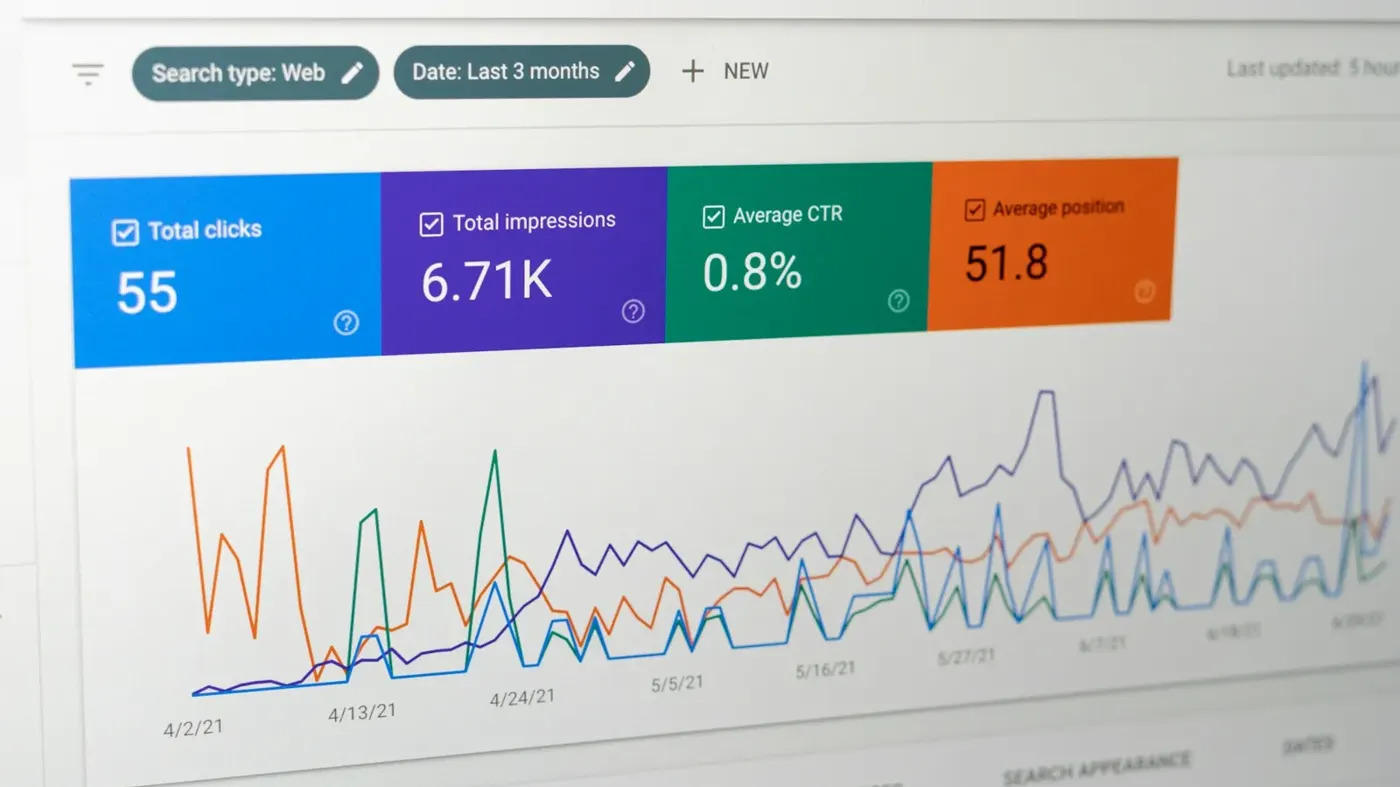
SEO using generative AI means two things at once: using tools like ChatGPT, Claude or Gemini to help you plan, write and fix pages, and making those pages easy for AI search features to find and cite. Both work, but only when a person stays in charge of the facts. Google's own line is that optimizing for its AI answers is still just SEO, and I think that's mostly right, with a few honest exceptions I'll get to.
The stakes went up this year. At Google I/O in May, Sundar Pichai said AI Overviews has over 2.5 billion monthly active users and AI Mode passed 1 billion within a year. That's a lot of searches where the first thing anyone reads is a machine-written summary, not your page.
The mechanics behind AI answers and AI-written pages
Start with the search side, because it explains everything else. Google's AI features don't invent answers from thin air (well, not on purpose). They pull pages from the normal search index, read them, and write a summary with links. Google calls this grounding, or retrieval-augmented generation, and its guide to generative AI search says the features are "rooted in our core Search ranking and quality systems."
There's a second trick, called query fan-out. The model splits one question into several smaller searches and gathers results for each. Google's example: someone asking how to fix a weedy lawn might trigger extra searches for herbicides, chemical-free removal and prevention.
So the eligibility rules are boring. A page has to be indexed and able to show a snippet; there's no special file or markup. Google says outright that you can ignore llms.txt files, "chunking" pages into tiny bits, and rewriting content in a special style for AI. That surprised me a little, given how many agencies sell exactly those services.
The writing side is simpler to describe. A language model predicts likely words based on its training data. It doesn't look facts up unless it's connected to search, which is why Google's guidance on AI-generated content tells site owners to fact-check everything, including titles, meta descriptions, structured data and image alt text. AI help is allowed. What isn't allowed is using it to churn out pages nobody needs.
Here's an analogy that I find useful. An AI Overview is a bit like a librarian who reads five books for you and hands back one paragraph with the page numbers. Your job is to be one of the five books, and to be the one worth opening afterwards.
Real examples of generative AI in SEO strategies
The cautionary tale most SEO people still bring up is CNET. In January 2023 the tech site published finance explainers written with an AI tool; after outside reporters spotted mistakes, it reviewed all 77 and corrected 41 of them. The lesson wasn't that AI can't write. It was that nobody checked.
Google's response came in March 2024, when it added a scaled content abuse policy. It covers "using generative AI tools or other similar tools to generate many pages without adding value for users," and it applies whether a person, a script or both made the pages. In my view that's the single rule anyone doing SEO with generative AI should memorise.
On the research side, the clearest evidence is a 2023 Princeton-led paper, "GEO: Generative Engine Optimization", later presented at KDD 2024. Its authors built a benchmark of queries and found that some content changes could lift visibility in generative answers by up to 40%. Adding citations, quotations and statistics helped most; keyword stuffing didn't. It's one paper, run on test engines rather than Google itself, so I'd treat the exact number loosely.
Then there's what happens to traffic. Pew Research Center tracked 900 US adults' browsing in March 2025 and found that people clicked a regular result on 8% of visits to a results page with an AI summary, against 15% without one. Clicks on links inside the summary happened on just 1% of those visits. Google called the study's method flawed. Still, it's the best independent number I've seen, and it matches what plenty of publishers have said about falling clicks.
For a smaller, made-up but realistic case, picture a two-person bike repair shop. Here's where generative AI earns its keep for a business like that, and where it doesn't:
| SEO task | Where generative AI helps | Where a human has to step in |
|---|---|---|
| Keyword research | Brainstorming the questions customers ask, like "why does my chain skip" | Checking real search data and picking which ones matter |
| First drafts | Outlining a guide on tubeless tyres in minutes | Adding the shop's own repair photos, prices and opinions |
| Meta descriptions | Writing 20 variations to choose from | Fact-checking every claim before it goes live |
| Technical fixes | Explaining a robots.txt rule or a schema error | Testing the change in Search Console |
| Local listings | Tidying the Google Business Profile description | Keeping hours and services accurate |
Notice the pattern: the AI speeds up the dull parts, and the shop's own knowledge is what makes the page worth citing.
Benefits and limitations of SEO with generative AI
The benefits are real, and mostly about time. Drafting outlines, clustering keywords, writing alt text and explaining a crawl error used to eat hours; now they take minutes. Google even says generative AI "can be particularly useful when researching a topic, and to add structure to original content." For a small team without an SEO specialist, that's probably the biggest win.
The limits are stubborn, though.
First, the content AI writes by default is what Google calls "commodity content": the kind of "7 Tips for First-Time Homebuyers" article that could come from anyone. Google's guide contrasts it with a piece built on a real inspection story, and says unique, non-commodity content will likely matter more for AI search "than any of the other suggestions in this guide." A model can't give you a first-hand story you don't have.
Second, hallucinations: a confident wrong price or date on a page is worse than no page. Third, the traffic picture is murky. Being cited in an AI Overview may bring fewer clicks than ranking first used to, and I don't think anyone honestly knows yet how that balances out over a year.
There's also a fairness issue for publishers. AI answers lean on their work while sending fewer visitors back. Google now lets site owners test a Search Console toggle to opt out of its generative AI features, but sites that switch it off lose traffic and impressions from those features. It's a real choice with a real cost.
Practical takeaways for your site
If I had to pick a short list, it'd look like this:
- Use AI for research, outlines and first drafts, then rewrite with your own data, photos and experience.
- Fact-check every number, name and date, including meta tags and alt text.
- Don't spin up dozens of near-identical pages for every query variation; Google names that as scaled content abuse.
- Check robots.txt so Googlebot can crawl you, and allow OAI-SearchBot if you want to show up in ChatGPT's search answers.
- Watch the Generative AI performance report in Search Console instead of guessing about AI visibility.
- Keep your Google Business Profile and Merchant Center details current, since AI answers pull from both.
That ChatGPT point is easy to miss. On OpenAI's crawler page, OAI-SearchBot (used for search) and GPTBot (used for model training) are separate, so you can block training while still appearing in ChatGPT search. Changes take about 24 hours to apply.
For tools, our round-up of AI SEO tools for small business covers the writing and audit side, and the list of AI visibility products for SEO covers trackers that watch where you're cited. If you want the wider marketing picture, the generative AI marketing explainer is a good next read. And better prompts make a real difference to drafts; there's a guide to writing better prompts for ChatGPT, Claude and Gemini.
The next year of search and generative AI
Some of this is known. Google is rolling out the opt-out control and new AI reports in Search Console to a subset of UK site owners first, with a global rollout promised later. It's also nudging site owners toward "agentic experiences", where AI agents visit pages to book or compare things for people, and it mentions a new Universal Commerce Protocol for that.
The rest is guessing, so I'll label it as such. I'd guess the AEO and GEO labels will keep selling software for a while, even as Google keeps saying they're just SEO. I also suspect clicks per search will keep sliding for basic factual queries, while pages with original testing data, local detail or strong opinions hold up better. Would I bet a business on any one AI visibility hack? No. The safest plan seems to be the dull one: useful pages, checked facts, and AI used as a fast assistant rather than an author.
FAQ
Does Google penalise AI-generated content?
Not for being AI-generated. Google's rules target content made mainly to manipulate rankings, however it's produced. Mass-producing low-value pages with AI can fall under the scaled content abuse policy and lead to lower rankings or removal.
What's the impact of generative AI on SEO traffic?
It's mixed. Pew's study found people clicked results on 8% of visits when an AI summary appeared, versus 15% without one, though Google disputes the method. Google says clicks from pages with AI Overviews tend to be "higher quality", meaning people spend more time on the site.
Do I need an llms.txt file or special schema for AI search?
Not for Google. Its guide says Google Search doesn't use llms.txt files and there's no special schema.org markup for AI features. Normal structured data is still worth having for rich results.
Is GEO different from SEO?
Google says optimizing for its generative AI features is still SEO. The term GEO comes from a 2023 research paper, and it's useful for talking about engines like ChatGPT and Perplexity, but the core work (crawlable pages, original content, accurate facts) overlaps heavily.
How can I see if my site appears in AI Overviews?
Use the Generative AI performance report in Google Search Console. AI Overview and AI Mode traffic also counts in the main Performance report under the "Web" search type.
Can I stop Google using my content in AI answers?
You can limit it with nosnippet, max-snippet or noindex, and Google is testing a Search Console toggle that removes a site from its generative AI features. Opting out means no traffic or impressions from those features, but Google says it won't affect regular rankings. If you'd rather hide AI Overviews as a searcher, see how to get rid of AI Overview.