AI is reshaping jobs while federal rules wait for the new Congress
A Gray DC report links Goldman Sachs' 300 million jobs figure, Microsoft's 60,000 buyout offers and stalled federal AI rules. We check what each claim says.
 Written byBurhan AqibSenior writer, policy and analysis
Why you can trust The AI Future
Our writers research every product, link each claim to its source and correct mistakes openly. Companies can't pay for coverage or see reviews before they're published.
Read our editorial policy
When Microsoft told staff on Monday that it was offering buyouts, eligible employees were due to hear the details by email within hours, according to Fox Business. Roughly 60,000 people were in that group. They have until early December to decide, and anyone who accepts leaves on Dec. 31, CNBC reported.
That offer sits at the centre of a Gray DC report published Oct. 28. It says AI is changing or ending jobs, that this is creating demand for oversight, and that efforts to regulate AI are stalled in Congress until at least January. Each of those three claims is worth checking separately.
What the report says
Gray DC opens by saying nearly all industries have been affected by AI, and cites Goldman Sachs' estimate that 300 million jobs will be impacted by 2030. It quotes Barry Jones, a vice president at the AI governance company X2X. Jones says there is not enough oversight right now, and that companies policing themselves is not enough. He argues for an outside party, and in some cases government, to set limits.
The story also gives both parties' views. Rep. Buddy Carter (R-GA) said he would rather keep the federal government out of it, but that the country has to get it right. Sen. Elizabeth Warren (D-MA) said the US must address the risks of powerful AI systems and that elected representatives should make those decisions.
Jones's advice to workers is to learn how AI applies to their profession. In his words, "The goal shouldn’t be to compete with the machine."
The 300 million figure needs care
It is easy to read "300 million jobs impacted" as "300 million jobs gone." That is not what the underlying research says. Goldman Sachs' own explainer says around 300 million jobs globally are exposed to AI automation. Exposure means some of the tasks in a job could be automated. It does not mean the job disappears.
The number is also older than the news cycle suggests. It comes from a report by Goldman Sachs economists that was covered in March 2023. The authors argued that job loss from automation has historically been offset by new types of jobs. A Goldman Sachs post on X puts the horizon at "the next decade", while the Gray DC story says 2030. The two framings are close but not identical, and we cannot tell from the story which Goldman document it relied on.
Think of it like a weather forecast that says 70% of the country may see rain. It tells you how wide the weather system is. It does not tell you how many people get soaked.
Microsoft's offer: what we know and what we are guessing
The facts are fairly clear. Microsoft confirmed to TechCrunch that it is offering buyouts to around 60,000 employees. CNBC says that is about 27% of its 223,000-person workforce. The offer covers staff in the US, Canada, India and the UK. It is voluntary, so 60,000 is the number who are eligible, not the number who will leave.
The link to AI is less direct than the Gray headline implies. CNBC describes the move as Microsoft balancing a costly AI infrastructure build-out with capital efficiency. In other words, the main reported pressure is the cost of building AI data centres, not necessarily AI doing the work of the departing employees. The TechCrunch report frames it as reworking the workforce "for the AI age." Whether AI tools are replacing specific roles at Microsoft is something we cannot confirm from these reports.
Where the rules stand
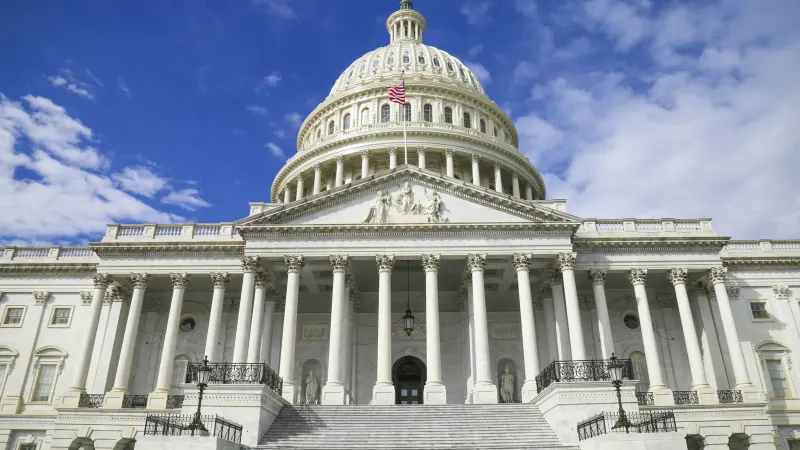
On regulation, Gray DC's summary holds up. Efforts to regulate AI are stalled on Capitol Hill, and the story says the new Congress could take the subject up in January. The calendar backs that up. House Speaker Mike Johnson was reported to be sending members home until after the Nov. 3 midterm election, and a new Congress is seated in January.
Here the sources differ slightly on how much has passed. A Tech Times tally says Congress has not enacted a single federal AI law despite more than 150 bills. The IEEE-USA analysis notes that one narrow measure, the Take It Down Act on non-consensual deepfake imagery, has been signed into law. The two accounts agree that no broad federal AI framework exists. They differ on whether that narrow law counts.
The states have filled the gap. Tech Times reports that 115 state AI laws were passed or enacted across 30 states between Jan. 1 and Oct. 15. Colorado is one example. Governor Polis signed a rewrite in May that moved its AI law's effective date to Jan. 1, 2027 and replaced risk-management duties with disclosure rules. Supporters of a federal approach say a patchwork like this is a problem. Opponents say a federal rule could override stronger state protections. A bipartisan "Great American AI Act" draft floated in June remains stalled.
What this means for you
If you work in an office, the useful reading of this story is narrower than the headline. Your tasks may change before your job does, and employers are making cost decisions partly shaped by how much AI infrastructure costs. That is a more modest claim than mass replacement, but it is still a real shift.
If you use AI tools at work, the oversight point is practical. Jones's example of an AI assistant sending sensitive financial information outside a company is about handling data, not about job losses. Rules on this will most likely come from your employer's policies and from state law before they come from Washington.
What happens next is a matter of timing. The new Congress convenes in January, and several state AI laws, including Colorado's, are scheduled to take effect on Jan. 1. We would not guess at what Congress will do. Its record so far is of proposals that stall, and a change in who controls committees could shift that, or not.
Sources
- Artificial intelligence transforms the workforce, regulations (Gray DC / localnewslive.com)
- How Will AI Affect the US Labor Market? (Goldman Sachs)
- Goldman Sachs: Generative AI Could Replace 300 Million Jobs (AI Business)
- Goldman Sachs on X: 300 million jobs globally could be exposed to AI automation (X)
- Microsoft offers voluntary buyouts to 60,000 employees as AI leads to efficiency push (CNBC)
- Microsoft offers buyouts to around 60,000 employees (TechCrunch)
- Microsoft offers voluntary buyouts to 60,000 employees as tech giant reshapes its workforce (Fox Business)
- From Schoolhouse Rock to Stalemate: Why AI Legislation Keeps Stalling in Congress (IEEE-USA InSight)
- Record 115 State AI Laws in 2026 (Tech Times)
- Congress Is Leaving Until After the Midterms: AI Regulation Waits Until 2027 (Onsite! Media)
- State AI Laws in 2026: SB 53, SB 942, and Preemption (GC AI)